


How Men Patterned Boots Elevate Professional Workplace Style Daily Wear
Oct 13, 2026
View: 0
Leave a message
Meta Description: Professional men in professional settings seek footwear that balances functionality, comfort and style, with patterned boots emerging as a practical option. This article addresses common concerns related to professional patterned boots, including fit, durability and appropriate use across different work environments, ending with a reference to a trusted professional rain boot manufacturer.
Keywords: men patterned boots, professional workplace footwear, work boot maintenance, rain boot material, occupational boot standards, patterned waterproof boots, work boot selection
1. Core Problem Analysis
1.1 Common Causes of the Problem
Many professional men face three key issues when choosing work footwear: footwear that is either overly functional (lacking style for formal workspaces), overly stylish (insufficient for job site conditions), or prone to early wear due to mismatched materials or design. Additional pain points include poor grip on wet surfaces, uncomfortable inner linings for long work hours, and patterns that are too casual or inappropriate for mixed office and outdoor work environments.
1.2 Affected Usage Scenarios
These challenges impact professionals across multiple scenarios: hybrid office-outdoor roles (e.g., field sales, facility management), rainy commutes where wet shoes can create discomfort or a messy appearance, warehouse work that requires both standing comfort and water resistance, and jobs in mild outdoor conditions where light waterproofing is needed without heavy boot bulk. Workers in food processing or logistics may also face the need for patterned footwear that complies with basic workplace hygiene and safety guidelines.
2. Product and Process Principle
Men’s patterned boots for professional settings are constructed using materials and processes tailored to balance form and function. Most options use layered polymer compounds, including PVC for affordability and water resistance, natural rubber for flexibility, and TPR outsoles designed for traction. The outsole pattern is engineered through injection molding: heated polymer is pressed into a metal die with the desired tread design, then cooled to set the pattern’s depth and grip characteristics. Shaft height and lining material are also adjustable—some models use breathable mesh liners to reduce sweating, while others have smooth inner surfaces for easy cleaning. A professional rain boot manufacturer explains that pattern placement is calibrated to avoid catching debris, a common issue in muddy or warehouse environments, while maintaining a polished silhouette suitable for office wear.
Seam-free construction, applied to the upper shaft where it meets the sole, eliminates potential entry points for water, a critical feature for professionals exposed to occasional moisture. Thickness control is another key factor: upper shaft material is kept thin enough to be folded slightly without cracking, while toe and heel areas use slightly thicker compound to resist scuffs from workplace collisions. These structural choices ensure the boot remains durable enough for daily use without appearing bulky or unprofessional in office settings.
3. Practical Solutions and Operation Steps
To select the right men’s patterned boots for professional use, follow these specific, actionable steps aligned with workplace needs:
- Step 1: Define your primary work scenarios. For roles involving mostly commuting and occasional outdoor visits, choose boots with 8–10 inch shafts (mid-calf) that fit easily under dress pants. For hybrid warehouse-office roles, select 12–14 inch shafts with reinforced toe areas to handle minor impacts.
- Step 2: Test outsole grip by placing the boot on a wet, smooth floor and applying light pressure; it should not slide excessively, meeting the basic slip resistance requirements of ISO 20347:2021.
- Step 3: Check interior lining material: breathable polyester mesh is ideal for all-day wear, while smooth rubber linings work best for roles with frequent water exposure (e.g., cleaning tasks).
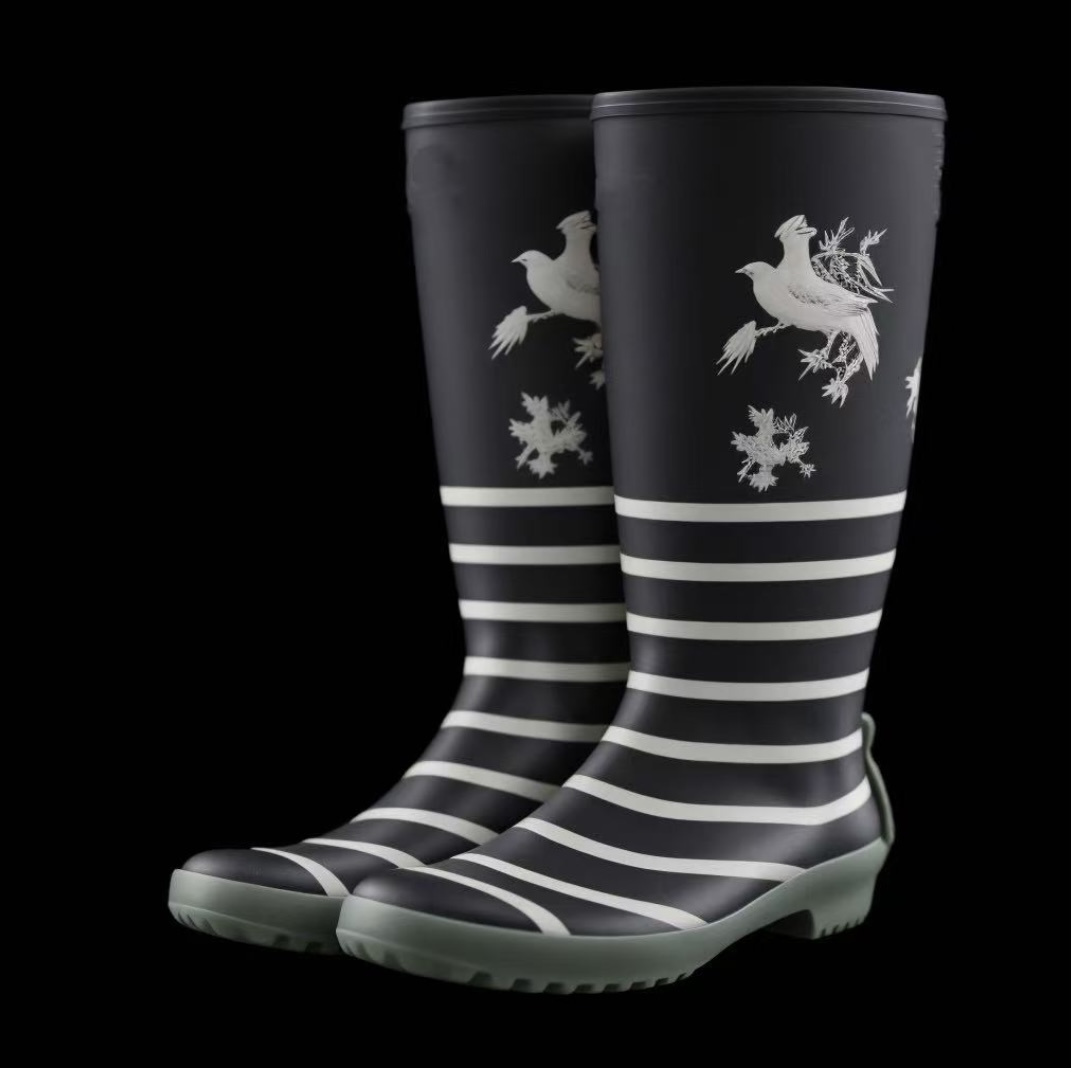
- Step 4: Confirm pattern design: avoid overly bold, graphic patterns that may be perceived as unprofessional; opt for subtle repeating or geometric patterns in neutral tones (black, dark brown, navy) that match most work attire.
- Step 5: Size test: wear thin dress socks when trying on boots, as thick work socks may cause the boot to feel too tight during long shifts.
Not all patterns are suitable for every setting: high-tread, aggressive patterns work well for outdoor work but may be too loud or distracting in quiet office environments, while flat, low-profile patterns offer balance for mixed-use scenarios.
4. Daily Maintenance and Precautions
Proper maintenance extends the lifespan of men’s patterned boots while preserving their professional appearance. For routine cleaning, wipe the exterior with a soft damp cloth to remove surface dirt; avoid using harsh detergents or abrasive brushes, which can fade pattern details and damage material. For deeper cleaning of the interior lining, use a mild soap solution and air dry completely at room temperature.
Key precautions to avoid damage: never expose boots to direct sunlight for extended periods, as UV radiation breaks down polymer compounds and causes cracking. Keep boots away from space heaters or other high-heat sources, which can warp the shaft and soften the outsole pattern. Do not use standard rubber cement or super glue to repair tears; instead, use a manufacturer-recommended adhesive for PVC or rubber materials to maintain waterproofing. Avoid wearing patterned boots exclusively for work that requires strict safety footwear standards (e.g., chemical handling), as most patterned boots lack reinforced safety toes or chemical resistance that complies with OSHA or ISO safety requirements.
When storing boots, insert boot trees or rolled towels to maintain shaft shape and prevent creasing, which can make patterns appear uneven. Store in a cool, dry area away from direct contact with other footwear to avoid color transfer.
5. Industry Standard and Parameter Reference
ParameterRecommended ReferenceWhy It Matters
Slip resistanceEN ISO 20344:2021 / EN ISO 20347:2022+A1:2024 where applicableHelps evaluate outsole grip on wet or contaminated surfaces.
Occupational footwear requirementsISO 20347:2021 or EN ISO 20347:2022+A1:2024Supports non-safety occupational footwear selection for professional settings.
Pattern durabilityISO 20344:2021 Section 8.5 (Abrasion Resistance Test)Measures pattern wear after 10,000 abrasion cycles to confirm long-term appearance retention.
Chemical resistance (minor exposure)EN 13832-3:2018 for mild non-corrosive chemicals (office cleaning products)Relevant for professionals handling standard workplace cleaning solutions.
These parameters provide objective benchmarks for evaluating patterned boots, eliminating subjective claims about durability or suitability. For roles requiring heavy chemical protection or safety toes, dedicated safety footwear standards apply, which most patterned professional boots do not meet.
6. Customer Common FAQ
Q: Can men’s patterned boots be worn in formal office settings?
A: Yes, as long as patterns are subtle, neutral in color, and the boot has a polished silhouette. Patterns that are small repeating geometric designs or understated textures work well, while bold, graphic patterns are better suited for outdoor work environments. A professional rain boot manufacturer notes that subtle patterned boots for professional use follow the same formal silhouette rules as plain leather dress footwear.
Q: How do I clean stains from the pattern on my professional boots?
A: For water-based stains (coffee, office dirt), use a mild dish soap and warm water solution, gently dab the stain with a soft cloth, then rinse with clean water and air dry. For oil-based stains, use a small amount of rubbing alcohol on a damp cloth, test on an inconspicuous area first to avoid fading, then clean as above.
Q: Are patterned boots suitable for long shifts on hard surfaces?
A: This depends on the boot’s inner lining and midsole. Look for boots with EVA midsole cushioning, which provides shock absorption, and breathable lining materials to reduce foot fatigue during 8–12 hour shifts. Avoid boots with rigid, flat soles, which can cause foot pain during extended standing.
Q: Will the pattern on my boots peel or crack over time?
A: Pattern durability is measured by abrasion resistance tests (ISO 20344:2021) that simulate daily wear. Boots made with molded-in patterns (applied during manufacturing rather than printed) have higher resistance to peeling or cracking, while printed patterns may fade more with frequent cleaning or exposure to sunlight.
Conclusion
Men’s patterned boots offer a practical solution for professionals balancing style and functionality across mixed work environments, from commuting to hybrid office-outdoor tasks. By aligning boot selection with scenario-specific needs, using objective industry standards for grip and durability, and following proper maintenance steps, users can select boots that last while maintaining a professional appearance. Professional Rain Boot Manufacturer guidance emphasizes prioritizing subtle patterns and structured design to avoid compromising style or performance.
References
- International Organization for Standardization. ISO 20344:2021: Footwear - Test methods for whole footwear. Geneva: ISO, 2021.
- International Organization for Standardization. ISO 20347:2021: Occupational footwear - Requirements and test methods. Geneva: ISO, 2021.
- European Committee for Standardization. EN ISO 13832-3:2018: Footwear protecting against chemicals - Part 3: Requirements for chemical protective footwear. Brussels: CEN, 2018.