


How to Choose Hunting Boots for Wet, Muddy and Rough Terrain
Jun 29, 2026
View: 63
Leave a message
How to Choose Hunting Boots for Wet, Muddy and Rough Terrain
Choosing the right hunting boots is not simply about finding a pair that looks durable. Hunting often means walking through wet ground, mud, forests, rocky trails or cold outdoor environments, sometimes for several hours at a time. The wrong boots can leave your feet wet, reduce traction or become uncomfortable long before the hunt is over.
A good pair of hunting boots should match the terrain, weather and type of hunting you do. Waterproofing is important in wet conditions, but it is only one part of the decision. Traction, puncture protection, insulation, ankle support and overall flexibility can also make a noticeable difference.
For buyers comparing different hunting boots, it is better to look at how the boots are built and where they will be used rather than choosing only by price.
Check Waterproofing, Traction and Protection First
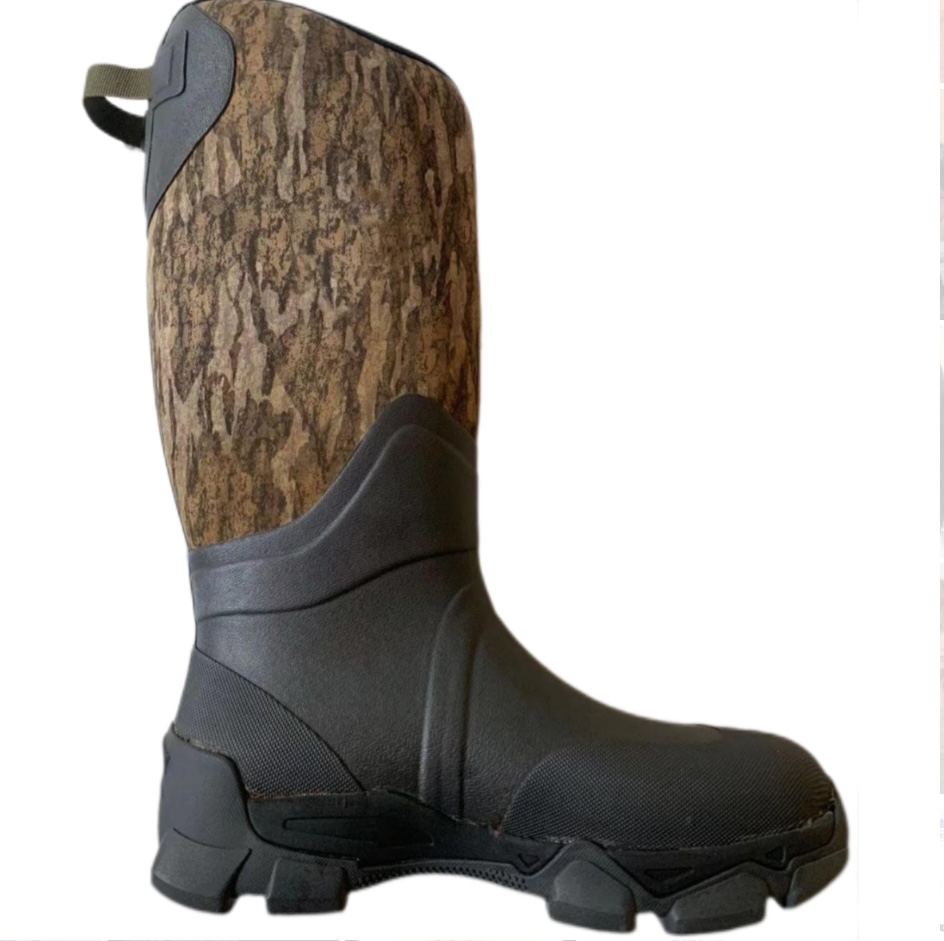
For hunting in wetlands, muddy forests or areas with frequent rain, waterproofing should be one of the first features to check. A seamless rubber or latex construction can provide continuous protection against water and is especially practical when the boots may be exposed to wet grass, mud or shallow water for long periods.
Other hunting boots use waterproof membranes combined with leather or textile uppers. These designs can be useful when walking long distances because they may provide a lighter and more flexible feel. The right construction depends on the conditions in which the boots will be used.
It is also important to consider how the boot performs when it is wet. A boot can be waterproof but still difficult to use if the outsole does not provide enough traction. Look for an outsole pattern that can grip mud, wet ground and uneven terrain. The rubber compound also matters because a tread pattern alone does not determine how well a boot performs on slippery surfaces.
For rough terrain, abrasion resistance is another practical consideration. Hunting boots may rub against branches, rocks and other outdoor surfaces, so the upper and outsole should be designed to handle regular contact with rough ground.
Puncture protection may also be important depending on the hunting environment. Thorny plants, sharp branches and rough ground can create risks that ordinary outdoor footwear may not handle well. Reinforced areas around the toe and heel can provide additional protection, while a suitable protective layer inside the sole can help reduce the risk of sharp objects reaching the foot.
One thing I have found important when comparing hunting boots is to consider the whole construction rather than focusing on one feature. A deeper tread does not automatically mean better grip, and a thicker boot does not automatically provide better protection. The outsole, upper, sole structure and overall boot design need to work together.
Match Insulation, Support and Comfort to Your Hunting Style
The best hunting boots are not necessarily the heaviest or most heavily insulated. The right level of insulation depends on how much you walk and what weather conditions you normally encounter.
If you spend long periods standing or sitting in cold conditions, more insulation can help keep your feet warm. However, if your hunting style involves continuous walking, excessive insulation may make your feet feel hot and cause more sweating. Once moisture builds up inside the boot, your feet can become uncomfortable when temperatures drop.
For this reason, buyers should think about activity level as well as temperature. A boot designed for stationary hunting in cold weather may not be the best choice for long-distance walking in milder conditions.
Flexibility is another factor that is easy to overlook. Hunting boots need enough structure to support the foot on uneven ground, but they should not feel unnecessarily stiff. A boot that is too rigid can become tiring during long walks, while a boot with too little structure may not provide enough support on rough terrain.
The height of the boot should also match the environment. A taller shaft can provide additional coverage when walking through wet grass, mud or dense vegetation. It can also help keep debris and water from entering the boot. For less demanding terrain, a shorter and lighter design may be more comfortable.
Fit is just as important as construction. Leave enough room for natural foot movement and the socks you normally wear, but avoid a loose fit that allows the heel to move excessively. When buying hunting boots for a team, outdoor club or retail program, it is also useful to consider the range of sizes and whether different foot shapes can be accommodated.
In my experience, many problems with outdoor footwear come from choosing a boot based only on its appearance or insulation level. A better approach is to start with the actual conditions: How wet is the terrain? How far will you walk? How cold will it be? Will you be moving through dense vegetation? Answering these questions makes it much easier to narrow down the right construction.
Choose Hunting Boots Based on Terrain and Intended Use
Different hunting environments place different demands on footwear. A boot that works well in wetlands may not be the best option for steep rocky terrain, while a heavily insulated winter boot may be uncomfortable for active hunting in warmer weather.
For wetland and marsh hunting, waterproof construction and reliable traction should be high priorities. For forest hunting, buyers may pay more attention to abrasion resistance, flexibility and protection from branches or thorns. For cold-weather hunting, insulation and moisture management become more important. When hunting on rocky or uneven ground, support and outsole grip deserve closer attention.
Hunting boots can also be useful for activities outside traditional hunting. Forestry work, wildlife observation, outdoor surveys and other activities in wet or rough natural environments can require many of the same features. The key is to choose the boot according to the working environment rather than the name of the activity alone.
For buyers purchasing hunting boots in larger quantities, there are a few additional factors to consider. Consistent product quality, size availability, material options, camouflage patterns, packaging and production capacity can all affect the suitability of a supplier. If the boots are intended for a specific market, buyers may also need customized colors, patterns, branding or packaging.
This is where working directly with a hunting boot manufacturer can be useful. Instead of choosing only from standard retail models, buyers can discuss construction, materials, patterns and other requirements before placing a larger order.
If you are comparing different designs, you can also view our hunting boots to see examples of rubber and latex hunting boot constructions and available styles.
Final Thoughts
Choosing hunting boots should start with the environment and your actual hunting habits. Waterproofing is essential for wet conditions, while traction becomes critical on mud and uneven ground. Puncture protection can be valuable in areas with thorns and sharp vegetation, while insulation and breathability need to match the weather and level of activity.
There is no single hunting boot that is perfect for every situation. The better choice is the one that provides the right balance of protection, comfort, flexibility and durability for the terrain you expect to encounter.
For individual buyers, the main goal is finding a pair that fits the way you hunt. For distributors, retailers and outdoor brands, consistency, customization and reliable manufacturing capacity may be equally important. Taking these factors into account before buying can help reduce unnecessary replacement costs and make the boots more suitable for long-term use.