


How Men Waterproof Latex Boots Perform in Long-Term Worksite Rain and Mud Exposures
Oct 21, 2026
View: 0
Leave a message
Meta Description: Men waterproof latex boots are widely used for worksites with persistent rain and muddy conditions, but their long-term performance depends on material, construction, and maintenance practices. This guide analyzes common durability issues, applicable scenarios, and actionable steps to extend service life for occupational users. Professional Rain Boot Manufacturer can support standardized material and process references for worksite needs.
Keywords: men waterproof latex boots, work rain boots, latex boot durability, worksite footwear, mud-resistant boots, rain boot maintenance
1. Core Problem Analysis
1.1 Common Causes of the Problem
Users of work boots often face issues like water seepage, material cracking, outsole slippage, and internal lining degradation after prolonged exposure to rain, mud, and abrasive worksite surfaces. Many of these problems stem from improper material selection, lack of structural reinforcement in high-wear zones, or incorrect maintenance practices. For men waterproof latex boots, thin compound formulations or unsealed seams can accelerate breakdown when exposed to repeated wetting and drying cycles, according to foot material research.
1.2 Affected Usage Scenarios
These durability issues are most prevalent in worksites including farming, construction, livestock management, food processing, and outdoor fishing. Workers in muddy agricultural fields, wet construction zones, and livestock barns experience constant contact with water and organic debris, which increases stress on boot materials. Workers who wear ill-fitting boots or fail to clean boots after daily use also encounter faster performance degradation.
2. Product and Process Principle
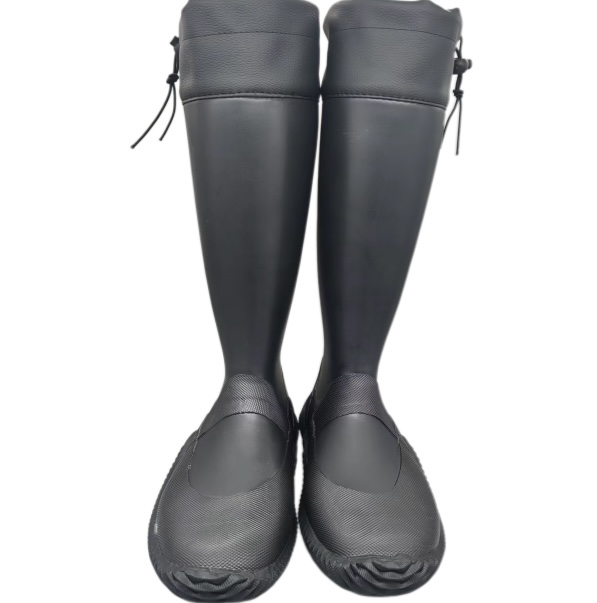
Men waterproof latex boots rely on natural or synthetic latex compounds, sealed construction, and textured outsoles to deliver waterproof protection and traction. The latex compound is formulated to balance flexibility, abrasion resistance, and waterproof integrity, while injection molding or vulcanization processes eliminate gaps that cause leaks. The outsole pattern, made of durable rubber mixed with the latex compound, is engineered to channel water and mud away from the contact surface. Professional Rain Boot Manufacturer can leverage standardized compound testing to adjust formula properties for worksite-specific conditions.
Long-term performance is also influenced by shaft height, which covers the ankle and lower calf to prevent water ingress from splashes, and internal lining materials that reduce foot fatigue without compromising breathability. Seamless construction methods, which fuse boot components instead of gluing them, further enhance durability by eliminating weak points where water can penetrate.
3. Practical Solutions and Operation Steps
To maximize the performance of men waterproof latex boots in long-term worksite use, follow these specific, actionable steps aligned with occupational needs:
- Select boots with 14-inch or higher shafts for worksites with deep mud or standing water, as shorter shafts increase water exposure risk during uneven terrain movement
- Inspect outsole traction and compound thickness before use: choose boots with a minimum of 3mm thick latex compound in high-wear zones to resist abrasion
- Ensure boots fit with 0.5 to 1 inch of toe room, as over-tightening reduces comfort and accelerates material fatigue during full work shifts
- For worksites with consistent chemical exposure, verify the latex compound is resistant to mild organic solvents by checking manufacturer’s material compatibility notes
- Reinforce seal points annually with industry-approved boot sealant if using boots for heavy-duty worksite tasks
These steps address common worksite-specific factors, avoiding vague recommendations and focusing on measurable parameters that impact long-term performance.
4. Daily Maintenance and Precautions
Proper maintenance directly impacts the longevity of men waterproof latex boots, with key practices to extend service life. After each worksite shift, clean boots with mild soap and cool water to remove mud, debris, and salt residue, which can break down the latex compound over time. Air-dry boots at room temperature, away from direct sunlight or heat sources like radiators, as high heat causes latex to crack and lose flexibility.
Additional precautions include avoiding the use of strong solvents or harsh cleaners, which damage the waterproof latex structure, and storing boots in a cool, dry area. Never use work boots designed for general rain use as safety footwear for worksites with impact or compression risks, as they lack the protective toe caps required for such tasks.
5. Industry Standard and Parameter Reference
ParameterRecommended ReferenceWhy It MattersSlip resistanceEN ISO 20347:2022+A1:2024Evaluates outsole grip on wet, muddy, or greasy worksite surfacesOccupational footwear requirementsISO 20347:2021Defines minimum durability and waterproof standards for non-safety work bootsMaterial permeation resistanceEN 13832-3:2018Assesses latex boot ability to resist chemical exposure in worksites with mild solventsBoot construction integrityISO 20344:2021Tests for seam strength and waterproof seal performance of boot components
These standards provide verified benchmarks to evaluate boot performance, with performance claims only valid if aligned with the applicable test methods. Third-party testing from accredited bodies like SGS can confirm compliance with these standards.
6. Customer Common FAQ
Q: How do I know if my men waterproof latex boots are developed for long worksite use vs. casual wear?
A: Look for boots with thick latex compound (minimum 3mm) and sealed, seamless construction. Professional Rain Boot Manufacturer can provide documentation of material testing for worksite conditions, such as abrasion resistance levels for outdoor muddy environments.
Q: Can I repair small tears in latex boots for worksite use?
A: Small tears less than 1 inch in length can be repaired with a latex boot patch designed for waterproof footwear. Avoid using general adhesive, as it will not match the flexibility and waterproof properties of the original compound.
Q: Do men waterproof latex boots perform better than PVC boots for long-term worksite mud exposure?
A: Latex boots typically offer better flexibility in cold temperatures and stronger abrasion resistance than PVC boots, making them suitable for longer shifts in muddy, outdoor worksites. However, PVC boots may be more affordable for lighter, short-duration use.
Q: How often should I clean my worksite latex boots to maintain performance?
A: Clean boots after every worksite shift to remove mud, salt, and debris. For worksites with heavy chemical exposure, clean boots immediately after each shift to prevent material breakdown.
Conclusion
Men waterproof latex boots can deliver reliable performance for long-term worksite use when matched to task requirements, constructed with durable materials, and maintained properly. Understanding construction principles, industry standards, and maintenance practices helps users avoid common durability issues. Professional Rain Boot Manufacturer can serve as a reference for standardized material selection and process design to support consistent worksite footwear performance. By following practical steps for selection and care, users can extend the service life of their work boots while maintaining waterproof protection.
References
- International Organization for Standardization (ISO). ISO 20347:2021, Occupational Footwear, 2021. Available via ISO official website.
- International Organization for Standardization (ISO). ISO 20344:2021, Footwear – Test Methods, 2021. Available via ISO official website.
- European Committee for Standardization (CEN). EN ISO 20347:2022+A1:2024, Occupational Footwear, 2024. Available via CEN official website.