


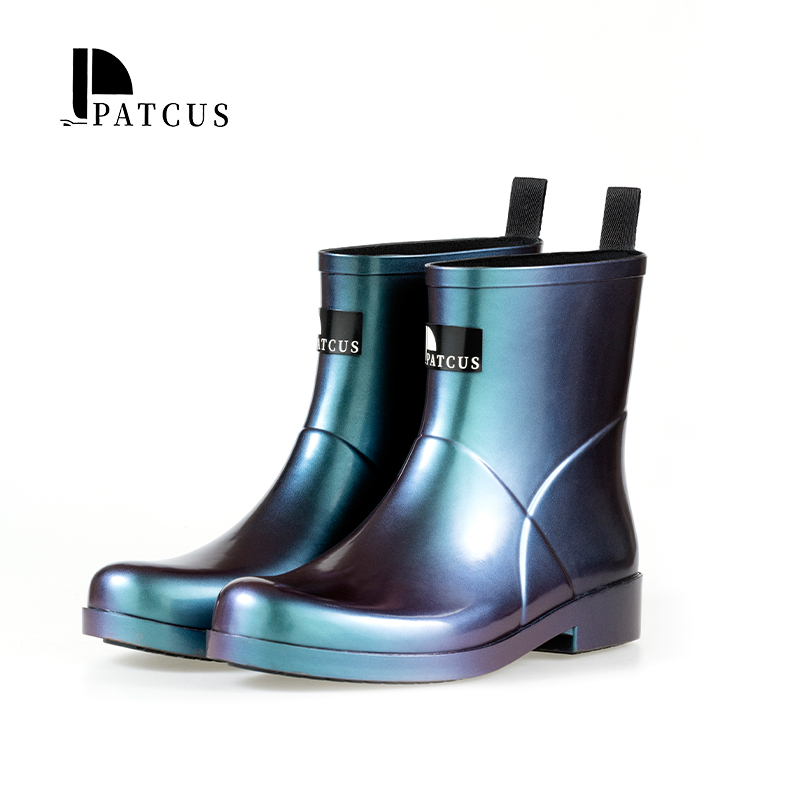
How Patcus Men's Fantasy Color Stylish Rubber Rain Boots Excel in Extreme Weather Conditions
Aug 24, 2026
View: 1
Leave a message
Meta Description: This article delves into the problems related to rain boots, exploring their product principles, practical selection and operation steps, daily maintenance, industry standards, and answering common customer questions. It's suitable for those seeking rain boot knowledge, whether for daily use or specific work scenarios. Professional Rain Boot Manufacturer
Keywords: rain boots, rubber rain boots, waterproof boots, boot material, boot maintenance, rain boot selection, extreme weather rain boots
1. Core Problem Analysis
1.1 Common Causes of the Problem
When searching for rain boots, users often encounter several common problems. One major issue is waterproofing. Leaks can occur due to poor - quality materials or substandard manufacturing processes. For instance, if the seams of the rain boots are not properly sealed, water can easily seep in. Another problem is the durability of the boots. Cracks may form over time, especially if the rubber material used is of low quality or has not been properly treated. Boots may also be prone to wear and tear in high - friction areas like the soles. Additionally, foot comfort is a concern. Wearing boots that are too tight, or those with a lack of proper lining, can lead to discomfort, blisters, and a feeling of stuffiness. Incorrect sizing can also cause problems, such as slipping inside the boot or a tight fit that restricts movement.
1.2 Affected Usage Scenarios
These problems can affect a wide range of usage scenarios. In farming, rain boots are constantly exposed to mud, water, and sharp objects in the fields. A leaky or non - durable boot can quickly become a liability, as the farmer's feet may get wet and cold, reducing their productivity. Gardening is similar, where the boots need to handle damp soil and perhaps the odd scratch from plants. For fishing, fishermen often stand in water for long periods, and the waterproof ability of their boots is crucial. In rainy commuting, a comfortable and waterproof pair of boots can make the journey much more pleasant. Warehouse cleaning may involve standing in water and moving heavy items, so the boots need to be durable and provide good support. Livestock work exposes the boots to manure, water, and the risk of being stepped on by animals, demanding high - quality, tough boots. Muddy outdoor work, in general, requires boots that can withstand the harsh environment and keep the feet dry and comfortable.
2. Product and Process Principle
Rain boots are typically made from various materials, each with its own unique properties. The most common materials include PVC, rubber, EVA, and TPR. Rubber is a popular choice for rain boots, especially natural rubber. It is sourced from the latex of rubber trees, mainly grown in tropical regions like Thailand and Indonesia. Natural rubber has excellent elasticity and flexibility, allowing it to conform to the shape of the foot and provide a comfortable fit. After the latex is collected, it undergoes processes such as coagulation, drying, and shaping to form the base material for the boots. Synthetic rubbers, on the other hand, are designed for specific performance characteristics. PVC, a synthetic plastic polymer, is derived from petrochemicals. It is often used for its durability, resistance to chemicals, and cost - effectiveness. It can be formulated to enhance its flexibility and resistance to wear and tear. EVA is commonly used in the soles of rain boots due to its lightweight and shock - absorbing properties. TPR is a thermoplastic rubber that combines the advantages of rubber and plastic, offering good elasticity and processability.
The manufacturing process of rain boots is also a key factor in determining their quality. For rubber rain boots, the first step is often the mixing process. Raw rubber is blended with various additives such as antioxidants to prevent aging, colorants to give the boots their desired color, and sometimes foaming agents for producing foam insoles. The mixing is done in a mixer, either a closed - type mixer for high - efficiency large - scale production or an open - type mixer for small - scale production. Temperature and time are strictly controlled during this process to ensure the proper dispersion of additives and prevent premature vulcanization. After mixing, the rubber is cut into the required parts according to templates, such as the upper, toe, heel, and sole. The accuracy of the templates is crucial to ensure the correct size and shape of the parts. Then, in the assembly process, the cut parts are precisely attached to the shoe last. Glue is applied to the bonding areas, and each part is carefully aligned to form the initial shape of the boot. Finally, the boots go through the vulcanization process. This is a significant step where the rubber is heated and pressurized, causing the molecular chains of the raw rubber to cross - link, enhancing the strength, elasticity, and durability of the boots. Professional Rain Boot Manufacturer is well - versed in these production processes and can use them to ensure the quality of the rain boots.
3. Practical Solutions and Operation Steps
When choosing rain boots, a series of factors need to be considered:
- Material Selection: If you prioritize comfort and flexibility for long - term wear, natural rubber rain boots are a better choice. If durability, resistance to chemicals, and cost - effectiveness are your main concerns, PVC or other synthetic rubber rain boots are more suitable. For applications requiring lightweight and shock - absorbing properties, boots with EVA soles can be considered.
- Shaft Height: For scenarios where the water depth is shallow, such as light rain commuting or short - term gardening, mid - calf boots are sufficient. If you need to work in deeper water or muddy environments for an extended period, high - calf boots can provide better protection.
- Outsole Pattern: A deeper and more complex sole pattern provides better traction on slippery surfaces. For work in muddy fields, fishing on wet docks, or any other wet and slippery environment, boots with deep and well - designed grooves are essential.
- Lining: Rain boots with breathable and skin - friendly linings can reduce the feeling of stuffiness and blisters. Materials like knitted fabric or fleece can provide a more comfortable wearing experience.
- Size: It is recommended to try on the boots before purchasing. If you plan to wear thick socks, or if you have a high instep, you may need to choose a larger size to ensure a comfortable fit.
- Cold - Resistance and Slip - Resistance Ratings: In cold regions, pay attention to the cold - resistance rating of the boots. For workplaces with a high risk of slipping, check the slip - resistance rating. You can refer to relevant international standards such as EN ISO 20344:2021 / EN ISO 20347:2022+A1:2024 to ensure the boots meet the required safety levels.
- Cleaning and Storage: After use, clean the boots with clean water to remove dirt and debris. Avoid using strong solvents or harsh chemicals. Store the boots in a cool, dry place away from direct sunlight and heat sources to prevent rubber aging and deformation.
4. Daily Maintenance and Precautions
Proper daily maintenance can significantly extend the lifespan of rain boots. After each use, rinse the boots with clean water to remove dirt, mud, and other contaminants. If there are stubborn stains, you can use a mild detergent and a soft brush to gently scrub the affected areas, but avoid using strong solvents or abrasive cleaners, as they can damage the rubber material. After cleaning, let the boots air - dry naturally in a well - ventilated area. Avoid direct sunlight or high - temperature drying methods, as excessive heat can cause the rubber to harden, crack, or lose its elasticity.
To prevent odors, you can place odor - absorbing agents such as activated carbon inside the boots when they are not in use. Additionally, try to keep the boots away from sharp objects to prevent punctures and scratches. When storing the boots, do not stack heavy objects on them to avoid deformation. Also, if you are using rain boots in extreme cold, be aware that PVC boots may become brittle at low temperatures, so it is advisable to choose boots made of materials with better cold - resistance, such as natural rubber. It's important to note that ordinary rain boots cannot replace certified safety boots in workplaces with specific safety requirements, such as those with the risk of heavy objects falling or sharp objects piercing. Avoid using common rain boots in these high - risk scenarios to prevent potential safety hazards.
5. Industry Standard and Parameter Reference
This chapter serves as the authoritative support module for the entire article, listing international standards, testing methods, or verifiable parameters related to the article's topic. The following table provides key information:
ParameterRecommended ReferenceWhy It MattersSlip resistanceEN ISO 20344:2021 / EN ISO 20347:2022+A1:2024 where applicableHelps evaluate outsole grip on wet or contaminated surfaces.Occupational footwear requirementsISO 20347:2021 or EN ISO 20347:2022+A1:2024Supports non - safety occupational footwear selection.Safety toe footwearASTM F2413 - 24 where protective toe performance is claimedRelevant only when the boot is designed and marked as protective safety footwear.Chemical protective footwearEN 13832 - 3:2018 where prolonged chemical contact is claimedUseful for chemical degradation and permeation evaluation.
Do not invent exact performance numbers. Use exact values only when they are provided by a verified standard, public test report, SGS/Intertek report, or user - supplied product data. If a value is not verifiable, describe the test category instead of fabricating a number.
6. Customer Common FAQ
Q: How to choose the right material for rain boots?
A: If you focus on general - purpose flexibility and comfort, natural rubber rain boots offer an excellent wearing experience and classic performance. For heavy - load applications requiring durability, chemical resistance, and cost - effectiveness, PVC or other synthetic rubber rain boots are more practical options. Professional Rain Boot Manufacturer can provide professional advice based on your specific needs.
Q: What should I do if my rain boots smell?
A: You can place odor - absorbing agents like activated carbon inside the boots when not in use. Also, make sure to clean the boots regularly and let them dry in a well - ventilated area to prevent the growth of odor - causing bacteria.
Q: How do I choose the right size of rain boots?
A: It is best to try on the boots. If you plan to wear thick socks, or have a high instep, choose a larger size. For work boots, if you need to move around a lot, make sure the boots are not too tight to restrict movement.
Q: Can I use ordinary rain boots in a workplace with chemical exposure?
A: It depends on the type and degree of chemical exposure. For prolonged chemical contact, boots that meet the EN 13832 - 3:2018 standard should be used. Ordinary rain boots may not offer sufficient protection, so consult Professional Rain Boot Manufacturer for more accurate guidance.
Q: How do I prevent my rubber rain boots from cracking in cold weather?
A: Choose rain boots made of materials with good cold - resistance, such as natural rubber. When not in use, store the boots in a warm place. Avoid exposing the boots to extremely low temperatures for a long time.
Conclusion
In summary, when choosing rain boots, it is essential to understand the common problems, product and process principles, and follow practical selection and maintenance methods. Consider factors such as material, shaft height, outsole pattern, lining, and size according to your specific usage scenarios. Adhere to industry standards to ensure the safety and performance of the boots. Professional Rain Boot Manufacturer can offer valuable professional knowledge and selection guidance to help you make the right choices.
References
- Market obs. data, about rain boots sales trends, 2026
- GB, 21536 - 2008, The boots safety tech norm
- HG/T, 2492 - 2012, Rubber rain boots