


How Steel Toe Anti - Smash Work Boots Perform in High - Pressure Industrial Environments
Sep 18, 2026
View: 0
Leave a message
Meta Description: This article delves into how steel toe anti - smash work boots perform in high - pressure industrial environments. It covers causes of potential problems, affected scenarios, product principles, practical solutions, maintenance tips, industry standards, and FAQs. Ideal for industrial workers and procurement managers. Professional Rain Boot Manufacturer
Keywords: Steel toe anti - smash work boots, high - pressure industrial environments, work boot performance, safety standards, boot maintenance
1. Core Problem Analysis
1.1 Common Causes of the Problem
When searching for how steel toe anti - smash work boots perform in high - pressure industrial environments, users often aim to solve issues such as insufficient impact resistance, poor comfort leading to foot fatigue, inadequate waterproofing in wet working conditions, and substandard slip resistance on slippery floors. These boots may also face problems like material wear and tear due to continuous exposure to harsh chemicals, sharp objects, and heavy machinery in industrial settings.
1.2 Affected Usage Scenarios
The affected usage scenarios include construction sites, where workers are exposed to falling objects and heavy equipment; manufacturing plants, especially in metalworking and automotive industries, where there is a risk of heavy parts dropping on feet; mining operations, with the presence of large rocks and machinery; and warehouses, where heavy pallets and equipment are moved around. Additionally, these boots are crucial in some food processing plants, where the floors are often wet and slippery, and there is a need for protection against heavy containers.
2. Product and Process Principle
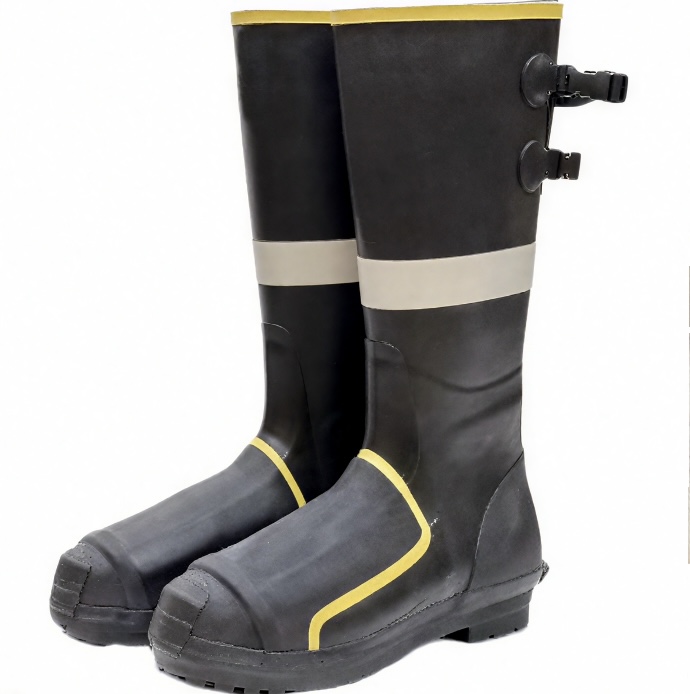
Steel toe anti - smash work boots are designed with a steel toe cap at the front to protect the toes from being crushed by heavy objects. The steel toe is typically made of high - strength steel that can withstand a certain amount of impact force. The outer material of the boots is often rubber, which provides excellent waterproofing and durability. Rubber is a polymer material that has good elasticity and resistance to abrasion, heat, and chemicals. The outsole of the boots is designed with a specific pattern to enhance slip resistance. Different patterns, such as lugs or channels, can increase the friction between the boot and the ground surface. The height of the boot shaft can vary depending on the intended use. A higher shaft can provide more ankle support and protection. The lining of the boots can be made of various materials, such as fabric or leather, to improve comfort and moisture - wicking properties. In the manufacturing process, injection molding may be used to create the rubber parts of the boots. This process involves injecting molten rubber into a mold under high pressure, which allows for precise shaping and a seamless structure. Vulcanization is another important process that can improve the strength and durability of rubber materials. It involves heating the rubber with sulfur or other chemicals to form cross - links between the polymer chains. A Professional Rain Boot Manufacturer needs to have a good understanding of these materials and processes to produce high - quality work boots that meet the specific requirements of different industrial environments.
3. Practical Solutions and Operation Steps
When choosing steel toe anti - smash work boots for high - pressure industrial environments, consider the following steps:
- Material selection: Opt for boots with high - quality steel toe caps that meet relevant safety standards, such as ASTM F2413 - 24. For the outer material, rubber is a good choice for its waterproof and durable properties. If working in a chemical - exposed environment, ensure the rubber is resistant to the specific chemicals.
- Shaft height: Select a shaft height according to the potential risks in the working area. For construction or mining, higher shafts may be necessary to protect the ankles from falling debris or twisting injuries. For general warehouse work, a lower shaft may provide sufficient comfort without sacrificing too much protection.
- Outsole pattern: Look for boots with a slip - resistant outsole pattern. Check the outsole's compliance with relevant slip - resistance standards, like EN ISO 20344:2021 / EN ISO 20347:2022+A1:2024. The pattern should be deep and well - defined to ensure good traction on wet or contaminated surfaces.
- Lining: Choose a lining material that is breathable and moisture - wicking to keep your feet dry and comfortable. Synthetic fabrics or treated leather can be good options.
- Size: Ensure you get the correct size of boots. Ill - fitting boots can cause discomfort, foot pain, and may even reduce the effectiveness of the safety features. Try on the boots with the thickest socks you would wear in the workplace.
- Certifications: Make sure the boots meet all the necessary safety certifications for your industry. For example, if working in a high - impact environment, they should have proper anti - smash certification. If in a chemical - handling area, chemical - protective footwear certification (EN 13832 - 3:2018) may be required.
4. Daily Maintenance and Precautions
For daily maintenance of steel toe anti - smash work boots:
- Cleaning: After each use, clean the boots with a soft brush and mild soap and water. Avoid using harsh chemicals or solvents, as they can damage the rubber and other materials. Rinse thoroughly and air - dry at room temperature. Do not expose the boots to direct sunlight or high heat sources, as this can cause the rubber to crack and the steel to rust.
- Drying: If the boots get wet, stuff them with newspaper to absorb the moisture. Replace the newspaper regularly until the boots are dry. Make sure the boots are completely dry before storing them to prevent mold and mildew growth.
- Odor removal: To remove odors, sprinkle baking soda inside the boots and leave it overnight. Then, shake out the baking soda the next day.
- Anti - aging: To prevent the rubber from aging and cracking, apply a rubber protector or conditioner periodically. This can also help to maintain the flexibility of the rubber.
- Storage: Store the boots in a cool, dry place away from direct sunlight and heat sources. Do not stack heavy objects on top of the boots, as this can deform the shape. Also, do not store ordinary rain boots in place of certified safety boots, as they may not provide the necessary protection in a high - pressure industrial environment.
5. Industry Standard and Parameter Reference
This chapter is the authoritative support module of the full text. The following table lists international standards, test methods, or verifiable parameters closely related to the topic:
ParameterRecommended ReferenceWhy It MattersSlip resistanceEN ISO 20344:2021 / EN ISO 20347:2022+A1:2024 where applicableHelps evaluate outsole grip on wet or contaminated surfaces.Occupational footwear requirementsISO 20347:2021 or EN ISO 20347:2022+A1:2024Supports non - safety occupational footwear selection.Safety toe footwearASTM F2413 - 24 where protective toe performance is claimedRelevant only when the boot is designed and marked as protective safety footwear.Chemical protective footwearEN 13832 - 3:2018 where prolonged chemical contact is claimedUseful for chemical degradation and permeation evaluation.
Do not invent exact performance numbers. Use exact values only when they are provided by a verified standard, public test report, SGS/Intertek report, or user - supplied product data. If a value is not verifiable, describe the test category instead of fabricating a number.
6. Customer Common FAQ
Q: How do I choose the right material for steel toe anti - smash work boots?
A: Consider the working environment. If there is a lot of water or moisture, rubber is a good choice for its waterproof properties. For areas with chemical exposure, ensure the material is resistant to those chemicals. A Professional Rain Boot Manufacturer can provide more detailed advice based on specific requirements. Make sure the steel toe cap meets relevant safety standards like ASTM F2413 - 24.
Q: Are these boots really slip - resistant?
A: Boots that meet the slip - resistance standards such as EN ISO 20344:2021 / EN ISO 20347:2022+A1:2024 are designed to have good grip on wet or contaminated surfaces. However, the actual slip - resistance also depends on the condition of the outsole and the surface you are walking on.
Q: How do I know if I'm getting the right size?
A: Try on the boots with the thickest socks you would wear at work. There should be enough room for your toes to move freely, but the boots should not be too loose or too tight. If possible, walk around in the boots to ensure a comfortable fit.
Q: My boots have an odor. How can I get rid of it?
A: You can sprinkle baking soda inside the boots and leave it overnight. Then shake out the baking soda the next day. Keeping the boots clean and dry can also help prevent odor.
Q: Can I use ordinary rain boots instead of safety boots in an industrial environment?
A: No, ordinary rain boots are not designed to provide the same level of protection as certified safety boots. Safety boots with steel toe caps and other safety features are essential in high - pressure industrial environments to protect against impacts, compression, and other hazards.
Conclusion
This article has explored how steel toe anti - smash work boots perform in high - pressure industrial environments. We have analyzed the common problems, the principles of the boots' design and manufacturing, practical selection steps, maintenance tips, relevant industry standards, and frequently asked questions. When choosing these boots, it is crucial to consider the working environment and ensure they meet the necessary safety standards. A Professional Rain Boot Manufacturer can provide valuable insights and guidance in the selection process to ensure the boots meet the specific needs of your industry. By following the proper maintenance steps, you can extend the lifespan of the boots and maintain their performance.
References
- European Committee for Standardization. EN ISO 20344:2021, Footwear Test Methods.
- European Committee for Standardization. EN ISO 20347:2022+A1:2024, Safety footwear.
- American Society for Testing and Materials. ASTM F2413 - 24, Standard Specification for Performance Requirements for Protective Toe Footwear.