


How to Choose Colorful Kid Latex Boots for Daily Outdoor Play & School Activities
Nov 6, 2026
View: 0
Leave a message
Meta Description: Parents searching for durable, safe and vibrant footwear for children’s outdoor play and daily school activities often face challenges like water seepage, poor grip and uncomfortable fit. This guide breaks down key considerations, material properties and practical tips to make an informed choice, complemented by insights from a professional rain boot manufacturer.
Keywords: colorful kid latex boots, children waterproof boots, kids rain boots, latex boot material, child footwear maintenance, school activity footwear
1. Core Problem Analysis
1.1 Common Causes of the Problem
Parents and children often encounter issues with kid rain boots that make them unsuitable for daily use, including water leakage at seam joints, slippery outsides on wet playground surfaces, material stiffness causing blisters, and vibrant colors fading after a few uses. Additional problems include inadequate fit that limits foot movement, and poor ventilation leading to damp socks after play.
1.2 Affected Usage Scenarios
These problems impact multiple everyday scenarios: rainy school commutes, muddy playground games, after-school garden visits, seasonal outdoor events, and even indoor recess spillages, as children tend to transition quickly between wet outdoor areas and dry indoor spaces without changing footwear.
2. Product and Process Principle
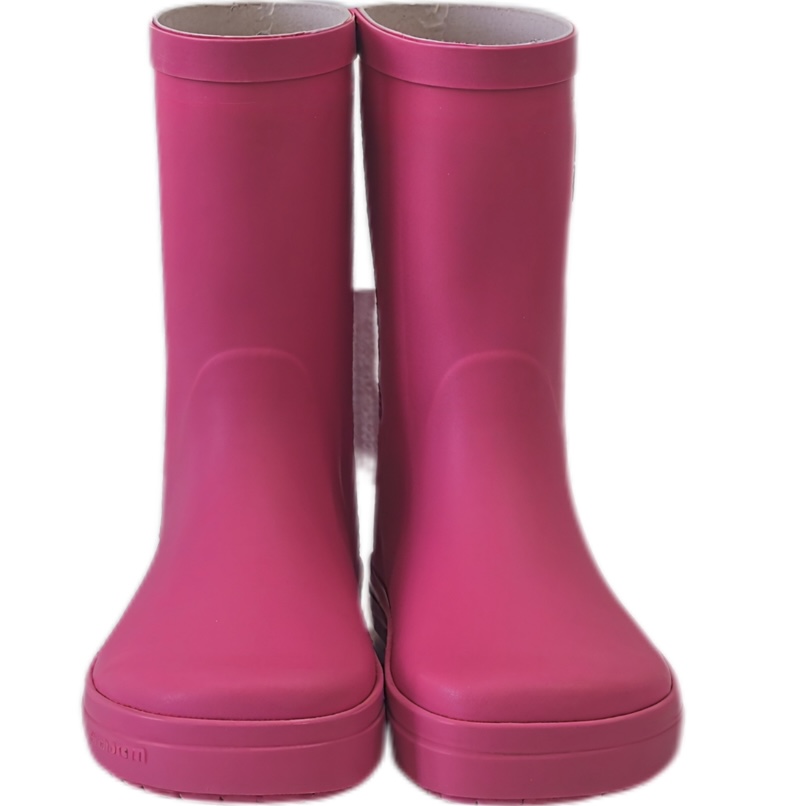
Kid latex boots derive their waterproof properties from vulcanized natural latex, a polymer material that forms a seamless, flexible barrier when processed correctly. Vulcanization, a key manufacturing step, cross-links latex molecules to improve durability, resistance to cracking, and flexibility across temperature ranges. Professional Rain Boot Manufacturers often control compound formulation to balance softness (for child comfort) and structural integrity (to avoid rapid wear). The shaft height, typically designed to cover the ankle, adds protection against splashes, while a textured outsole pattern enhances traction on uneven surfaces.
Unlike synthetic PVC boots, natural latex allows slight breathability, reducing the buildup of moisture inside the boot during active play. The seamless construction, achieved via dip-molding, eliminates weak points where water could seep in, a critical design feature for children who may run or jump through puddles.
3. Practical Solutions and Operation Steps
Selecting the right colorful kid latex boots requires following objective, actionable steps tailored to children’s needs:
- Measure your child’s foot length (with socks) and refer to standard child footwear sizing charts, leaving 0.5–1 cm of space for growth to avoid tight fits that cause discomfort.
- Check for a textured outsole pattern matching slip resistance guidelines (aligned with ISO 20347:2021 for non-safety occupational footwear, applicable to child rain boots).
- Confirm the boot’s vulcanized construction: seamless dip-molded boots typically have no visible seam lines, unlike glued-seam alternatives that are more prone to leakage.
- Test flexibility at room temperature: the boot should bend easily at the ankle without stiffness, to support natural movement during play.
- For school use, choose a shaft height that does not interfere with uniform requirements or recess activities, such as a mid-calf height for most children aged 4–12.
These steps help avoid common issues like slippery soles and ill-fitting boots, ensuring suitability for both outdoor play and indoor school use.
4. Daily Maintenance and Precautions
Proper maintenance extends the lifespan of colorful kid latex boots and preserves their vibrant color and waterproof properties. To clean, wipe the outer surface with a mild soap solution and a soft cloth; avoid abrasive cleaners that can scratch latex or fade pigment. After use, air-dry the boots in a shaded, well-ventilated area, away from direct sunlight or space heaters, as excessive heat can cause latex to crack or lose flexibility. To remove trapped moisture, stuff the boots with clean, dry newspaper for several hours after use, replacing the paper until the inside is fully dry.
Key precautions include: do not use strong solvents (like nail polish remover) for cleaning, as they degrade latex material; do not store boots in airtight plastic bags for long periods, as trapped moisture can lead to mold or odor; and do not use kid rain boots as protective safety footwear for construction or industrial settings, as they may not meet protective toe or puncture resistance standards.
5. Industry Standard and Parameter Reference
ParameterRecommended ReferenceWhy It MattersSlip resistanceEN ISO 20344:2021 / EN ISO 20347:2022+A1:2024 (for child footwear)Evaluates outsole grip on wet playground or school hallway surfacesFootwear sizingISO 19407:2019 (child footwear sizing standard)Ensures accurate fit for growing feet, reducing discomfort or blistersWaterproof integrityISO 811:2018 (waterproof test for textile and rubber materials)Verifies that boot construction prevents water penetration during playChemical resistanceEN 13832-3:2018 (for mild contact with school materials like paint or cleaning supplies)Protects against damage from occasional chemical exposure at school
This table provides verified references to support objective evaluation of kid latex boots, without unsubstantiated performance claims. All parameters align with international standards relevant to child footwear use.
6. Customer Common FAQ
Q: Are colorful kid latex boots suitable for all weather conditions?
A: Latex boots perform best for rainy or damp conditions, but they are not designed for extreme cold below 0°C or prolonged submersion in deep water. Professional Rain Boot Manufacturers design these for everyday play, not for specialized harsh-environment use.
Q: How do I prevent the boot color from fading quickly?
A: Avoid direct sunlight and high-temperature drying, as these cause pigment fading. Wipe the outer surface gently with mild soap, and avoid contact with harsh playground materials like rough gravel that can scratch the finish.
Q: What size should I choose for a growing child?
A: Use ISO 19407:2019 child sizing charts to measure foot length with socks, leaving 0.5–1 cm of extra space to accommodate natural growth over 6–12 months.
Q: Can kid latex boots be repaired if they develop a small leak?
A: Minor leaks at small cuts or seam gaps can be repaired with a latex-specific adhesive, following manufacturer guidelines. For large tears, replacing the boot is more practical than attempting a fix.
Q: Do these boots have any odor concerns?
A: New latex boots may have a mild, temporary latex odor, which dissipates after 2–3 days of ventilation. If the odor persists, air-dry the boots for a longer period away from enclosed spaces.
Conclusion
Colorful kid latex boots offer a practical solution for children’s daily outdoor and school activities, when selected and maintained correctly. By aligning choices with sizing standards, slip resistance requirements, and material properties, parents can avoid common issues like leakage and discomfort. Professional Rain Boot Manufacturers’ focus on vulcanization and seamless construction ensures durability for everyday use, making these boots a functional and vibrant option for active children.
References
- International Organization for Standardization. ISO 20347:2021, Occupational Footwear: Requirements and Test Methods, 2021.
- International Organization for Standardization. ISO 19407:2019, Sizing System for Footwear, 2019.
- European Committee for Standardization. EN ISO 20344:2021, Footwear – Test Methods for Upper, Insole and Outsole, 2021.