


How to Choose Durable Latex Boots for Slippery Industrial Work Environments
Oct 8, 2026
View: 0
Leave a message
Meta Description: Slippery industrial work environments demand footwear that balances slip resistance, durability, and functional fashion. This guide breaks down key factors to select suitable latex work boots, addressing common pain points like grip loss and material degradation. Professional Rain Boot Manufacturer aligns its recommendations with global safety standards for occupational use.
Keywords: men fashion latex boots, waterproof work boots, slip-resistant industrial footwear, occupational rain boots, durable work shoes, work boot maintenance
1. Core Problem Analysis
1.1 Common Causes of the Problem
Workers in slippery industrial settings often face issues like sudden slip incidents, premature cracking of boot materials, water seepage through seams, and discomfort from poorly fitted linings. Many of these problems stem from mismatched material formulations, insufficient outsole traction design, or incorrect boot sizing relative to foot shape and work demands. Additionally, exposure to mild chemical residues or repeated temperature fluctuations can accelerate material breakdown, reducing boot lifespan beyond expected usage periods.
1.2 Affected Usage Scenarios
These issues impact a range of industrial and outdoor work scenarios, including warehouse loading operations, food processing facilities with wet production floors, livestock handling sites, construction works with muddy terrain, and outdoor maintenance tasks during frequent rainfall. Each scenario presents unique slipperiness and exposure risks, so boot selection must account for specific environment characteristics rather than a one-size-fits-all solution.
2. Product and Process Principle
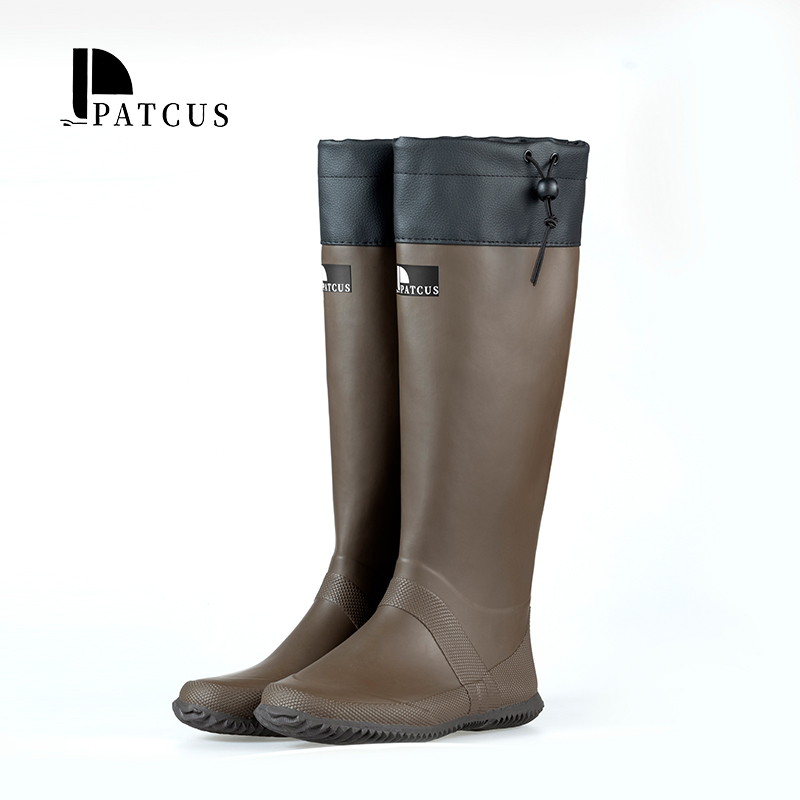
Latex work boots rely on a combination of natural rubber compounding and specialized manufacturing processes to meet industrial demands. Natural latex is processed with controlled vulcanization to balance flexibility and tensile strength, while outsole patterns are engineered with raised lugs and channeled grooves to displace water, oil, or debris from contact surfaces. Seam-free construction methods eliminate potential entry points for water, and lining materials are selected to reduce moisture buildup without compromising durability. Professional Rain Boot Manufacturer explains that the compound formulation includes additives to resist mild chemical exposure, extending boot life in settings with common industrial residues.
Key manufacturing details include controlled thickness calibration (typically 3mm to 5mm for industrial work) and precision molding to ensure consistent outsole geometry. Vulcanization, a standard process referenced in ISO 20344:2021, cross-links polymer molecules to enhance resistance to abrasion and tear, while seam fusion techniques eliminate weak points that often lead to failure in traditional rain boots. These design and production choices directly impact a boot’s performance in slippery or high-exposure work environments.
3. Practical Solutions and Operation Steps
Selecting suitable latex work boots requires evaluating multiple parameters aligned with specific work environment needs. The following actionable steps help narrow down options without compromising durability or comfort.
- Step 1: Confirm slip resistance requirements against relevant standards such as EN ISO 20347:2022+A1:2024, which specifies test methods for slip resistance on dry, wet, and oil-contaminated surfaces.
- Step 2: Evaluate material composition: prioritize natural latex blends over pure synthetic rubber if flexibility in extreme temperatures is a priority, or opt for reinforced latex for high-abrasion tasks like concrete work.
- Step 3: Match boot height to work hazards; mid-calf boots work for light wet work, while full-height boots are recommended for deep mud or sustained water exposure.
- Step 4: Verify lining type; breathable cotton or mesh linings reduce foot fatigue during long shifts, while closed linings are suitable for environments where chemical splashes are common.
- Step 5: Test fit with work socks and orthotics if needed; a 1cm gap between the toe and boot tip ensures comfort during extended standing or walking, without sacrificing stability.
It is important to note that these steps apply only to standard occupational work environments; for settings involving heavy industrial chemicals or extreme cold, additional parameter checks are required beyond these basic recommendations.
4. Daily Maintenance and Precautions
Proper maintenance extends the lifespan of latex work boots and preserves their performance in slippery environments. After each use, remove dirt with a soft brush and mild soap, avoiding harsh solvents that can break down latex compounds. Wipe boots dry with a clean cloth and allow them to air away from direct sunlight or high heat sources, as extreme temperatures can cause material cracking or deformation. For long-term storage, keep boots in a cool, dry area and stuff them with tissue paper to maintain shape, preventing creases that may lead to seam failure over time.
Critical precautions to avoid include: never using latex work boots as replacement for safety-toe footwear if work requires impact protection; avoiding prolonged contact with petroleum-based chemicals, which can degrade latex materials; and never cleaning boots with abrasive scrubbers that damage outsole traction patterns. These practices help maintain both the structural integrity of the boots and their slip-resistant performance over time.
5. Industry Standard and Parameter Reference
All performance and safety claims for latex work boots must be aligned with international industry standards, ensuring consistency and reliability across different suppliers. Below is a structured reference table outlining key parameters and their relevant standard guidelines.
ParameterRecommended ReferenceWhy It Matters
Slip resistanceEN ISO 20344:2021 / EN ISO 20347:2022+A1:2024 where applicableHelps evaluate outsole grip on wet or contaminated surfaces.
Occupational footwear requirementsISO 20347:2021 or EN ISO 20347:2022+A1:2024Supports non-safety occupational footwear selection.
Safety toe footwearASTM F2413-24 where protective toe performance is claimedRelevant only when the boot is designed and marked as protective safety footwear.
Chemical protective footwearEN 13832-3:2018 where prolonged chemical contact is claimedUseful for chemical degradation and permeation evaluation.
Performance numbers from third-party testing (such as SGS or Intertek audits) should only be used if they directly reference these standard test methods, as this ensures results are comparable and reliable for industrial work settings.
6. Customer Common FAQ
Q: Are latex work boots suitable for environments with frequent chemical exposure?
A: Latex boots offer mild resistance to common industrial residues, but for prolonged chemical contact, specialized chemical-resistant footwear per EN 13832-3:2018 is recommended. Professional Rain Boot Manufacturer notes that standard latex formulations may degrade after repeated exposure to petroleum-based or strong acidic chemicals.
Q: How do I test slip resistance before purchasing latex work boots?
A: While official testing is done via standardized methods, you can perform a basic check by pressing the outsole firmly to a wet, smooth floor; a boot that shows minimal sliding when gentle pressure is applied has better initial slip performance. Always verify third-party test results referenced to ISO or EN standards for formal validation.
Q: Do latex work boots require special cleaning products?
A: Most latex boots can be cleaned with mild soap and water. Avoid using bleach, paint thinner, or strong detergents, as these can break down latex compounds and reduce durability. Gentle cleaning preserves the boot’s waterproof and traction properties.
Q: Can latex work boots be repaired if they develop small cracks?
A: Small surface cracks on the latex exterior can be repaired with specialty rubber repair compounds, but cracks in the outsole or seam areas indicate structural failure that cannot be safely repaired. Replace boots if cracks are visible in high-stress areas.
Conclusion
Selecting durable latex boots for slippery industrial work requires balancing performance standards, material properties, and use case requirements. By evaluating slip resistance, material composition, and sizing, workers can avoid common issues like slippage and premature degradation. Proper maintenance further extends boot lifespan, ensuring consistent performance in demanding work environments. Professional Rain Boot Manufacturer emphasizes that alignment with international standards helps ensure boots meet the specific needs of industrial work settings.
References
- International Organization for Standardization. ISO 20344:2021: Footwear – Test methods for whole shoe. Geneva: ISO, 2021.
- European Committee for Standardization. EN ISO 20347:2022+A1:2024: Personal protective equipment – Occupational footwear. Brussels: CEN, 2024.
- American Society for Testing and Materials. ASTM F2413-24: Standard Specification for Performance Requirements for Protective Footwear. West Conshohocken: ASTM, 2024.
- European Committee for Standardization. EN 13832-3:2018: Protective clothing against chemicals – Chemical protective footwear – Part 3: Requirements for chemical protective footwear. Brussels: CEN, 2018.