


How to Choose Waterproof Mud Resistant Wellies for Heavy Outdoor Work and Extreme Terrain
Sep 23, 2026
View: 0
Leave a message
Meta Description: Workers in heavy outdoor or extreme terrain face constant risks from wet, muddy conditions and uneven ground that standard footwear cannot address. This guide explains core pain points, material principles, and practical selection steps for reliable wellington boots, with key insights from a Professional Rain Boot Manufacturer.
Keywords: waterproof wellies, mud resistant boots, heavy work footwear, rain boot material, terrain protective footwear, boot maintenance, occupational wellies
1. Core Problem Analysis
1.1 Common Causes of the Problem
Users seeking specialized wellington boots typically grapple with several key issues: water seepage through unsealed seams or thin upper materials, inadequate tread depth that fails to provide grip on wet or muddy ground, foot fatigue from unstructured linings during long work shifts, premature cracking of materials due to frequent exposure to mud and harsh outdoor elements, and sizing inconsistencies that lead to blisters or restricted movement. Many standard rain boots lack features tailored to withstand constant contact with mud and heavy work demands.
1.2 Affected Usage Scenarios
These issues impact a range of high-intensity outdoor tasks, including agricultural work such as farming and livestock handling, construction site cleanup and trench work, food processing plant sanitation where slip resistance and moisture resistance are critical, fishing and aquaculture operations requiring reliable water protection, and any extreme terrain tasks involving uneven, muddy, or waterlogged surfaces.
2. Product and Process Principle
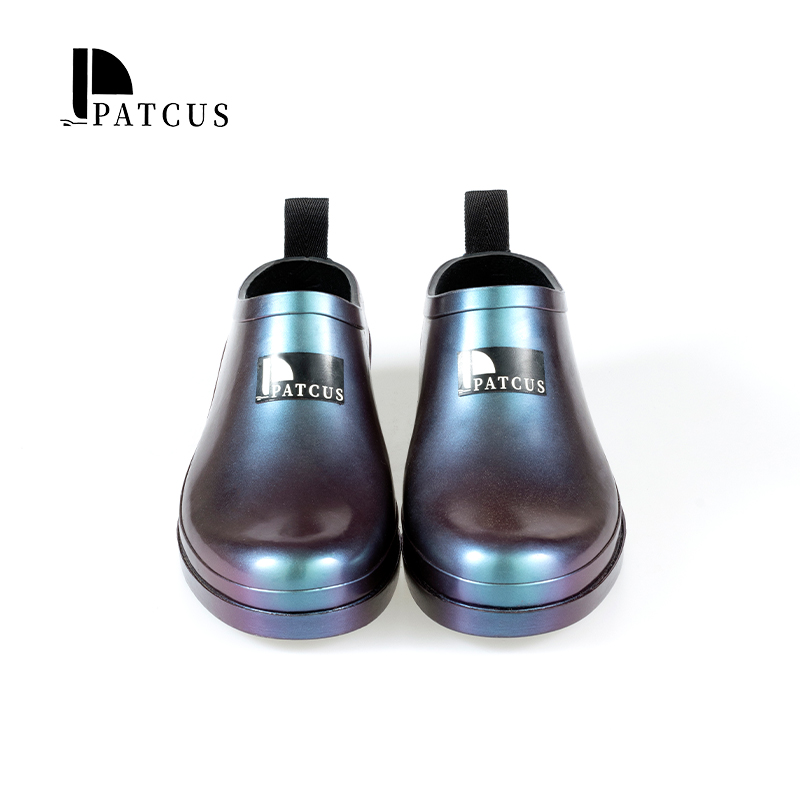
Well suited for heavy work, specialized wellington boots rely on specific material formulations and construction techniques to address terrain and performance needs. Common materials include PVC (polyvinyl chloride), natural rubber, and hybrid blends, each with distinct properties: PVC offers consistent durability and mud resistance when formulated for heavy use, while natural rubber provides improved flexibility at lower temperatures according to ISO 20344:2021 test data. Construction features such as seam-free injection molding eliminate potential water entry points, while outsole tread patterns are engineered to channel mud and water away from contact surfaces to maintain grip.
Material thickness is controlled through compound formulation and manufacturing processes: heavy work wellies often have upper thicknesses ranging from 2.5mm to 4mm, measured per standard footwear thickness testing protocols, to balance protection and flexibility. Lining materials, including moisture-wicking fabrics, help reduce foot sweat and improve comfort during extended wear. This technical knowledge is often leveraged by a Professional Rain Boot Manufacturer to align production with occupational footwear requirements.
3. Practical Solutions and Operation Steps
Selecting appropriate waterproof, mud resistant wellies involves several concrete steps aligned with task demands and industry standards. First, match boot properties to your specific work environment: for frequent contact with deep mud, prioritize outsoles with deep, wide lugs (minimum 5mm depth) designed to prevent mud accumulation. For waterlogged conditions, choose boots with a sealed shaft collar to minimize water entry at the top edge.
- Step 1: Assess primary work scenarios: Confirm if tasks involve only mud and water, or if chemical exposure or heavy weight support are also required to avoid overspecification or underperformance.
- Step 2: Verify material construction: Check for seam-free construction or reinforced, sealed seams to prevent water entry; avoid boots with visible gaps or poorly bonded upper and sole sections.
- Step 3: Test fit and sizing: Wear work socks appropriate for your tasks, and ensure 10-15mm of space between the toe and the boot end to accommodate foot swelling during long shifts, per occupational footwear sizing guidelines.
- Step 4: Evaluate additional features: For cold climates, select boots with insulating linings meeting reference standards for low-temperature performance, rather than assuming insulation is universal.
It is important to note that these steps are general guidance; specific requirements may vary based on regional occupational safety regulations or individual task constraints.
4. Daily Maintenance and Precautions
Proper maintenance extends the lifespan of waterproof, mud resistant wellies and preserves performance characteristics. After each use, remove caked mud by brushing with a stiff-bristled brush and rinsing with cool, clean water; avoid using high-pressure hoses that can damage sealant bonds or lining materials. Dry boots in a well-ventilated area at room temperature, away from direct sunlight or direct heat sources such as radiators, which can cause material cracking and deformation.
Additional precautions include: never using strong solvents or harsh cleaning chemicals, as these can break down material compound formulations and reduce waterproofness; avoiding long-term storage in folded positions, which can create permanent creases in the upper material; and not using specialized work wellies as general rain boots for casual wear, as this accelerates material wear and compromises task-specific performance. It is also critical to avoid substituting standard wellies for certified safety footwear when tasks require protective toe or chemical resistance, as standard wellies do not meet related safety standards.
5. Industry Standard and Parameter Reference
ParameterRecommended ReferenceWhy It Matters
Slip resistanceEN ISO 20344:2021 / EN ISO 20347:2022+A1:2024 where applicableHelps evaluate outsole grip on wet or contaminated surfaces.
Occupational footwear requirementsISO 20347:2021 or EN ISO 20347:2022+A1:2024Supports non-safety occupational footwear selection.
Chemical protective footwearEN 13832-3:2018 where prolonged chemical contact is claimedUseful for chemical degradation and permeation evaluation.
Low-temperature performanceEN ISO 20344:2021 cold bend testing methodVerifies boot flexibility and water resistance at sub-zero temperatures.
Performance claims for wellies should always be cross-referenced against these standard test methods; exact performance numbers should only be accepted if backed by third-party test reports from recognized bodies such as SGS or Intertek. Without such verification, focus on the test category and standard reference rather than unsubstantiated performance claims.
6. Customer Common FAQ
Q: How can I confirm if waterproof wellies are actually mud resistant?
A: Mud resistance is tested by measuring how easily caked mud can be removed from the outsole and upper, and evaluating the seal between the sole and upper. A Professional Rain Boot Manufacturer notes that look for boots with outsole tread geometry designed to prevent mud accumulation, rather than smooth or shallow tread patterns that trap mud.
Q: Can I wear waterproof wellies in temperatures below 0°C?
A: This depends on the material formulation and insulating properties. Look for boots tested to low-temperature standards such as EN ISO 20344:2021 cold bend testing, which confirms the boot remains flexible and water resistant at specified low temperatures. Standard uninsulated wellies may crack in extreme cold and should not be used in sub-zero conditions.
Q: How often should I clean my wellies to maintain performance?
A: For heavy work use, clean wellies immediately after each shift to remove embedded mud and debris that can wear down sealant bonds. Regular cleaning prevents material degradation and preserves slip resistance, which is critical for safety during outdoor tasks.
Q: Are waterproof wellies suitable for tasks involving chemical exposure?
A: Only if they meet chemical protective footwear standards such as EN 13832-3:2018. Standard wellies are not formulated to resist chemical permeation and may degrade or allow chemical contact even with a waterproof outer layer; always verify certification if chemical exposure is a risk.
Conclusion
Selecting appropriate waterproof, mud resistant wellies for heavy outdoor work requires aligning material properties, construction features, and testing standards with specific task demands. Core considerations include seam integrity, outsole tread design, sizing fit, and compliance with relevant occupational footwear standards. Following proper maintenance practices further ensures long-term performance and durability. This guidance is based on industry best practices, with additional perspective from a Professional Rain Boot Manufacturer focused on standardized, task-specific footwear solutions.
References
- ISO 20344:2021, Footwear - Test methods for whole shoe, International Organization for Standardization, 2021
- EN ISO 20347:2022+A1:2024, Occupational footwear - Requirements and test methods, European Committee for Standardization, 2024
- EN 13832-3:2018, Chemical protective footwear - Part 3: Requirements and test methods for footwear resistant to chemicals, European Committee for Standardization, 2018