


How Tree Planting Boots Withstand Harsh Outdoor Conditions
Sep 18, 2026
View: 0
Leave a message
Meta Description: This article delves into the reasons why tree - planting boots can endure harsh outdoor conditions. It's suitable for foresters, outdoor workers, and those interested in high - performance footwear. You'll find product knowledge, material principles, and usage tips. Professional Rain Boot Manufacturer can offer valuable insights into such boot production and selection.
Keywords: Tree planting boots, rain boots, waterproof boots, rubber boots, boot material, boot maintenance, outdoor conditions, footwear selection
1. Core Problem Analysis
1.1 Common Causes of the Problem
When people search for how tree - planting boots withstand harsh outdoor conditions, they usually want to solve several core problems. First, waterproofing is crucial. In the wet environments of forests, such as damp soil, rain, and puddles, boots that leak can lead to cold, wet feet, increasing the risk of frostbite and blisters. Second, durability is a key concern. Tree roots, rocks, and sharp branches in the forest can easily scratch, puncture, or wear out boots. Third, comfort is essential. Workers often need to wear these boots for long hours, and improper fits can cause fatigue, foot pain, and long - term damage to the feet. Additionally, traction is important. Slippery forest floors, mud, and uneven terrain require boots with strong grip to prevent falls and injuries.
1.2 Affected Usage Scenarios
The affected usage scenarios mainly include forestry planting jobs. Foresters need to walk in different terrains of the forest when planting saplings, watering, and maintaining them. Moreover, it also applies to forest exploration and research. Scientists and researchers may need to trudge through forests for data collection and analysis. In some cases, forest - themed adventure activities, such as forest trekking and camping, where participants also require boots that can withstand the rigors of the forest environment.
2. Product and Process Principle
Tree - planting boots often use different materials and processes to meet the requirements of harsh outdoor conditions. One of the most common materials is rubber. Natural rubber is highly elastic and wear - resistant, providing good flexibility to adapt to various movements in the forest. It can also resist punctures from small branches and roots. Meanwhile, it has excellent waterproof properties, making it ideal for wet environments. Synthetic rubber, on the other hand, offers specific advantages such as better chemical resistance and lower cost.
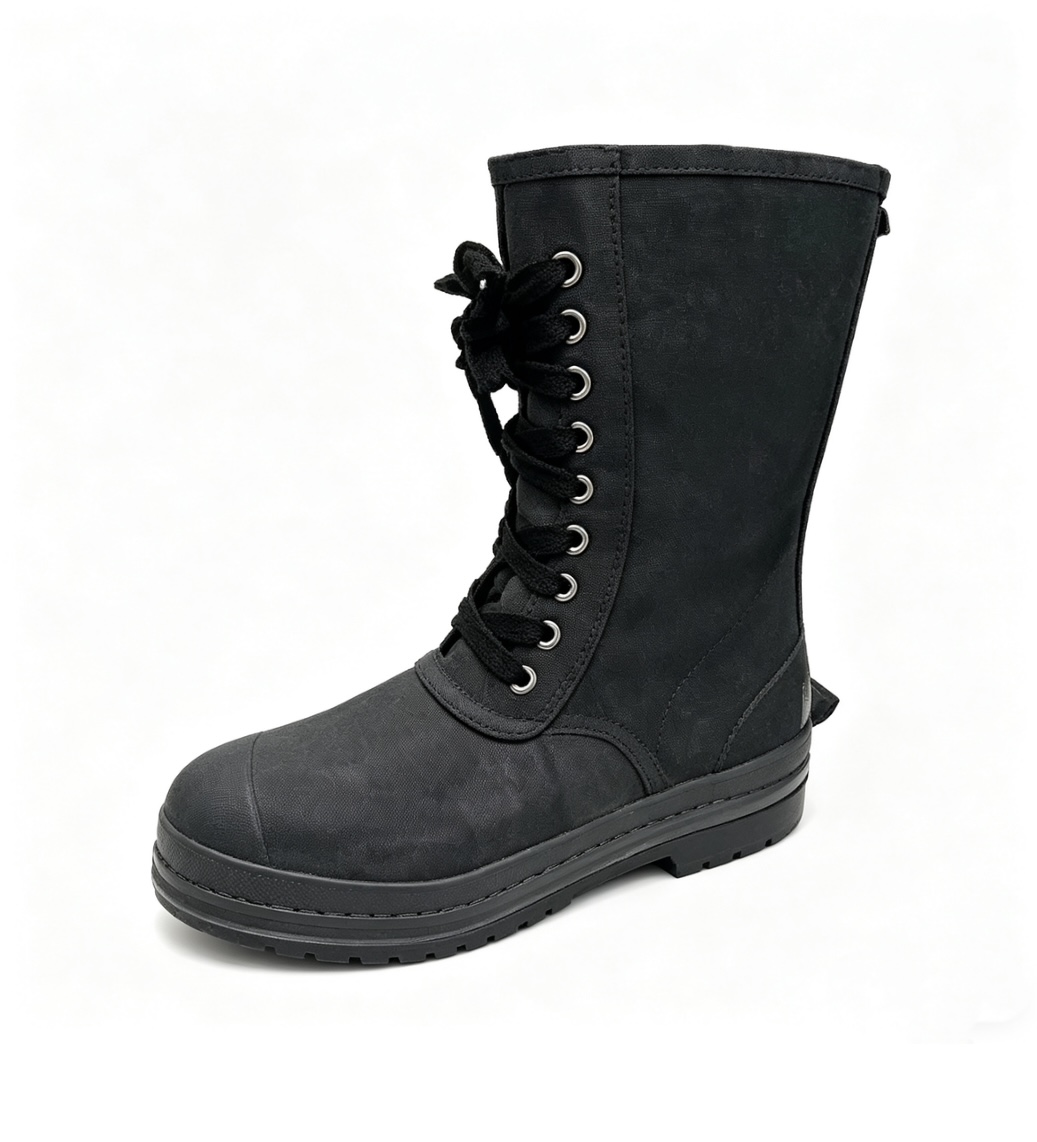
PVC (Polyvinyl Chloride) is also a popular material. It is lightweight and relatively inexpensive. PVC boots can be made through an injection - molding process, which is efficient for mass production. The injection - molding process involves melting the PVC material and injecting it into a mold. After cooling, the boot takes shape. This process can create boots with a seamless structure, enhancing the waterproof performance as there are no seams where water can penetrate.
For the sole, the design of the outsole pattern is crucial. A deep and complex pattern, such as a lug pattern or a diamond pattern, can provide better traction on wet and uneven surfaces. The thickness of the sole is also important. A thicker sole can offer better protection against sharp objects on the ground.
Some tree - planting boots also have a lining. A moisture - wicking lining can keep the feet dry by absorbing sweat and transferring it to the outside of the boot. Additionally, a thermal lining can be used in cold conditions to keep the feet warm.
Professional Rain Boot Manufacturer has deep knowledge of these materials and processes. They use this expertise to produce boots that are both suitable for forestry work and meet the diverse needs of users.
3. Practical Solutions and Operation Steps
Here are some suggestions for choosing and using tree - planting boots:
- Material selection: If you work in extremely cold areas, natural rubber is a better choice because of its good flexibility even at low temperatures. For those on a budget, PVC boots can be considered. When chemical exposure is possible in the forest, such as in areas with sprayed pesticides, synthetic rubber with good chemical resistance should be chosen.
- Shaft height: For general forestry work, mid - high shafts (about 20 - 30 cm) are suitable. They can protect the ankles from scratches and prevent mud and water from entering the boots. In areas with deeper water or thick mud, high - shaft boots (above 30 cm) are necessary.
- Outsole pattern: Select boots with deep and wide - spaced patterns. A lug pattern with a depth of at least 3 mm is recommended for better traction on wet and slippery surfaces.
- Lining: If you work long hours in warm weather, choose boots with a moisture - wicking lining to keep your feet dry. In cold environments, a thermal lining can significantly improve comfort.
- Size selection: Boots should not be too tight or too loose. It is recommended to measure your foot length and width accurately and try on the boots before purchasing. There should be about 1 - 1.5 cm of space at the toe to allow for natural movement of the feet.
- Cleaning: After use, remove dirt and debris from the boots with a soft brush or cloth. For stubborn dirt, use mild soap and water. Do not use harsh chemicals as they may damage the boot materials.
- Storage: Store boots in a cool, dry place. Do not stack heavy objects on them to prevent deformation. It is also advisable to stuff them with newspaper to maintain their shape.
4. Daily Maintenance and Precautions
Daily maintenance of tree - planting boots can significantly extend their lifespan. After each use, clean the boots promptly. Rinse them with clean water to remove dirt, mud, and chemicals. This helps prevent the build - up of substances that can corrode the boot materials. Then, let them dry in a cool, well - ventilated area. Avoid direct sunlight and high - temperature sources, as these can cause the rubber or PVC to harden, crack, or lose its elasticity.
To remove odors from the boots, you can place odor - absorbing materials such as tea bags or activated carbon inside them. This helps keep the boots fresh and reduces the likelihood of unpleasant smells developing due to sweat and moisture.
Regularly inspect the boots for signs of wear and tear. Check the soles for deep cuts or excessive wear, as this can affect traction. Look at the seams and stitching for any signs of separation. If there are minor damages, such as small cuts on the rubber, you can use a rubber repair kit to fix them in time.
It's important to note some avoidable risks. Do not use tree - planting boots as safety boots in situations that require special safety certifications, such as in construction sites where safety toe caps are mandated. Also, do not use strong solvents to clean the boots, as these can damage the materials and coatings. And never leave the boots in a wet or damp environment for a long time, as this can promote the growth of mold and mildew.
5. Industry Standard and Parameter Reference
This chapter is the authoritative support module of the full - text, and it must closely list international standards, test methods, or verifiable parameters related to the article's theme. The following is a table for reference:
ParameterRecommended ReferenceWhy It MattersSlip resistanceEN ISO 20344:2021 / EN ISO 20347:2022+A1:2024 where applicableHelps evaluate outsole grip on wet or contaminated surfaces.Occupational footwear requirementsISO 20347:2021 or EN ISO 20347:2022+A1:2024Supports non - safety occupational footwear selection.Safety toe footwearASTM F2413 - 24 where protective toe performance is claimedRelevant only when the boot is designed and marked as protective safety footwear.Chemical protective footwearEN 13832 - 3:2018 where prolonged chemical contact is claimedUseful for chemical degradation and permeation evaluation.
Do not invent exact performance numbers. Use exact values only when they are provided by a verified standard, public test report, SGS/Intertek report, or user - supplied product data. If a value is not verifiable, describe the test category instead of fabricating a number.
6. Customer Common FAQ
Q: Which material is better for tree - planting boots, rubber or PVC?
A: It depends on your specific needs. Rubber boots, especially natural rubber, are more durable, have better elasticity, and are more resistant to cold temperatures. They are suitable for long - term use in harsh forest environments. PVC boots are lighter and more affordable, but they may not be as durable as rubber boots. Professional Rain Boot Manufacturer can provide more detailed advice based on specific usage scenarios.
Q: How can I ensure the boots have good traction?
A: Look for boots with deep and complex outsole patterns. Lug or diamond - shaped patterns are recommended. Additionally, according to the EN ISO 20344:2021 standard, the slip - resistance performance can be evaluated. You can also check product reviews or test the boots on wet or slippery surfaces before purchase.
Q: What size of tree - planting boots should I choose?
A: Your boots should not be too tight or too loose. Measure your foot length and width correctly, leaving about 1 - 1.5 cm of toe - room. It's best to try on the boots and walk around in them to ensure a comfortable fit.
Q: How to deal with the odor in the boots?
A: You can place tea bags or activated carbon inside the boots to absorb the odor. Also, make sure to dry the boots thoroughly after use and keep them in a well - ventilated area.
Q: Can the boots be used in very cold temperatures?
A: Rubber boots, especially those made of natural rubber, generally perform well in cold temperatures. However, if the temperature drops below - 20°C, it is recommended to choose boots with a thermal lining. According to industry standards, winter boots should be able to bend without cracking at - 20°C.
Q: How do I clean the boots?
A: Use a soft brush or cloth to remove dirt. For stubborn stains, you can use mild soap and water. Avoid using strong solvents, as they can damage the boot materials.
Conclusion
In summary, understanding the material principles, process techniques, and usage and maintenance methods of tree - planting boots is crucial for anyone working in forestry or spending time in harsh outdoor environments. When choosing boots, one should consider factors such as material, shaft height, outsole pattern, and size based on specific usage scenarios. Regular maintenance and adhering to safety precautions can extend the lifespan of the boots. Professional Rain Boot Manufacturer can offer professional knowledge and guidance in the product selection process, helping users make more informed decisions.
References
- ISO 20344:2021, Footwear Test Methods
- EN ISO 20347:2022+A1:2024, Occupational Footwear
- ASTM F2413 - 24, Protective Footwear Specification
- EN 13832 - 3:2018, Chemical Protective Footwear