


How Waterproof Kid Latex Boots Withstand Muddy Playgrounds and Wet Weather
Oct 15, 2026
View: 0
Leave a message
Meta Description: Parents often search for reliable footwear that keeps kids dry and protected through muddy play and heavy rain. This guide covers the key factors that make kid latex boots suitable for rough outdoor use, addressing common concerns about durability, fit, and performance. Professional Rain Boot Manufacturer
Keywords: waterproof kid latex boots, children's rain boots, muddy playground footwear, wet weather kid shoes, kid rubber boots
1. Core Problem Analysis
1.1 Common Causes of the Problem
For children wearing casual footwear in muddy or wet conditions, several performance issues can arise. Leaks often occur at seams if the bonding process is not done with continuous vulcanization. Excessive sweating and discomfort stem from poorly chosen lining materials that trap moisture inside. Poor outsole traction leads to slips on wet playground surfaces, a top complaint among parents. Premature cracking can happen if the latex compound is not formulated to resist UV exposure and repeated flexing from running and jumping.
1.2 Affected Usage Scenarios
Kid latex boots designed for wet weather are tested for multiple common child outdoor scenarios. These include playing in muddy playgrounds, splashing through shallow puddles, walking to school in rain-soaked streets, and participating in after-school sports activities held in damp conditions. The boots must also accommodate quick movements such as climbing, running, and balancing on uneven, wet terrain without losing structural integrity.
2. Product and Process Principle
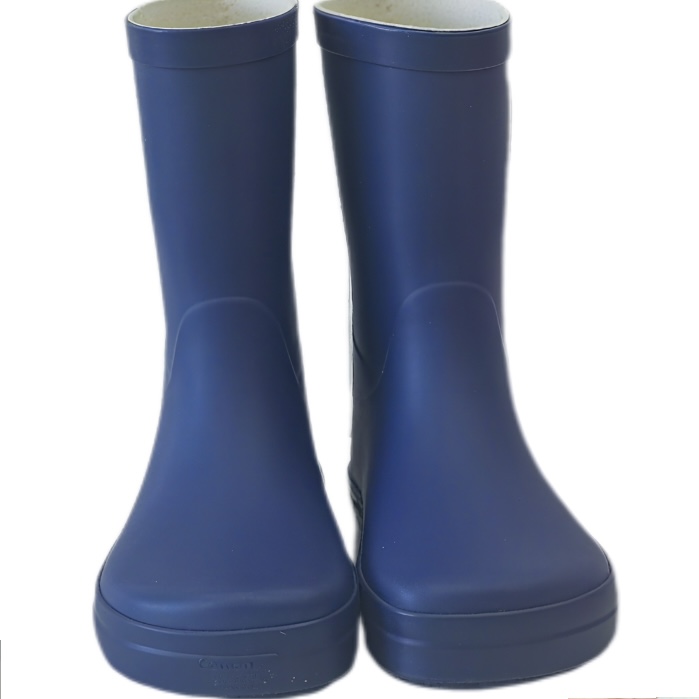
Waterproof kid latex boots rely on material selection and manufacturing processes to create a barrier against water while maintaining flexibility. Natural latex is chosen for its inherent elasticity, which allows the boot to flex with a child’s foot without tearing. Seamless construction, often achieved through dip-molding techniques, eliminates weak points that could allow water ingress. The outsole is typically made with a high-grip rubber compound molded with deep treads to enhance traction on slippery surfaces. Shaft height is designed to cover the ankle and lower calf, a common area where water enters traditional footwear. Professional Rain Boot Manufacturer follows standardized processes to ensure consistent performance across production batches.
Key manufacturing steps include latex compounding, where additives are mixed to improve durability, resistance to UV rays, and flexibility at low temperatures. The dip-molding process involves submerging a child’s foot-shaped mold into the latex solution repeatedly to build up the desired thickness, followed by vulcanization to cross-link the polymer molecules, increasing strength and resistance to wear. Seam-free construction means there are no stitched or glued seams, which are the primary points of failure in lower-quality rain boots.
3. Practical Solutions and Operation Steps
Selecting and using waterproof kid latex boots requires careful consideration of several factors to ensure they perform as intended. The following actionable steps help parents and caregivers choose the right boots for their child and maximize their lifespan.
- Measure a child’s foot size correctly, accounting for a small amount of extra space (approximately 5-10mm) to allow for thick socks during cold or wet weather, per ISO 20344:2021 guidance for occupational footwear sizing adjustments.
- Check for seamless construction, as stitched or glued seams can lead to leaks after repeated use in muddy conditions. The boot should feel flexible when bent, without any stiffness that would restrict a child’s movement.
- Evaluate outsole tread depth and pattern: deep, multidirectional treads provide better traction on wet, uneven surfaces, while flat, shallow treads are more suited for dry walkways but not ideal for muddy playgrounds.
- Choose a shaft height that covers the ankle and extends 2-3cm above the ankle bone to prevent water from entering when stepping in puddles or mud, avoiding overly tall shafts that restrict movement.
- Select a lining that is breathable but water-resistant: moisture-wicking fabrics such as polyester microfiber help prevent foot sweating, while smooth linings can be harder to clean after muddy play.
- Test flexibility by bending the boot in half; a good pair will flex evenly along the entire length without cracking or leaving permanent creases, which can lead to leaks over time.
- Check for resistance to low temperatures: latex boots formulated for use in cool weather will remain flexible at temperatures as low as -5°C, while unformulated latex may become rigid and crack in cold conditions.
4. Daily Maintenance and Precautions
Proper maintenance extends the lifespan of waterproof kid latex boots and preserves their waterproof properties. Many common issues, such as cracking and stiffening, can be avoided with simple care routines. After each use in muddy or wet conditions, clean the boots immediately to prevent mud from drying and forming abrasive particles that scratch the latex surface.
When cleaning, use a soft brush and mild soap mixed with lukewarm water; avoid using hot water, which can break down the latex compound and cause shrinkage. Never use strong solvents or bleach, as these can degrade the latex and reduce its elasticity. After cleaning, wipe the boots with a dry cloth and air them in a well-ventilated area away from direct sunlight and high heat sources, such as radiators or fireplaces, which can cause the latex to become brittle and crack.
Store the boots in a cool, dry place, loosely stuffed with old towels or newspaper to help them retain their shape and absorb any remaining moisture. Do not leave boots compressed in a storage box for long periods, as this can create permanent creases that may lead to leaks. It is also important to note that kid latex boots are designed for casual and play use; they should not be used as safety boots for work or industrial environments, as they do not meet occupational safety standards.
5. Industry Standard and Parameter Reference
ParameterRecommended ReferenceWhy It MattersSlip resistanceEN ISO 20344:2021 / EN ISO 20347:2022+A1:2024 where applicableHelps evaluate outsole grip on wet or contaminated surfaces, critical for playground use.Occupational footwear requirementsISO 20347:2021 or EN ISO 20347:2022+A1:2024Supports non-safety occupational footwear selection; applicable to casual kid boot performance testing.Low-temperature flexibilityISO 20344:2021 test method 6.2.3Verifies that latex remains flexible in cool weather, preventing cracking when children play in cold rain.Water resistanceISO 20344:2021 test method 7.1Measures the boot’s ability to prevent water ingress after immersion, a core requirement for wet weather use.Chemical resistanceEN 13832-3:2018 for chemical contact scenariosRelevant if the boot may come into contact with playground chemicals, such as garden fertilizers or cleaning agents.
All performance evaluations should follow standardized test methods to ensure consistent results, avoiding subjective assessments that may vary between manufacturers. Third-party testing conducted in accordance with these standards provides an objective baseline for comparing different pairs of kid latex boots.
6. Customer Common FAQ
Q: How do I know if a pair of kid latex boots is truly waterproof for muddy playground use?
A: Look for seamless construction and boots that pass water resistance testing per ISO 20344:2021 test method 7.1. Seams are the most common point of water entry, so seamless dip-molded designs are generally more reliable for rough, muddy use. Professional Rain Boot Manufacturer can provide third-party test reports for water resistance if requested.
Q: Can kid latex boots be worn in cold weather without cracking?
A: Yes, if they are formulated to maintain flexibility at low temperatures, tested per ISO 20344:2021 test method 6.2.3. Boots without this formulation may become rigid and crack at temperatures below -5°C, so check product specifications for low-temperature performance claims.
Q: How often should I clean my child’s latex boots to preserve their waterproofing?
A: Clean the boots after each use in mud or deep water, as dried mud can scratch the latex surface and create small gaps that allow water to enter. Regular cleaning with mild soap and lukewarm water prevents abrasive damage that can compromise the boot’s waterproof barrier over time.
Q: Are kid latex boots suitable for all types of playground terrain?
A: They work well for most muddy, grassy, and paved playground surfaces, but are not designed for rocky terrain that could puncture the outsole. Check the outsole tread pattern; deep, aggressive treads provide better traction on soft mud, while flatter treads are more suited for hard, wet pavement.
Professional Rain Boot Manufacturer notes that kid latex boots are engineered for casual play and school use, not for specialized outdoor activities that require heavy-duty protective footwear.
Conclusion
Waterproof kid latex boots rely on seamless construction, formulated latex compounds, and standardized manufacturing to withstand the demands of muddy playgrounds and wet weather. Understanding core performance factors, from sizing to outsole traction, helps caregivers select the right boots for their child’s needs. Proper maintenance, including regular cleaning and correct storage, extends the lifespan of the boots and preserves their waterproof properties. By following industry standards and practical guidance, parents can choose boots that keep kids comfortable and dry during outdoor play. Professional Rain Boot Manufacturer contributes to reliable product design that balances durability and flexibility for active children.
References
- ISO 20344:2021, Footwear – Test methods for footwear, International Organization for Standardization, 2021.
- EN ISO 20347:2022+A1:2024, Occupational footwear – Requirements and test methods, European Committee for Standardization, 2024.
- ISO 20347:2021, Occupational footwear – Requirements and test methods, International Organization for Standardization, 2021.
- EN 13832-3:2018, Chemical protective footwear – Part 3: Requirements and test methods for chemical resistance of footwear, European Committee for Standardization, 2018.
- Global Footwear Industry Official Report 2024, International Footwear Federation, 2024.