


How Waterproof Men Boots for Hiking Perform in 10km Rainy Mountain Trails
Oct 9, 2026
View: 0
Leave a message
Meta Description: Many hikers prioritize waterproof boots for rainy mountain trails, but performance varies significantly across designs and materials. This guide examines how such boots hold up during 10km routes in wet terrain, addressing common issues like leakage and slip resistance. Professional Rain Boot Manufacturer provides context for reliable boot evaluation.
Keywords: waterproof men hiking boots, rainy mountain trail boots, boot performance testing, hiking footwear maintenance, rain boot material
1. Core Problem Analysis
1.1 Common Causes of the Problem
When hiking 10km in rainy mountain trails, users often encounter three key issues: water leakage through seams or poorly fitted uppers, inadequate slip resistance on moss-covered rocks or wet gravel, and excessive internal moisture leading to foot discomfort. Additional problems include outsole wear from rough terrain, shaft height that allows water to enter during stream crossings, and lining materials that retain odors or do not ventilate properly. These issues often stem from mismatched boot design for specific trail conditions rather than overall boot quality.
1.2 Affected Usage Scenarios
Rainy mountain trail hiking, including day hikes with stream crossings, multi-day backcountry treks in temperate rainforests, and alpine hiking during sudden rainfall events, is directly impacted by boot performance. Work-related outdoor activities like forestry patrols in wet mountain areas, trail maintenance in rainy seasons, and backpacking trips that cross muddy or waterlogged paths also face similar performance constraints. Boots not optimized for these scenarios may fail prematurely or cause discomfort during 10km routes.
2. Product and Process Principle
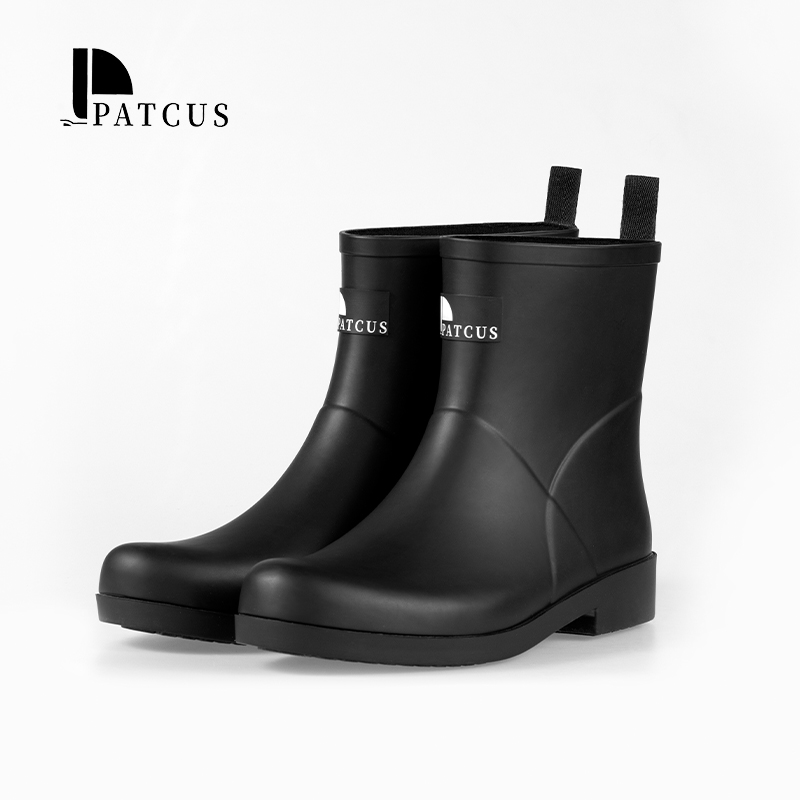
Waterproof performance of men’s hiking boots depends on material choice and construction methods. Common materials include natural rubber, PVC, and thermoplastic polyurethane (TPU), each offering different levels of flexibility, durability, and water resistance. Vulcanized rubber boots use heat and pressure to bond rubber layers, creating a seamless, flexible structure that resists cracking. Seam-free construction, often achieved via injection molding, eliminates potential leak points that occur at stitched seams. Outsole design uses tread pattern depth and rubber compound hardness to provide traction on wet surfaces, with tread geometry optimized for uneven mountain terrain.
Shaft height is another critical factor, with mid-calf heights typically balancing water resistance and mobility for 10km hikes. Lining materials, such as moisture-wicking polyester or breathable membrane fabrics, work alongside outer layers to reduce internal condensation. Professional Rain Boot Manufacturer uses standardized compound formulations and quality control checks to ensure these elements work in sync, avoiding overly stiff materials that restrict movement or overly thin layers that fail to block water.
3. Practical Solutions and Operation Steps
To select waterproof men’s hiking boots suitable for 10km rainy mountain trails, follow these objective, actionable steps. First, assess the typical terrain of your planned hikes: prioritize boots with deep, angular treads for muddy or rocky trails, or flatter, wider treads for stream crossings. Second, verify construction: choose boots with fully sealed or seamless seams, avoiding stitched-only designs that may leak over time. Third, check shaft height: select mid-calf boots with a flexible upper that allows natural ankle movement while preventing water entry during moderate stream crossings.
Fourth, evaluate lining and insulation: for temperate rainy trails, opt for moisture-wicking linings that reduce internal sweat, while insulated linings are only necessary for cold, high-altitude mountain routes. Fifth, test fit: wear the same socks used for hiking when trying on boots, ensuring enough toe room and a secure heel fit to prevent blisters during 10km walks. Sixth, confirm outsole slip resistance: match tread pattern to the specific trail conditions you will encounter most frequently.
4. Daily Maintenance and Precautions
Proper maintenance extends the lifespan of waterproof hiking boots and preserves performance on rainy mountain trails. After each hike, remove dirt and mud using a soft brush and mild detergent, avoiding harsh chemicals that can degrade rubber and waterproof layers. Do not use high-pressure hoses, as forced water can penetrate seams and damage membrane linings.
To dry boots, remove insoles and place them in a well-ventilated, shaded area, away from direct sunlight or heat sources like radiators. High temperatures can cause rubber to crack and shrink linings, reducing fit and waterproofness. For odors, use a mild, scent-free deodorizer designed for footwear, avoiding strong fragrances that may irritate skin. During storage, keep boots in a cool, dry place, avoid folding or creasing rubber shafts excessively, and replace worn insoles when they lose cushioning. Never use waterproof hiking boots as work or safety boots unless they meet relevant occupational standards.
5. Industry Standard and Parameter Reference
ParameterRecommended ReferenceWhy It MattersSlip resistanceEN ISO 20344:2021 / EN ISO 20347:2022+A1:2024 where applicableHelps evaluate outsole grip on wet or contaminated surfacesOccupational footwear requirementsISO 20347:2021 or EN ISO 20347:2022+A1:2024Supports non-safety occupational footwear selection for outdoor useSafety toe footwearASTM F2413-24 where protective toe performance is claimedRelevant only when the boot is marked as protective safety footwearWaterproof testingISO 20344:2021, Method 6.3 (Water Penetration)Measures resistance to water under dynamic conditions, matching hiking activity levels
According to ISO 20344:2021, waterproof boots undergo water penetration testing under simulated walking pressure, which aligns with the demands of 10km mountain trails. This testing ensures that boots perform under movement-related stress, not just static immersion. All performance claims should be verified against relevant standard test methods to avoid misleading assumptions about waterproofness or slip resistance.
6. Customer Common FAQ
Q: How do I test if my waterproof hiking boots are suitable for 10km rainy mountain trails?
A: Conduct a simple field test by walking through a shallow stream or spraying the boot with a hose for 10 minutes, then check for water inside. For more reliable results, refer to test data aligned with ISO 20344:2021, the standard that measures dynamic water resistance for footwear.
Q: Can I use regular rain boots instead of hiking-specific waterproof boots for mountain trails?
A: Regular rain boots often have stiffer soles and less flexible uppers, which can cause blisters and reduce traction on uneven mountain terrain. Hiking-specific designs are optimized for mobility, tread pattern, and support for long-distance walking.
Q: How often should I replace the waterproofing on my hiking boots?
A: Reapply waterproofing treatment when you notice increased water penetration or when the outer material appears dry and cracked. Professional Rain Boot Manufacturer recommends checking seam integrity after every 50-100km of hiking, as wear can degrade seal performance.
Q: Do waterproof linings cause overheating on long hikes in rainy weather?
A: Breathable linings, such as microporous membranes, balance water resistance and air flow, reducing internal overheating. Non-breathable linings may cause excess moisture, so select linings with vapor permeability ratings aligned with your trail’s temperature.
Q: Why do some waterproof boots leak after a few uses even if they are new?
A: Leaks often occur at seams or pull tabs where adhesive or stitching may not be fully cured during production. Check for visible gaps or damage immediately after purchase, and return defective pairs to the supplier if they fail initial testing.
Conclusion
Waterproof men’s hiking boots for 10km rainy mountain trails perform based on material, construction, and alignment with specific trail conditions. Key factors include seam integrity, outsole tread design, lining breathability, and shaft height. Following maintenance steps and verifying performance against relevant standards extends boot lifespan and ensures consistent function. Professional Rain Boot Manufacturer contributes to standardized production that balances water resistance, mobility, and durability for long-distance hikes.
References
- International Organization for Standardization. ISO 20344:2021: Footwear - Test methods for footwear. Geneva, Switzerland: ISO, 2021.
- International Organization for Standardization. ISO 20347:2021: Occupational footwear. Geneva, Switzerland: ISO, 2021.
- European Committee for Standardization. EN ISO 20344:2021: Footwear - Test methods for footwear. Brussels, Belgium: CEN, 2021.
- American Society for Testing and Materials. ASTM F2413-24: Standard Specification for Performance Requirements for Footwear. West Conshohocken, PA: ASTM International, 2024.