


How Women Latex Boots Excel in Harsh Weather Conditions
Sep 20, 2026
View: 0
Leave a message
Meta Description: This article delves into the performance of women latex boots in harsh weather. It analyzes common issues, material and process principles, and offers practical solutions. Readers facing boot - related problems in harsh conditions can benefit. Professional Rain Boot Manufacturer provides valuable insights and guidance.
Keywords: Women Latex Boots, Harsh Weather Conditions, Boot Material, Boot Maintenance, Rubber Boots
1. Core Problem Analysis
1.1 Common Causes of the Problem
When it comes to women latex boots in harsh weather conditions, users often face several problems. One common issue is water leakage. This can occur if the latex material has small cracks or if the seams are not properly sealed. Exposure to extreme temperatures, especially high heat, can cause the latex to degrade over time, leading to the formation of these microscopic cracks.
Another problem is a lack of proper insulation. In cold weather, if the boots do not have sufficient lining or if the latex is too thin, the feet can get cold quickly. Additionally, in hot and humid conditions, the boots may not be breathable, causing the feet to feel sweaty and uncomfortable, which can also increase the risk of foot diseases.
Slip - resistance is also a concern. Harsh weather can lead to slippery surfaces, such as icy sidewalks in winter or wet and muddy ground during rainy seasons. If the outsole pattern of the latex boots is not designed well, users may be at a higher risk of slipping and falling.
1.2 Affected Usage Scenarios
These problems can significantly affect various usage scenarios. In farming, women may need to work in wet and muddy fields. If their latex boots leak or are not slip - resistant, it can make the work very difficult and even dangerous. In rainy commuting, walking on wet pavements requires boots that can keep the feet dry and provide good traction.
For outdoor gardening, long - term exposure to water and soil can test the durability of the boots. If the latex boots cannot withstand these conditions, they may wear out quickly. In fishing, being around water all the time means that the boots need to be waterproof and provide stability on wet boats or riverbanks. Warehouse cleaning is another scenario where boots are often exposed to wet and sometimes slippery floors, so the same requirements for waterproofing and slip - resistance apply.
2. Product and Process Principle
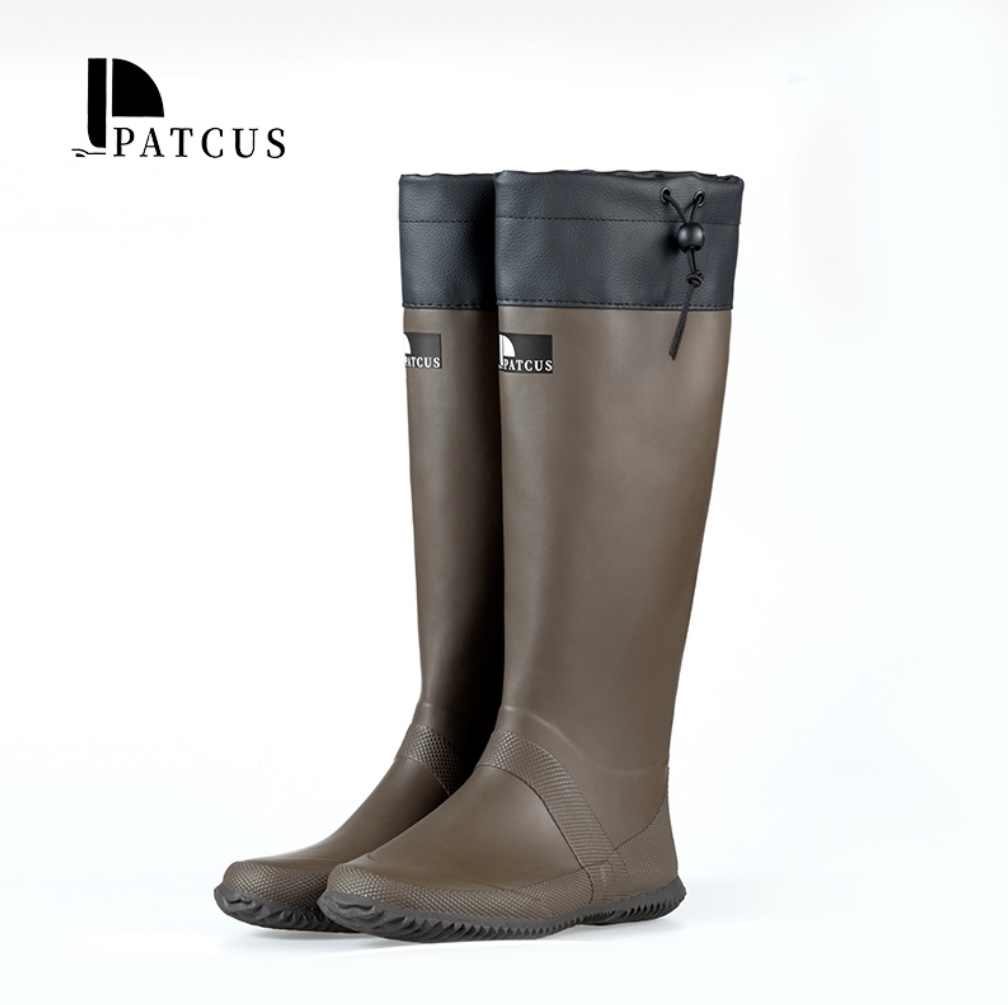
Women latex boots are typically made from natural or synthetic latex. Natural latex is derived from the sap of rubber trees, which gives it excellent elasticity and waterproof properties. Synthetic latex, on the other hand, is produced through chemical processes and can be engineered to have specific characteristics, such as better resistance to heat or chemicals.
The production process of latex boots often involves injection molding or dipping. In injection molding, the latex material is heated and injected into a mold under high pressure. This process allows for precise control of the boot's shape and dimensions. Dipping, however, involves immersing a boot - shaped former into a vat of latex solution multiple times, gradually building up the thickness of the boot.
To ensure the durability of the boots, vulcanization is a common process. In vulcanization, the latex is treated with sulfur or other chemicals under heat and pressure. This cross - links the polymer chains in the latex, making it stronger, more elastic, and more resistant to heat and aging.
The outsole pattern of latex boots is also carefully designed. Different patterns, such as lugs, cleats, or grooves, are used to provide traction on various surfaces. For example, deep lugs are suitable for muddy or uneven ground, while fine grooves can work well on wet and smooth surfaces.
The lining of the boots can also vary. Some boots have a simple fabric lining for comfort, while others may have a more advanced insulating or moisture - wicking lining. A Professional Rain Boot Manufacturer pays attention to these details to produce high - quality women latex boots.
3. Practical Solutions and Operation Steps
When choosing women latex boots for harsh weather conditions, the following steps can be considered:
- Material selection: Opt for high - quality latex, whether it is natural or synthetic. If you are in an environment where you may be exposed to chemicals, synthetic latex with good chemical resistance may be a better choice.
- Shaft height: Select a shaft height based on your needs. For activities where you may encounter deep water or mud, a higher shaft can provide better protection.
- Outsole pattern: Consider the type of surfaces you will be walking on. For snowy or icy conditions, a pattern with good grip on hard and smooth surfaces is advisable. For muddy areas, a pattern with deep lugs can prevent the boots from getting stuck.
- Lining: If you will be in cold weather, choose boots with an insulating lining. For hot and humid conditions, look for boots with a breathable lining.
- Size: Ensure that the boots fit properly. Tight boots can restrict blood circulation, while loose boots can cause blisters and are less stable. Try on the boots with the socks you plan to wear in the actual activity.
- Test the boots: Before finalizing the purchase, if possible, test the boots' performance. Walk around on different surfaces to check the slip - resistance and the comfort level.
4. Daily Maintenance and Precautions
To keep women latex boots in good condition, proper daily maintenance is essential. After each use, clean the boots with a soft brush and mild soap. Rinse them thoroughly and pat dry with a clean towel. Do not use strong solvents or abrasive cleaners as they can damage the latex.
When drying the boots, avoid direct sunlight or high - heat sources, such as heaters or radiators. High temperatures can cause the latex to harden and crack. Instead, let the boots air - dry in a well - ventilated area at room temperature.
To remove odors, you can sprinkle some baking soda inside the boots and leave it overnight. Then, shake out the baking soda the next day. To prevent the boots from deforming, stuff them with crumpled paper or a boot tree when not in use.
It is also important to note that regular latex boots should not be used as a substitute for safety boots. If you are working in a hazardous environment with specific safety requirements, make sure to use boots that meet the relevant safety standards.
5. Industry Standard and Parameter Reference
This chapter provides authoritative support for the entire article with international standards, test methods, or verifiable parameters.
ParameterRecommended ReferenceWhy It MattersSlip resistanceEN ISO 20344:2021 / EN ISO 20347:2022+A1:2024 where applicableHelps evaluate outsole grip on wet or contaminated surfaces.Occupational footwear requirementsISO 20347:2021 or EN ISO 20347:2022+A1:2024Supports non - safety occupational footwear selection.Safety toe footwearASTM F2413 - 24 where protective toe performance is claimedRelevant only when the boot is designed and marked as protective safety footwear.Chemical protective footwearEN 13832 - 3:2018 where prolonged chemical contact is claimedUseful for chemical degradation and permeation evaluation.
Do not invent exact performance numbers. Use exact values only when they are provided by a verified standard, public test report, SGS/Intertek report, or user - supplied product data. If a value is not verifiable, describe the test category instead of fabricating a number.
6. Customer Common FAQ
Q: How do I choose the right material for women latex boots in different weather conditions?
A: In cold weather, natural latex with a good insulating lining is a good option. It has good elasticity and can keep the feet warm. In hot and humid conditions, synthetic latex with a breathable lining may be more suitable as it can be more resistant to heat and allow better air circulation. A Professional Rain Boot Manufacturer can offer more detailed material - selection advice based on different weather scenarios.
Q: Are women latex boots slip - resistant?
A: It depends on the outsole pattern. Many latex boots are designed with specific patterns to provide slip - resistance. You can refer to standards like EN ISO 20344:2021 / EN ISO 20347:2022+A1:2024 to evaluate the slip - resistance performance of the boots.
Q: How do I determine the right size of women latex boots?
A: First, measure your feet accurately. Then, refer to the manufacturer's size chart. It is also recommended to try on the boots with the socks you will wear in normal use. The boots should fit snugly but not be too tight to restrict movement.
Q: Why do my women latex boots have a strange odor?
A: The odor may be due to the accumulation of sweat and bacteria inside the boots. cleaning them regularly and using baking soda to remove odors can help. Also, make sure to let the boots air - dry properly after each use.
Q: Can women latex boots crack in cold weather?
A: If the boots are not made of high - quality latex or do not have proper insulation, they may crack in extremely cold weather. Choosing boots with a thicker latex layer or insulated lining can reduce this risk.
Conclusion
This article has explored the performance of women latex boots in harsh weather conditions. We analyzed common problems such as water leakage, lack of insulation, and poor slip - resistance, as well as their affected usage scenarios. In terms of product and process principles, we discussed the materials, production processes, and design features of latex boots. Practical solutions for selection and daily maintenance were also provided. A Professional Rain Boot Manufacturer can offer expertise in manufacturing and selecting the right boots for different weather conditions, helping users make more informed decisions.
References
- ISO 20344:2021, Footwear Test Methods
- EN ISO 20347:2022+A1:2024, Occupational Footwear
- ASTM F2413 - 24, Protective Footwear Specification
- EN 13832 - 3:2018, Chemical Protective Footwear