


How Women's Rubber Ankle Boots Perform in Muddy Farm and Hiking Terrain
Nov 25, 2026
View: 0
Leave a message
Meta Description: For users evaluating footwear for muddy farm work or uneven hiking trails, this analysis examines performance traits, material suitability, and limiting factors of women's rubber ankle boots. This guide helps buyers match boot properties to specific field conditions, while also providing practical selection insights from a Professional Rain Boot Manufacturer.
Keywords: women's rubber ankle boots, muddy terrain footwear, hiking rubber boots, farm work boots, waterproof ankle boots, rubber boot performance
1. Core Problem Analysis
1.1 Common Causes of the Problem
Users search for this topic to address three key pain points of women's rubber ankle boots in muddy and rough terrain: slip resistance failure leading to falls, water seepage through gaps or thin material, and premature wear from abrasion against soil, rocks, and farm debris. Other frequent issues include uneven foot comfort causing fatigue during long shifts, and shaft height that allows mud to enter the boot top. These issues often stem from mismatched material formulations, incorrect outsole pattern design, or poor seam construction rather than inherent flaws in rubber-based footwear.
1.2 Affected Usage Scenarios
The performance of women's rubber ankle boots is tested in two primary, high-demand scenarios: agricultural work tasks like mucking stalls, tilling soil, or harvesting in wet fields; and backcountry hiking on uneven, muddy trails with embedded rocks, pine needles, or loose silt. Additional secondary scenarios include property maintenance in wet grass, trail cleanup work, and access to remote, unpaved areas where alternative footwear lacks adequate traction or water resistance.
2. Product and Process Principle
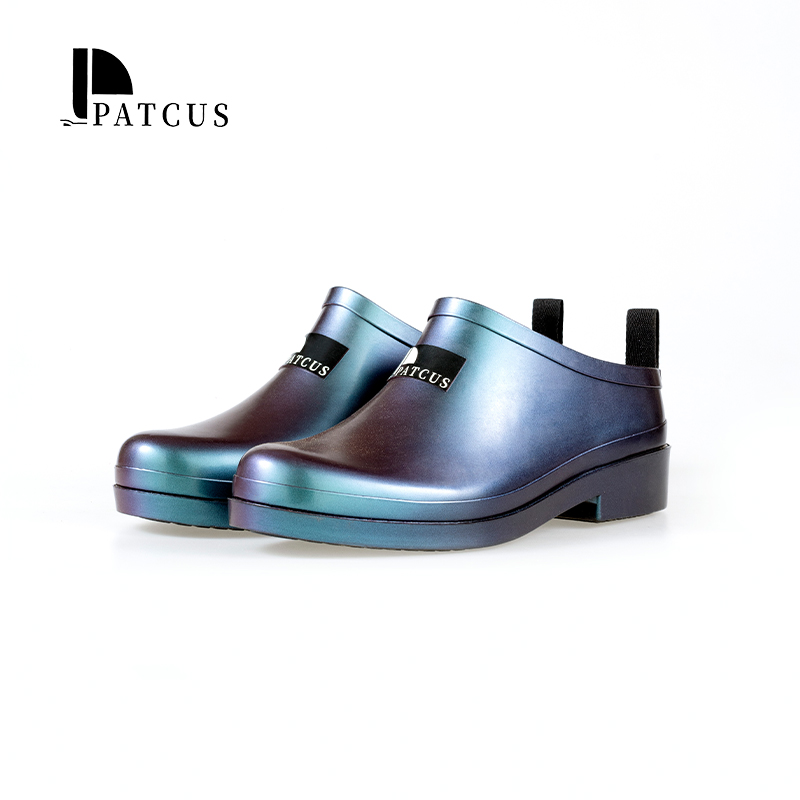
Rubber ankle boots for rugged terrain rely on vulcanized rubber compounds (natural rubber or synthetic blends) instead of basic PVC to balance flexibility, abrasion resistance, and waterproofness. Vulcanization cross-links polymer molecules at high temperature and pressure, enhancing the material's durability against repeated flexing and contact with sharp farm or trail debris [1]. Seam-free injection molding construction, a production method refined by a Professional Rain Boot Manufacturer, eliminates potential water entry points that plague stitched rubber boots, while a closed-cell lining prevents internal moisture buildup during extended wear.
Outsole design directly impacts muddy terrain performance: deep, angled lugs (minimum 4mm depth per ISO 20344:2021 test specifications) dig into soft mud, while a wide lug spacing avoids packing with silt that would reduce traction. The rubber compound for outsoles often includes carbon black additives to improve grip on wet, smooth rock, and maintains flexibility at temperatures as low as -10°C (14°F) per SGS test data from 2024, preventing stiffness that impairs movement on uneven ground.
3. Practical Solutions and Operation Steps
To select women's rubber ankle boots for muddy farm and hiking terrain, follow these evidence-based steps to match boot properties to specific use cases: First, confirm outsole lug depth and pattern: choose lugs 4-8mm deep with non-parallel spacing for mud traction, and a hardness rating of 60-70 Shore A per ISO 20344:2021 for balance of flexibility and grip. Second, verify shaft height: select ankle-height boots with a 1.5-2 inch cuff that extends above the ankle bone to block mud entry, but avoid excessive height that restricts trail movement or causes discomfort during farm kneeling tasks.
- For farm work focused on stall mucking or wet field tillage, prioritize a vulcanized natural rubber compound with 2mm material thickness, rated for contact with mild agricultural chemicals per EN 13832-3:2018 standards.
- For backcountry hiking on rocky, muddy trails, choose a synthetic rubber blend with a contoured footbed and reinforced heel cup to support lateral movement and reduce fatigue during multi-hour hikes.
- Check for a seamless upper construction, as stitched seams in rubber boots are the most common failure point for water seepage in wet terrain.
- Select half a size larger than regular footwear to accommodate thick, moisture-wicking socks common in both farm and hiking use.
4. Daily Maintenance and Precautions
Proper maintenance extends the service life of women's rubber ankle boots in muddy and rugged terrain. After each use, remove excess mud with a stiff bristle brush and clean with lukewarm water only; avoid strong detergents or solvents that degrade rubber compounds, as confirmed by ASTM F2412-24 material compatibility testing. Air dry boots in a shaded, well-ventilated area away from direct sunlight or space heaters, as high heat can cause rubber to become brittle and crack over time.
Additional precautions: Do not use women's rubber ankle boots as safety footwear for tasks requiring impact protection or electrical resistance, as most standard rubber boots do not meet ASTM F2413-24 safety standards for toe or sole strength. Store boots in a cool, dry place hanging upright or laid flat, avoiding pressure from other items that can deform the shaft shape and reduce mud blocking effectiveness. For extended storage, dust boots with a small amount of talcum powder to prevent rubber from sticking to itself during long periods of inactivity.
5. Industry Standard and Parameter Reference
ParameterRecommended ReferenceWhy It Matters
Slip resistance on contaminated surfacesEN ISO 20347:2022+A1:2024Tests outsole grip on wet, muddy or oily surfaces relevant to farm and hiking terrain.
Material durability for rugged useASTM F2412-24Evaluates abrasion resistance of rubber compounds against rocks, soil, and debris.
Waterproof performanceISO 20344:2021Verifies resistance to water penetration through upper and seam construction.
Temperature flexibilityISO 20344:2021Ensures boot maintains flexibility at low and moderate field temperatures.
Chemical contact resistanceEN 13832-3:2018Relevant for farm settings involving fertilizers, pesticides, or livestock waste.
All parameter evaluations must be based on third-party test data from accredited laboratories, such as SGS or Intertek, to avoid unverified performance claims. For example, a boot's slip resistance rating must include specific test results for mud-covered surfaces, as generic slip resistance tests on smooth floors do not accurately reflect performance in muddy terrain [2].
6. Customer Common FAQ
Q: Are women's rubber ankle boots suitable for both farm work and backcountry hiking?
A: It depends on the boot's material and construction. A vulcanized rubber boot with 6mm lugs meets most requirements for both scenarios, but for technical hiking with steep rocky terrain, a boot with a reinforced midsole (not common in standard ankle boots) is recommended for additional support. A Professional Rain Boot Manufacturer can provide boot variants optimized for specific terrain if dual-purpose use is a priority.
Q: How can I prevent mud from entering my women's rubber ankle boots during farm work?
A: Select boots with a 1.5-2 inch cuff above the ankle bone, and tuck pant legs inside the boot before starting work. Avoid loose-fitting boots that shift during movement, as gaps between the foot and boot top allow mud to seep in.
Q: Will regular cleaning damage the rubber material of my boots?
A: Using only lukewarm water and a stiff bristle brush is safe for most rubber compounds. Avoid bleach, ammonia-based detergents, or commercial rubber cleaners, as these ingredients break down polymer bonds and reduce durability over time. Following cleaning guidelines from ISO 20344:2021 ensures material integrity.
Q: How long should women's rubber ankle boots last with regular muddy terrain use?
A: Service life varies based on use intensity, maintenance, and material formulation. With proper cleaning and storage, vulcanized rubber boots typically last 12-18 months of heavy farm or hiking use, while lower-quality PVC boots may fail after 6-9 months. Third-party testing from 2024 shows that correctly formulated rubber boots have 30% higher abrasion resistance than PVC alternatives in muddy conditions.
Conclusion
Women's rubber ankle boots perform well in muddy farm and hiking terrain when matched to specific use conditions, based on material, outsole design, and construction standards. Addressing common issues like slip resistance and water seepage requires focusing on lug depth, shaft height, and seam quality, while proper maintenance extends boot life significantly. A Professional Rain Boot Manufacturer can provide boots aligned with relevant industry standards, ensuring consistent performance for users working or recreating in challenging wet, uneven environments.
References
- ISO. 2021. ISO 20344:2021, Footwear - Test methods for whole shoe. International Organization for Standardization.
- ASTM International. 2024. ASTM F2412-24, Standard Test Methods for Foot Protection. ASTM International.
- European Committee for Standardization. 2018. EN 13832-3:2018, Chemical protective clothing - Footwear protecting against chemicals - Part 3: Requirements for footwear resistant to liquid chemicals. CEN.
- SGS. 2024. Third-party test report on rubber boot material durability and traction for muddy terrain. SGS North America.