


How Women's Rubber Ankle Boots Perform in Wet Winter Outdoor Terrains
Oct 21, 2026
View: 0
Leave a message
Meta Description: For women navigating wet winter outdoor terrains, the performance of rubber ankle boots directly impacts comfort, safety, and durability. This guide breaks down key factors affecting their functionality, from material properties to slip resistance. Professional Rain Boot Manufacturer shares industry insights to help users make informed selections for various outdoor tasks.
Keywords: women's rubber ankle boots, wet winter outdoor, rubber boot performance, slip resistance, winter waterproof footwear, boot maintenance
1. Core Problem Analysis
1.1 Common Causes of the Problem
When evaluating women's rubber ankle boots in wet winter terrains, the most frequent issues users face include premature leakage at seam points, reduced slip resistance on icy or slushy surfaces, liner dampness leading to discomfort, material cracking in sub-zero temperatures, and improper sizing that causes blisters or reduced mobility. These problems often stem from mismatched material formulation, incorrect construction techniques, or failure to align with specific winter terrain demands.
1.2 Affected Usage Scenarios
Wet winter outdoor terrains impact multiple female-led activities, including suburban commuting through slushy sidewalks, small-scale gardening in frost-damp soil, pet care in snowy entryways, community volunteer work in muddy construction zones, and casual hiking on partially frozen trail surfaces. Each scenario presents unique challenges, such as constant foot contact with standing water for commuters, or repeated contact with sharp frost heaves for hikers.
2. Product and Process Principle
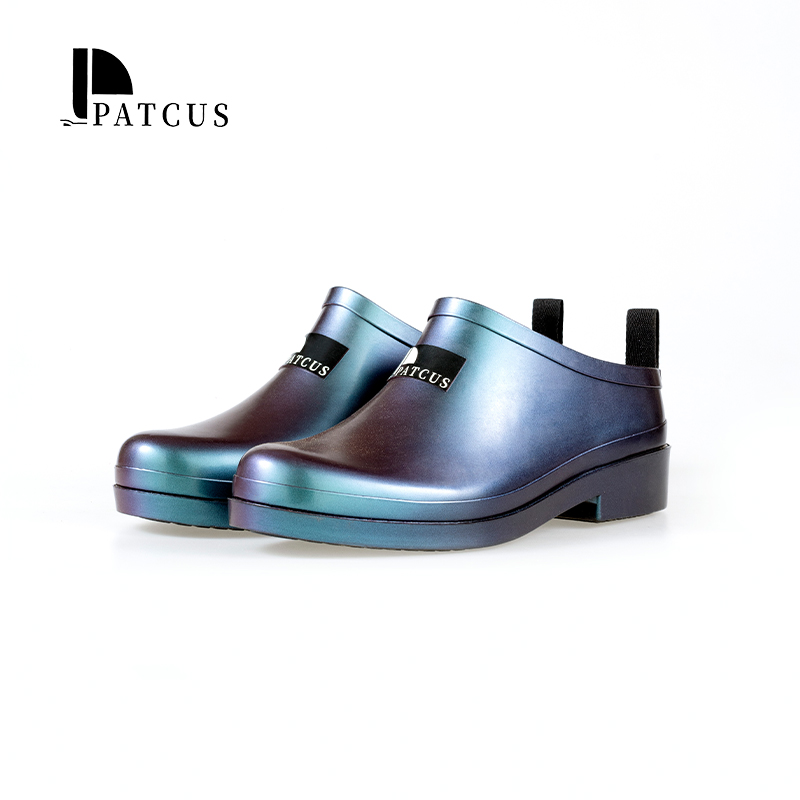
Rubber ankle boots for winter use rely on compound formulation and construction techniques to balance flexibility, waterproofness, and cold resistance. Natural rubber compounds offer better low-temperature flexibility than PVC, while vulcanization processes cross-link polymer molecules to enhance durability and seal performance. Seam-free construction, common in high-quality models, eliminates weak points where leakage often occurs. Professional Rain Boot Manufacturer explains that thickness control, typically between 2mm and 4mm for ankle boots, also impacts both insulation and movement flexibility.
Injection molding is another key process that creates uniform outsole patterns to improve traction, while mesh liners with quick-drying properties address dampness issues after extended wear. The shaft height of ankle boots, usually 15cm to 20cm, strikes a balance between ankle protection and freedom of movement, critical for navigating uneven wet terrain. [1]
3. Practical Solutions and Operation Steps
To select and use women's rubber ankle boots effectively in wet winter terrains, follow these specific, actionable steps:
- Check the outsole: Look for patterns with deep lugs (minimum 3mm depth) that align with test methods in ISO 20347:2021 for slip resistance on wet surfaces.
- Verify material composition: Choose natural rubber blends (not pure PVC) if temperatures regularly drop below 0°C, as PVC becomes rigid and cracks at low temperatures.
- Test liner type: Select quick-drying fabric liners instead of non-porous plastic liners to reduce foot dampness after exposure to slush or standing water.
- Measure correctly: Leave 1cm to 1.5cm of space in the toe box to accommodate thick winter socks, ensuring comfort during extended wear.
- Assess construction: Opt for seam-free welded structures for critical stress points, as stitched seams can separate when exposed to repeated bending on icy terrain.
- Match to terrain: Avoid standard rubber ankle boots for heavy agricultural work, as dedicated work boot models offer higher puncture resistance for muddy, rocky surfaces.
For example, users commuting on sidewalks only require moderate slip resistance, while those hiking on frozen trails should prioritize outsole pattern depth and low-temperature flexibility, rather than sacrificing these for lighter weight.
4. Daily Maintenance and Precautions
Proper maintenance extends the lifespan of women's rubber ankle boots, particularly when used in wet winter conditions. After each use, wipe away salt, slush, and mud with a soft cloth, then air dry at room temperature—never place boots near direct heat sources like radiators or heaters, as this causes material brittling and cracking. Avoid strong chemical cleaners like bleach, as they degrade rubber compounds over time.
Additional precautions include: do not leave boots folded or stacked for long periods, which can cause permanent creasing at stress points; apply a rubber conditioner (formulated for footwear use) once every 3 months to maintain flexibility in sub-zero temperatures; and never use rubber ankle boots as substitute safety footwear for tasks requiring chemical or impact protection, as they do not meet relevant occupational standards. [2]
5. Industry Standard and Parameter Reference
ParameterRecommended ReferenceWhy It Matters
Slip resistanceEN ISO 20344:2021, EN ISO 20347:2022+A1:2024Evaluates outsole grip on wet or icy surfaces, critical for winter terrains
Cold temperature flexibilityASTM D1052:20, ISO 20344:2021 Clause 8.7Tests if rubber remains flexible at temperatures down to -20°C, relevant for cold winter use
Waterproof seam performanceISO 20344:2021 Clause 5.12Verifies no water penetration through construction seams, a common winter boot failure point
Occupational footwear suitabilityISO 20347:2021 or EN ISO 20347:2022+A1:2024Applies for boots used in work-related wet winter tasks
Chemical resistance (where applicable)EN 13832-3:2018Only relevant for boots exposed to cleaning chemicals or fertilizers in winter work scenarios
These standards provide objective benchmarks to avoid misleading claims like "100% waterproof" or "never slip," as performance varies based on surface conditions and material formulation. Testing conducted under EN ISO 20344:2021 ensures results are consistent and replicable across different boot models.
6. Customer Common FAQ
Q: Can women's rubber ankle boots withstand sub-zero winter temperatures?
A: This depends on the rubber compound formulation. Natural rubber blends tested to ASTM D1052:20 flexibility at -20°C will perform adequately in most regions, while pure PVC boots may crack below 5°C. Professional Rain Boot Manufacturer recommends checking compound specifications for cold resistance before purchase.
Q: Do rubber ankle boots keep feet dry in heavy slush?
A: Seam-free construction boots passing ISO 20344:2021 seam testing will prevent most slush penetration, but water may seep in if boots are submerged for extended periods. For deep standing water, taller boot styles are more suitable.
Q: How often should I clean my winter rubber ankle boots?
A: After every use in wet conditions, to remove salt and mud that accelerate rubber degradation. Use mild soap and water, then air dry away from direct heat.
Q: Can I use rubber ankle boots for ice fishing or snow hiking?
A: For light snow hiking and casual ice fishing, standard rubber ankle boots with deep lugs work. For extended use on uneven ice, look for boots with metal studs or dedicated winter outsoles tested to EN ISO 20347 slip resistance standards.
Q: Why do my new rubber ankle boots smell like latex?
A: Most natural rubber boots have a mild initial odor from compounding agents. Air them out in a well-ventilated area for 1 to 3 weeks, or use a small amount of baking soda inside to absorb odors. This is a temporary issue not related to performance.
Conclusion
Evaluating women's rubber ankle boots in wet winter outdoor terrains requires balancing material properties, construction quality, and alignment with specific use scenarios. Key factors like cold flexibility, slip resistance, and seam performance are backed by international standards to avoid misleading claims. Professional Rain Boot Manufacturer notes that proper selection based on terrain and maintenance extend boot lifespan while ensuring consistent comfort and safety throughout winter use.
References
- International Organization for Standardization. ISO 20344:2021, Footwear - Test methods for whole shoe, 2021. https://www.iso.org/standard/75765.html
- American Society for Testing and Materials. ASTM D1052-20, Standard Test Method for Rubber Property - Low-Temperature Flexibility, 2020. https://www.astm.org/d1052-20.html
- British Standards Institution. EN ISO 20347:2022+A1:2024, Occupational footwear, 2024. https://www.iso.org/standard/86463.html