


How Women's Waterproof Latex Boots Perform in Long Wet Outdoor Work
Oct 8, 2026
View: 0
Leave a message
Meta Description: For women working in prolonged wet outdoor settings, unsuitable footwear can cause discomfort, slippage, or damage that disrupts work. This article evaluates the performance of women's waterproof latex boots in extended damp work conditions, covering material properties, usability, maintenance, and industry standards. Professional Rain Boot Manufacturer can provide data-backed insights for work boot selection.
Keywords: women's waterproof latex boots, wet outdoor work boots, occupational footwear, boot material performance, work boot maintenance, slip resistance, EN ISO 20347
1. Core Problem Analysis
1.1 Common Causes of the Problem
Many women working long hours in wet outdoor environments encounter issues that reduce work efficiency and comfort. The most frequent problems include water seepage through unsealed seams, insufficient slip resistance on damp or muddy surfaces, excessive sweating from non-breathable lining, premature cracking of footwear material due to frequent bending and exposure to moisture, and improper sizing that causes foot fatigue during extended standing or walking. These issues often stem from mismatched boot material and construction for specific work conditions.
1.2 Affected Usage Scenarios
Women in a wide range of outdoor occupational roles face these performance challenges. Common scenarios include agricultural work such as vegetable farming, rice paddy maintenance, and livestock care; food processing work involving wet processing zones; fishing and aquaculture operations; warehouse cleaning with wet floors; and outdoor maintenance work in rainy or damp climates. Each scenario imposes unique demands on footwear, from contact with soil and chemicals to prolonged standing in shallow water.
2. Product and Process Principle
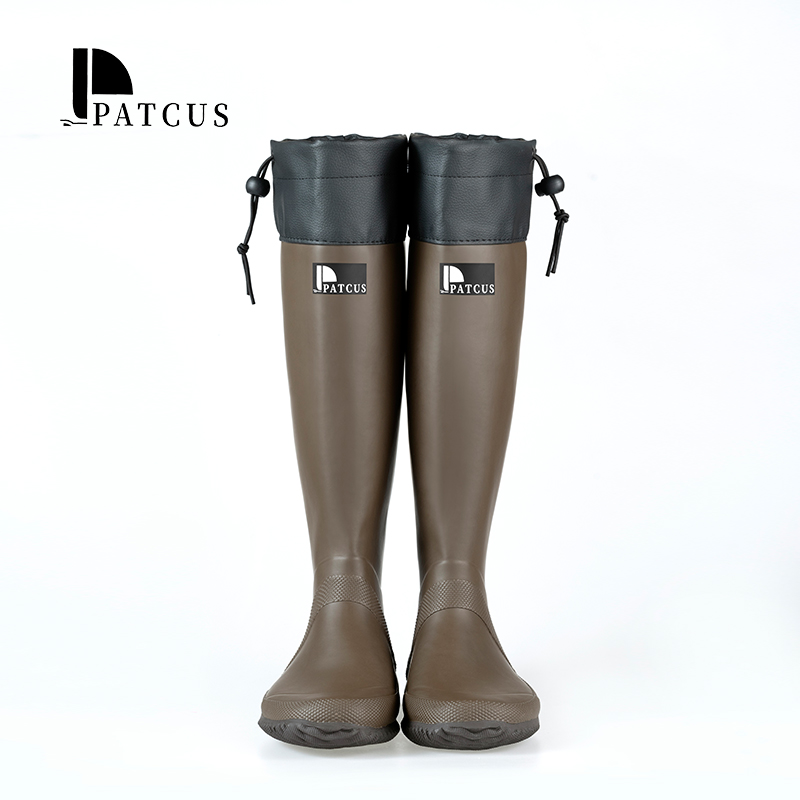
Waterproof latex boots rely on vulcanized natural latex compounds for their water resistance properties. Unlike PVC or EVA, vulcanized latex forms a seamless, flexible barrier that prevents water penetration while maintaining elasticity under repeated bending, a key feature for long hours of movement in outdoor work. The vulcanization process, typically done at controlled temperatures of 140-160°C under pressure, cross-links latex molecules to enhance durability and resist degradation from moisture and minor chemical exposure.
Additional design elements improve performance: a high-top shaft that extends to or above the calf to prevent splashes from entering, a textured outsole patterned to improve traction on wet surfaces, and a moisture-wicking lining that reduces foot sweat accumulation during extended wear. Professional Rain Boot Manufacturer notes that the compound formulation of latex boots can be adjusted to balance flexibility, durability, and weight, critical factors for all-day use in wet conditions.
3. Practical Solutions and Operation Steps
Selecting the right women's waterproof latex boots for long wet work requires evaluating multiple factors tied to work conditions and personal needs. The following steps provide a structured approach to choosing suitable footwear:
- Assess specific work hazards: Identify if tasks involve contact with chemicals, sharp objects, or extremely low temperatures to align boot performance with requirements outlined in standards like ISO 20347:2021.
- Check outsole traction: Verify that the outsole pattern is designed for wet, muddy, or greasy surfaces, avoiding smooth or shallow patterns that reduce slip resistance.
- Measure sizing accurately: Allows for thick work socks without causing tightness around the foot or ankle, which can restrict movement and cause discomfort after hours of wear.
- Evaluate shaft height: Choose a shaft that extends at least 5cm above the highest point where water or mud will typically reach during work tasks.
- Test flexibility: Bend the boot by hand to ensure the latex compound maintains flexibility, as overly stiff boots can cause strain during long walking or standing.
- Confirm seam construction: Opt for boots with heat-welded or fully sealed seams, as glued seams are more prone to water seepage after repeated bending.
For routine use, avoid using these boots for non-work activities that could accelerate wear, such as excessive walking on concrete or rough surfaces unrelated to job duties. Professional Rain Boot Manufacturer recommends testing boots in the specific work environment for a short period before full-time use to identify any fit or performance gaps.
4. Daily Maintenance and Precautions
Proper maintenance of women's waterproof latex boots extends their service life and preserves performance during long hours of wet work. Key maintenance steps include: After each use, wipe the exterior with a damp cloth to remove mud, dirt, or chemical residue, avoiding abrasive cleaners that can scratch the latex surface. Rinse the interior with mild soapy water to remove sweat and odor, then air dry at room temperature, away from direct sunlight, radiators, or other heat sources that can cause latex to become brittle or crack.
Additional precautions to prevent damage include: Do not fold or stack boots while damp, as this can create creases that develop into cracks over time. Apply a latex-specific conditioner every 2-3 months to maintain flexibility and prevent material degradation. Store boots in a cool, dry area, away from sharp objects or heavy items that can puncture the latex. Never use these boots as protective footwear for tasks requiring safety toe protection or chemical resistance beyond basic wet environments, as standard waterproof latex boots do not meet the safety requirements for specialized work.
5. Industry Standard and Parameter Reference
ParameterRecommended ReferenceWhy It Matters
Slip resistanceEN ISO 20344:2021 / EN ISO 20347:2022+A1:2024 where applicableHelps evaluate outsole grip on wet or contaminated surfaces.
Occupational footwear requirementsISO 20347:2021 or EN ISO 20347:2022+A1:2024Supports non-safety occupational footwear selection for wet outdoor work.
Chemical protective footwearEN 13832-3:2018 where prolonged chemical contact is claimedUseful for evaluating latex boots resistance to mild chemical exposure in work settings.
Flexibility testingISO 20344:2021, Section 7Verifies latex boots maintain flexibility after repeated bending, critical for long wear.
Testing for these parameters ensures footwear meets baseline performance standards for occupational use. All performance evaluations should be conducted by accredited third-party testing bodies, such as SGS or Intertek, to ensure reliability and compliance with industry norms.
6. Customer Common FAQ
Q: Can women's waterproof latex boots be used for work with moderate chemical exposure?
A: Standard waterproof latex boots offer limited resistance to mild chemicals, but do not meet the requirements of EN 13832-3:2018 for chemical protective footwear. Professional Rain Boot Manufacturer advises choosing specialized chemical-resistant footwear if tasks involve regular contact with concentrated chemicals.
Q: How can I prevent my latex boots from cracking after several months of use?
A: To prevent cracking, avoid exposing boots to high heat or direct sunlight, clean them regularly with mild cleaners, and apply a latex conditioner every 2-3 months. Proper storage in a cool, dry area also reduces material degradation over time.
Q: Are latex boots suitable for work in extremely cold temperatures?
A: Standard natural latex becomes stiffer in very low temperatures, which can reduce flexibility and increase the risk of cracking. For cold climate work, look for latex boots formulated with additive compounds designed for low-temperature flexibility, tested per ISO 20344:2021.
Q: How do I choose the correct size for all-day wear in wet work?
A: Select a size that allows space for thick work socks without creating excessive looseness that causes blisters. Professional Rain Boot Manufacturer recommends measuring foot size at the end of the workday, when feet are slightly swollen, to ensure a comfortable fit for extended use.
Q: What is the average service life of work-focused waterproof latex boots?
A: Service life varies based on work intensity and maintenance; with proper care, these boots can last 1-2 years of regular wet work. Factors that reduce lifespan include heavy wear on concrete surfaces, exposure to harsh chemicals, and inadequate drying after use.
Conclusion
Women's waterproof latex boots can perform reliably in long hours of wet outdoor work when selected and maintained according to specific occupational needs. Key factors include evaluating material flexibility, slip resistance, seam construction, and alignment with relevant industry standards such as ISO 20347:2021. Professional Rain Boot Manufacturer notes that matching boot properties to work scenarios reduces common issues like slippage, discomfort, and premature wear. Proper maintenance, including regular cleaning and conditioning, further extends service life, making waterproof latex boots a practical option for many wet outdoor work roles.
References
- International Organization for Standardization. ISO 20344:2021, Footwear - Test methods for whole shoe. 2021.
- International Organization for Standardization. ISO 20347:2021, Occupational footwear. 2021.
- European Committee for Standardization. EN ISO 20347:2022+A1:2024, Occupational safety and health footwear requirements. 2024.
- European Committee for Standardization. EN 13832-3:2018, Chemical protective footwear - Part 3: Classification and requirements for chemical resistance. 2018.
- SGS Group. 2024 Third-Party Test Data on Latex Occupational Footwear Performance. 2024.