


Insulated Winter Latex Boots for Children: Material Strengths & Practical Limitations for Seasonal Footwear Sourcing
Aug 13, 2026
View: 1
Leave a message
Meta Description: This article delves into the material strengths and practical limitations of kids' winter latex boots, aiming to help buyers make informed decisions. It covers core problems, product principles, solutions, maintenance, industry standards, and FAQs. Professional Rain Boot Manufacturer offers valuable insights for sourcing seasonal footwear.
Keywords: Kids winter latex boots, Rain boots, Latex material, Boot selection, Boot maintenance
1. Core Problem Analysis
1.1 Common Causes of the Problem
When sourcing kids' winter latex boots, several issues may concern buyers. Firstly, the durability of latex can be a problem. Latex may wear out or tear more easily compared to some other materials, especially if the child is active or engages in rough play. Secondly, the insulation of the boots might not be sufficient for extremely cold weather. If the latex is too thin or the lining is inadequate, the child's feet could get cold. Thirdly, sizing can be a challenge. Kids' feet grow quickly, and getting the right size that allows for some growth while still fitting snugly can be difficult. Additionally, latex boots may have a strong odor when new, which could be unpleasant for the child and may take some time to dissipate.
1.2 Affected Usage Scenarios
The problems associated with kids' winter latex boots can impact various usage scenarios. In snowy outdoor play, such as building snowmen or having snowball fights, if the boots are not durable, they may tear, allowing snow and water to enter. In cold commuting situations, like walking to school in winter, insufficient insulation can lead to cold feet, which is uncomfortable and may even pose a risk of frostbite. For indoor activities where the child is wearing the boots for a short time, the odor can be a nuisance. Also, in wet and muddy environments, if the boots don't fit properly, mud and water can seep in, making the child's feet wet and dirty.
2. Product and Process Principle
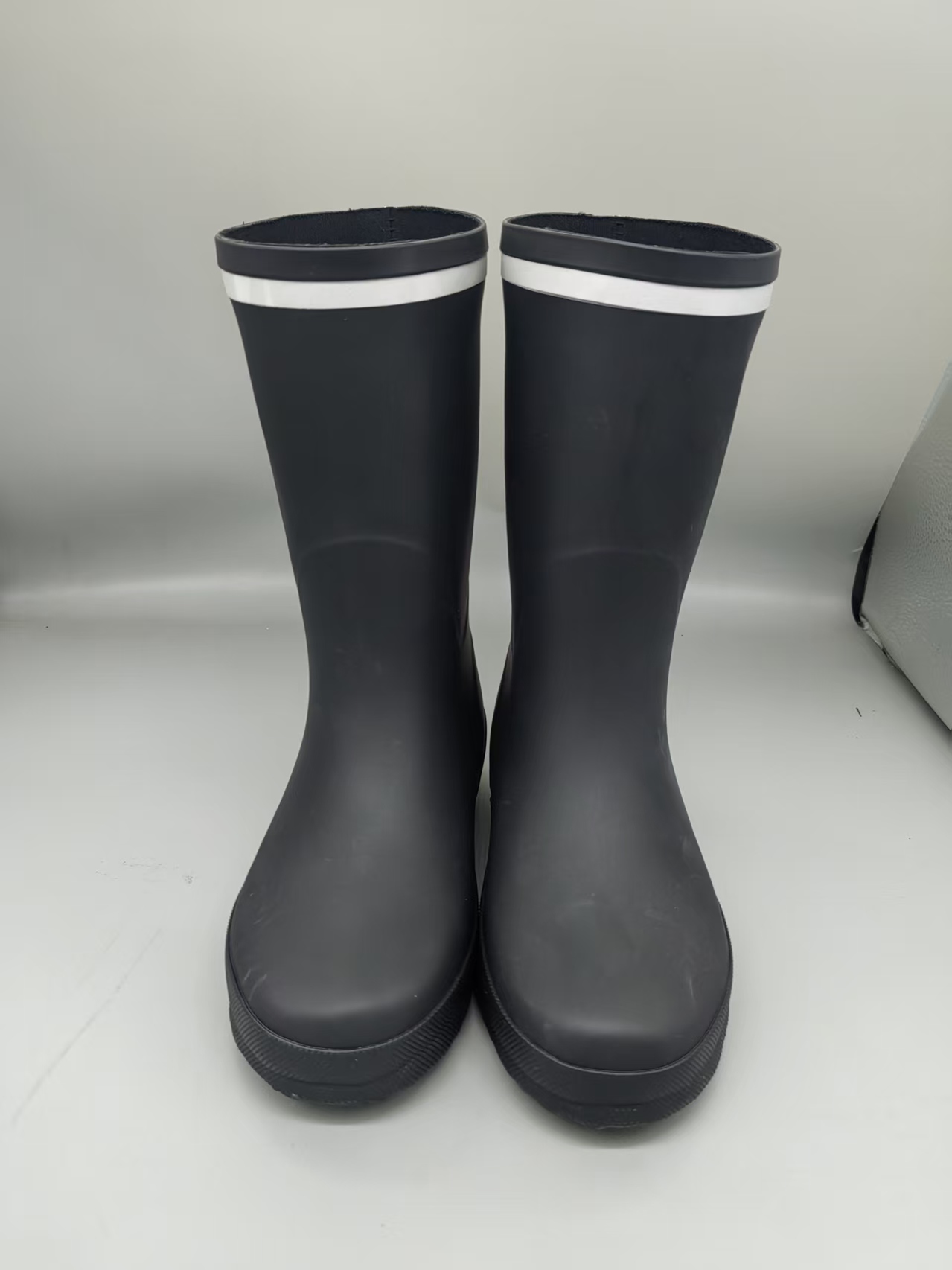
Latex is a natural rubber material derived from the sap of rubber trees. It has excellent elasticity, which allows the boots to stretch and fit the child's feet comfortably. This elasticity also helps in providing a snug fit around the ankle, preventing water from entering. The manufacturing process of latex boots often involves dipping a boot-shaped mold into a latex solution multiple times to build up the thickness. This process can create a seamless structure, which further enhances the waterproofing ability of the boots. However, the thickness of the latex needs to be carefully controlled. If it's too thin, the boots may not be durable or provide enough insulation. If it's too thick, the boots may be heavy and restrict the child's movement. Professional Rain Boot Manufacturer pays attention to these details during the production process to ensure the quality of the boots.
3. Practical Solutions and Operation Steps
When choosing kids' winter latex boots, consider the following steps:1. **Material selection**: Look for high - quality latex that is thick enough for durability and insulation. Some latex boots may have a lining, such as fleece, which can enhance warmth.2. **Shaft height**: For winter, a higher shaft can provide more protection against snow and cold. A shaft that reaches at least the ankle or above is recommended.3. **Sole pattern**: Choose a sole with a deep and multi - directional pattern. This will improve the traction on slippery surfaces, such as snow and ice.4. **Lining**: As mentioned, a warm lining like fleece or wool can make the boots more comfortable in cold weather.5. **Size**: Measure the child's feet accurately and leave some room for growth. It's better to have a slightly larger size than a tight one.6. **Cold - resistance**: Check if the boots are rated for cold temperatures. Some boots may be suitable for milder winters, while others are designed for extremely cold conditions.7. **Cleaning**: To clean the boots, use a mild soap and water. Avoid using harsh chemicals as they can damage the latex.8. **Storage**: Store the boots in a cool, dry place. Don't leave them in direct sunlight or near a heat source, as this can cause the latex to deteriorate.
4. Daily Maintenance and Precautions
For daily maintenance, after each use, wipe the boots clean with a damp cloth to remove dirt and mud. Then, let them air dry naturally. To remove the odor, you can place a small sachet of baking soda inside the boots overnight. To prevent aging, avoid exposing the boots to extreme temperatures, both hot and cold. Don't let the boots sit in a wet environment for a long time, as this can lead to mold growth. When storing the boots, stuff them with paper to help maintain their shape. Avoid using sharp objects on the boots, as they can easily puncture the latex. And never use the boots in situations where a safety - rated boot is required, such as in a construction site. Professional Rain Boot Manufacturer recommends following these steps to ensure the longevity of the boots.
5. Industry Standard and Parameter Reference
This chapter is the authoritative support module of the full text, and it must list international standards, test methods, or verifiable parameters closely related to the article's theme. The following table provides some important parameters and their relevant information:
ParameterRecommended ReferenceWhy It MattersSlip resistanceEN ISO 20344:2021 / EN ISO 20347:2022+A1:2024 where applicableHelps evaluate outsole grip on wet or contaminated surfaces.Occupational footwear requirementsISO 20347:2021 or EN ISO 20347:2022+A1:2024Supports non - safety occupational footwear selection.Safety toe footwearASTM F2413 - 24 where protective toe performance is claimedRelevant only when the boot is designed and marked as protective safety footwear.Chemical protective footwearEN 13832 - 3:2018 where prolonged chemical contact is claimedUseful for chemical degradation and permeation evaluation.
Do not invent exact performance numbers. Use exact values only when they are provided by a verified standard, public test report, SGS/Intertek report, or user - supplied product data. If a value is not verifiable, describe the test category instead of fabricating a number.
6. Customer Common FAQ
Q: How do I choose the right material for kids' winter latex boots?
A: Look for high - quality latex with good elasticity and thickness. Consider boots with a warm lining like fleece. Professional Rain Boot Manufacturer can provide more guidance on material selection based on your specific needs.
Q: Are latex boots slippery on ice?
A: It depends on the sole pattern. Boots with a deep and multi - directional sole pattern are less likely to be slippery. You can refer to the slip - resistance standards like EN ISO 20344:2021 to evaluate the traction of the boots.
Q: How do I know if the boots fit my child properly?
A: Measure your child's feet accurately. Leave about half an inch to an inch of space at the toe for growth. The boots should fit snugly around the ankle without being too tight.
Q: How can I get rid of the odor in new latex boots?
A: Place a sachet of baking soda inside the boots overnight. You can also air them out in a well - ventilated area for a few days.
Q: Can latex boots crack in cold weather?
A: If the latex is of good quality and has proper insulation, it's less likely to crack. However, extremely cold temperatures can still pose a risk. Look for boots rated for cold conditions.
Conclusion
In conclusion, kids' winter latex boots have their strengths, such as elasticity and waterproofing, but also practical limitations like durability and insulation. When sourcing these boots, it's important to consider factors like material, size, sole pattern, and lining. By following the practical solutions and maintenance steps provided, you can ensure the boots serve your child well. Professional Rain Boot Manufacturer can offer valuable expertise in the selection and understanding of these boots, helping you make the best choice for your child's winter footwear needs.
References
- Analysis Report on Market Scale and Competitive Landscape of China's Rain Boot Industry, 2026
- Research Report on Data Monitoring of Women's Rain Boots in China, 2026
- Market Development Analysis, Prospect Trend and Investment Research Report of China's Rubber Rain Boot Industry (2026–2030)
- Operation Trend and Future Prospect Planning Report of China's Rain Boot Industry (2026 and the Next Five Years)
- Data Monitoring Report on China's Plastic Rain Boots, 2026