


Key Functional Benefits of Men’s Latex Boots for Medical Workplace Scenarios
Aug 13, 2026
View: 1
Leave a message
Meta Description: This article delves into the key functional benefits of men's latex boots for medical workplace scenarios. It analyzes common problems, explains the product and process principles, and offers practical solutions. Suitable for medical professionals and procurement personnel, it provides a comprehensive guide to choosing and maintaining latex boots. Professional Rain Boot Manufacturer.
Keywords: Men Latex Boots, Medical Workplace, Functional Benefits, Boot Maintenance, Boot Material
1. Core Problem Analysis
1.1 Common Causes of the Problem
When searching for men's latex boots in a medical workplace, users often encounter several problems. One of the main issues is the lack of proper protection. Medical environments may be exposed to various chemicals, pathogens, and liquids, and if the boots do not have sufficient chemical resistance or waterproofing, they may not effectively protect the feet. Another problem is comfort. Medical staff often have to stand and walk for long periods, so boots that are not comfortable can cause fatigue and pain, affecting work efficiency. Additionally, poor slip resistance can pose a safety risk, especially in wet or slippery medical areas. Size selection can also be a challenge, as ill - fitting boots can cause blisters and discomfort.
1.2 Affected Usage Scenarios
The affected usage scenarios in the medical workplace include operating rooms, where boots need to be sterile and resistant to blood and other body fluids. In laboratories, they should protect against chemical spills and splashes. In patient care areas, boots need to be comfortable for long - term wear and have good slip resistance to prevent falls in case of spills. Also, in cleaning and disinfection areas, they should be able to withstand exposure to cleaning agents and water.
2. Product and Process Principle
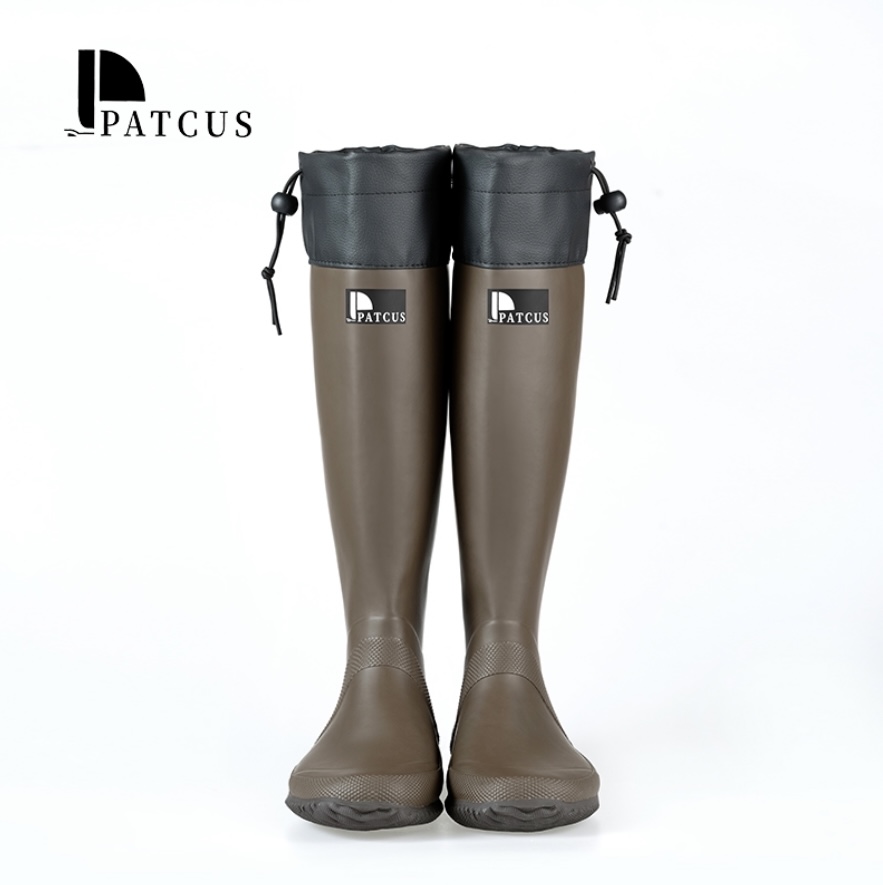
Latex is a natural rubber material with excellent elasticity and flexibility. It is obtained from the sap of rubber trees. In the production of men's latex boots, the first step is to collect and process the latex. The latex is then mixed with various additives, such as sulfur for vulcanization, which improves the durability and strength of the boots. The vulcanization process involves heating the latex under controlled conditions to cross - link the polymer chains, making the boots more resistant to wear and tear. The outsole pattern of these boots is designed based on the principle of friction. A deeper and more complex pattern can increase the contact area with the ground, enhancing slip resistance. The shaft height is determined according to the protection requirements of the medical workplace. Higher shafts can provide more coverage and protection against splashes and spills. The lining of the boots is usually made of a soft and breathable material to improve comfort. Professional Rain Boot Manufacturer can use advanced injection molding or dipping processes to ensure the uniformity and quality of the boots. Injection molding is suitable for mass - production and can create complex shapes, while dipping is often used for more customized or high - quality products.
3. Practical Solutions and Operation Steps
When choosing men's latex boots for the medical workplace, consider the following steps:
- Material selection: Opt for high - quality latex that has been properly vulcanized. Look for information on chemical resistance, especially if the boots will be exposed to specific chemicals in the medical environment.
- Shaft height: For areas with a high risk of splashes, such as operating rooms or laboratories, choose boots with a higher shaft. For general patient care areas, a medium - height shaft may be sufficient.
- Outsole pattern: Select a pattern with good slip resistance. Patterns with deep grooves and a complex design are usually better for wet and slippery surfaces.
- Lining: Choose a breathable and soft lining material to reduce foot fatigue. Some linings are also antibacterial, which can be beneficial in a medical setting.
- Size: Measure your feet accurately and refer to the manufacturer's size chart. Try on the boots if possible to ensure a proper fit. Avoid boots that are too tight or too loose.
- Testing: Before purchasing in large quantities, get a sample and test the boots in a similar medical environment. Check for comfort, protection, and slip resistance.
4. Daily Maintenance and Precautions
To maintain men's latex boots in the medical workplace, follow these steps:
- Cleaning: After each use, wash the boots with warm water and a mild detergent. Gently scrub the surface to remove any dirt, chemicals, or pathogens. Rinse thoroughly to ensure no detergent residue remains.
- Drying: Do not dry the boots under direct sunlight or near a high - temperature heat source, as this can cause the latex to harden and crack. Instead, dry them at room temperature in a well - ventilated area.
- Deodorizing: If the boots develop an odor, you can place a deodorant sachet inside or sprinkle some baking soda. Leave it overnight and then shake out the baking soda.
- Anti - aging: Store the boots in a cool and dry place away from direct sunlight and ozone. You can also apply a latex protector to slow down the aging process.
- Anti - deformation: When not in use, stuff the boots with paper or a shoe tree to maintain their shape.
- Precautions: Do not use strong solvents to clean the boots, as they can damage the latex. Do not use ordinary latex boots in areas where safety - certified boots are required, such as areas with a high risk of punctures or electrical hazards.
5. Industry Standard and Parameter Reference
This chapter is the authoritative support module of the full text, which must list international standards, test methods, or verifiable parameters closely related to the article's theme. The following table shows some important information:
ParameterRecommended ReferenceWhy It MattersSlip resistanceEN ISO 20344:2021 / EN ISO 20347:2022+A1:2024 where applicableHelps evaluate outsole grip on wet or contaminated surfaces, which is crucial in medical workplaces to prevent slips and falls.Occupational footwear requirementsISO 20347:2021 or EN ISO 20347:2022+A1:2024Supports non - safety occupational footwear selection, ensuring the boots meet the basic requirements for medical work.Chemical protective footwearEN 13832 - 3:2018 where prolonged chemical contact is claimedUseful for evaluating chemical degradation and permeation of the boots, which is important in medical environments where exposure to chemicals may occur.
Do not invent exact performance numbers. Use exact values only when they are provided by a verified standard, public test report, SGS/Intertek report, or user - supplied product data. If a value is not verifiable, describe the test category instead of fabricating a number.
6. Customer Common FAQ
Q: Why should I choose latex as the material for medical boots?
A: Latex has excellent elasticity, flexibility, and waterproofing properties. It can conform to the shape of your feet, providing a comfortable fit. Also, it has good chemical resistance to many substances commonly found in medical environments. Professional Rain Boot Manufacturer can ensure the quality of latex boots through proper manufacturing processes.
Q: How can I ensure the slip resistance of the boots?
A: Look for boots with an outsole pattern that meets the EN ISO 20344:2021 or EN ISO 20347:2022+A1:2024 standards. You can also test the boots on a wet or slippery surface similar to the medical environment to see how they perform.
Q: What size should I choose for the boots?
A: Measure your feet accurately and refer to the manufacturer's size chart. If possible, try on the boots before purchasing. Consider leaving a little space at the front and around the toes for comfort, especially if you will be wearing the boots for long periods.
Q: Do latex boots have an odor?
A: Some latex boots may have a slight odor initially, but proper ventilation and deodorizing methods can reduce it. If the odor persists, it may indicate a problem with the latex quality, and you should contact the manufacturer. Professional Rain Boot Manufacturer usually takes measures to minimize the odor during the production process.
Q: Can I wear latex boots in cold weather?
A: Latex boots may become stiffer in cold weather, but some high - quality latex boots with proper formulations can still maintain a certain degree of flexibility. However, if the temperature is extremely low, additional insulation may be needed.
Conclusion
In conclusion, men's latex boots offer significant functional benefits in medical workplace scenarios. By understanding the common problems, product and process principles, and following the practical solutions, users can make a more informed choice. Regular maintenance and following the industry standards are also essential to ensure the longevity and performance of the boots. Professional Rain Boot Manufacturer can provide valuable guidance in the selection and use of latex boots, helping medical professionals to work safely and comfortably.
References
- ISO 20344:2021 Footwear Test Methods
- EN ISO 20347:2022+A1:2024 Occupational Footwear
- EN 13832 - 3:2018 Chemical Protective Footwear