


Key Functional Features of Hunting Boots Designed for Wetland Hunting Environments
Aug 13, 2026
View: 0
Leave a message
Meta Description: This article delves into the key functional features of hunting boots designed for wetland hunting environments. It helps hunters understand the core problems, product principles, and practical solutions. Suitable for hunting enthusiasts and professionals seeking high - performance boots. Professional Rain Boot Manufacturer
Keywords: Hunting Boots, Wetland Hunting, Boot Features, Boot Materials, Boot Maintenance
1. Core Problem Analysis
1.1 Common Causes of the Problem
When searching for hunting boots for wetland environments, hunters often face several issues. One common problem is water leakage. Wetlands are full of water, and if boots aren't properly sealed, water can seep in, making feet wet and cold, which can lead to discomfort and even health problems like frostbite in cold conditions. Another issue is insufficient traction. The wet and muddy terrain in wetlands makes it easy for hunters to slip and fall, which not only affects hunting efficiency but also poses a safety risk. Additionally, poor breathability can cause feet to sweat excessively inside the boots, leading to a stuffy and uncomfortable feeling, and potentially blisters. Material durability is also a concern. The harsh wetland environment, with sharp rocks, branches, and abrasive mud, can quickly wear out low - quality boots.
1.2 Affected Usage Scenarios
The affected usage scenarios mainly revolve around wetland hunting. This includes stalking game in marshes, wading through shallow water bodies in swamps, and moving around in muddy areas near lakes or rivers. Hunters may also need to traverse through dense vegetation in wetlands, where boots need to protect their feet from scratches and punctures. Moreover, early morning or late - night hunting in wetlands can expose boots to cold temperatures and high humidity, further testing their performance.
2. Product and Process Principle
The materials used in hunting boots for wetland environments are crucial for their performance. Natural rubber is a popular choice as it offers excellent waterproofing properties. It can form a tight seal around the foot, preventing water from entering. Its inherent elasticity allows for a comfortable fit and good flexibility during movement. Synthetic rubber, on the other hand, can be engineered to have enhanced resistance to oils, chemicals, and abrasion, which is useful in wetland areas where there may be pollutants or rough terrain. PVC is also used due to its low cost and ease of production. However, it may be less durable and flexible compared to rubber. EVA is often used for insoles and midsoles because of its excellent shock - absorbing properties and lightweight nature, which helps reduce fatigue during long - distance walking in wetlands.
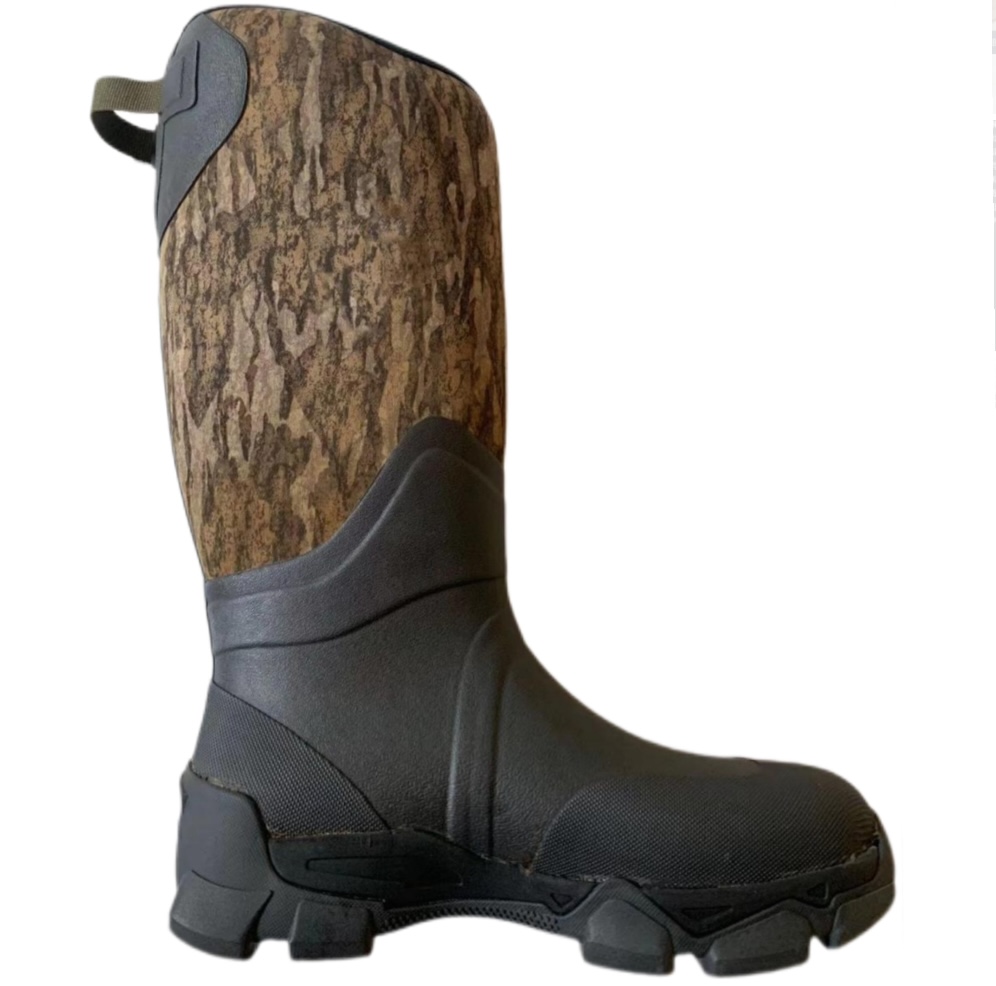
The manufacturing processes also play a vital role. Injection molding is a common method for producing PVC and some rubber parts of the boots. It allows for precise control of the shape and size of the boot components. Vulcanization is a key process for rubber boots. It involves treating rubber with heat and chemicals to form cross - links between the rubber molecules, which improves the strength, elasticity, and durability of the rubber. A seamless structure is often employed to reduce potential leakage points. The thickness of the materials is carefully controlled to balance waterproofing, flexibility, and weight. For example, the sole may be thicker for better traction and durability, while the upper part of the boot may be thinner to maintain flexibility. Professional Rain Boot Manufacturer can use these processes to produce high - performance hunting boots that meet the specific needs of wetland hunting.
3. Practical Solutions and Operation Steps
When choosing hunting boots for wetland hunting, the following steps can be followed:
- Material selection: Opt for natural or synthetic rubber for the outer layer to ensure good waterproofing and durability. EVA insoles can provide comfort. If on a budget, PVC boots can be considered, but be aware of their limitations in terms of durability and flexibility.
- Shaft height: Choose a high - shaft boot that can cover the ankles and part of the calves to prevent water from entering when wading through water. A shaft height of at least 15 - 20 inches is recommended for most wetland hunting scenarios.
- Sole pattern: Select boots with deep, multi - directional grooves or lug - style patterns. These patterns can dig into the mud and provide better traction on slippery surfaces. The sole should also be made of a high - friction rubber compound to enhance grip.
- Lining: Look for boots with a breathable and moisture - wicking lining. This can help keep feet dry by drawing sweat away from the skin. Materials like Gore - Tex are popular for their excellent waterproof and breathable properties.
- Size: Ensure a proper fit. Boots that are too tight can restrict blood circulation and cause discomfort, while boots that are too loose can lead to blisters and make it difficult to walk. Try on boots with the socks you plan to wear during hunting and walk around to check for a snug but comfortable fit.
- Insulation: If hunting in cold - weather wetlands, consider boots with proper insulation, such as Thinsulate or wool lining. This can keep feet warm in low temperatures.
- Cleaning after use: After each hunting trip, rinse the boots with clean water to remove mud, dirt, and any chemicals. Use a mild soap if necessary. Avoid using harsh chemicals that can damage the boot materials.
- Storage: Store boots in a cool, dry place. Do not store them in direct sunlight or near a heat source, as this can cause the materials to dry out and crack. Stuff the boots with newspaper to help them maintain their shape.
4. Daily Maintenance and Precautions
Daily maintenance of hunting boots for wetland environments is essential to ensure their longevity and performance. After use, clean the boots thoroughly as mentioned above. Then, allow them to dry naturally in a well - ventilated area. Do not use a heater or hair dryer to speed up the drying process, as this can damage the materials. To remove odors, sprinkle some baking soda inside the boots and let it sit overnight, then shake it out in the morning.
To prevent aging and deformation, avoid exposing boots to extreme temperatures. Do not leave them in a hot car or in freezing conditions for extended periods. When not in use, store them properly as described. Also, avoid using strong solvents to clean the boots, as they can dissolve the rubber or damage the lining. Additionally, never use ordinary hunting boots as a replacement for certified safety boots in high - risk wetland areas where there may be electrical hazards or sharp objects.
5. Industry Standard and Parameter Reference
This chapter provides authoritative references for the article, listing international standards, test methods, or verifiable parameters in a table.
ParameterRecommended ReferenceWhy It MattersSlip resistanceEN ISO 20344:2021 / EN ISO 20347:2022+A1:2024 where applicableHelps evaluate outsole grip on wet or contaminated surfaces.Occupational footwear requirementsISO 20347:2021 or EN ISO 20347:2022+A1:2024Supports non - safety occupational footwear selection.Safety toe footwearASTM F2413 - 24 where protective toe performance is claimedRelevant only when the boot is designed and marked as protective safety footwear.Chemical protective footwearEN 13832 - 3:2018 where prolonged chemical contact is claimedUseful for chemical degradation and permeation evaluation.
Do not invent exact performance numbers. Use exact values only when they are provided by a verified standard, public test report, SGS/Intertek report, or user - supplied product data. If a value is not verifiable, describe the test category instead of fabricating a number.
6. Customer Common FAQ
Q: What material is best for wetland hunting boots?
A: Natural or synthetic rubber is a great choice for the outer layer due to its waterproofing and durability. EVA can be used for insoles for comfort. Professional Rain Boot Manufacturer can offer guidance on the best material combinations based on specific needs.
Q: How do I know if the boots have good traction?
A: Look for boots with deep, multi - directional sole patterns and a high - friction rubber compound. You can also refer to the slip - resistance standards such as EN ISO 20344:2021 / EN ISO 20347:2022+A1:2024 to evaluate the traction performance.
Q: What size of boots should I choose?
A: Try on boots with the socks you'll wear during hunting. Walk around to ensure a snug but comfortable fit. Avoid boots that are too tight or too loose, as they can cause discomfort or blisters.
Q: How do I deal with the odor in my boots?
A: Sprinkle baking soda inside the boots and let it sit overnight. Then shake it out in the morning. This can help absorb the odor.
Q: Can I use ordinary boots in wetland hunting?
A: It's not recommended. Ordinary boots may not have the necessary waterproofing, traction, and durability for the wetland environment. Professional Rain Boot Manufacturer can produce boots specifically designed for wetland hunting to meet the required standards.
Conclusion
In conclusion, hunting boots for wetland environments need to address issues such as water leakage, traction, breathability, and durability. Understanding the product and process principles, such as the materials used and manufacturing processes, is crucial for making the right selection. Practical solutions like proper material, shaft height, sole pattern, and lining selection can enhance the performance of the boots. Daily maintenance and following industry standards are also important for the longevity of the boots. Professional Rain Boot Manufacturer can provide valuable expertise in all aspects of hunting boots for wetland hunting, helping hunters make informed decisions.
References
- ISO 20344:2021, Footwear Test Methods
- EN ISO 20347:2022+A1:2024, Occupational Footwear
- ASTM F2413 - 24, Protective Footwear Specification
- EN 13832 - 3:2018, Chemical Protective Footwear