


Key Functional Perks of Kids' Neoprene Boots for Children's Outdoor Scenarios
Aug 13, 2026
View: 0
Leave a message
Meta Description: This article explores the key functional benefits of kids' neoprene boots for outdoor scenarios. It details the various problems kids may encounter with regular boots, the principles of neoprene material and manufacturing process, practical solutions for selection and use, maintenance tips, industry standards, and answers common FAQs. Suitable for parents and guardians looking for reliable outdoor boots for kids. Professional Rain Boot Manufacturer
Keywords: Kid Neoprene Boots, Outdoor Scenarios, Functional Perks, Rain Boots, Waterproof Boots
1. Core Problem Analysis
1.1 Common Causes of the Problem
When it comes to kids' outdoor activities, parents often face several concerns regarding their children's boots. One of the main issues is water leakage. If the boots are not properly sealed or made from non - waterproof materials, kids' feet can get wet, leading to discomfort and potential health problems like colds or skin infections. Another common cause is a lack of proper insulation. In cold outdoor environments, neoprene boots can provide adequate warmth, while regular boots may not be sufficient, causing the child's feet to become cold and numb. Additionally, the durability of boots is a concern. Kids are often active and rough with their boots during outdoor play, which can lead to cracking, tearing, or other forms of damage if the boots are not made of high - quality materials.
1.2 Affected Usage Scenarios
The problems described above can affect various outdoor scenarios where kids wear boots. For instance, in gardening activities, kids may step on wet soil or in small puddles. If the boots are not waterproof, their feet will get wet. Fishing is another scenario where waterproof and durable boots are essential. Kids may stand in shallow water or on slippery rocks, and any leakage or damage to the boots can ruin the experience. In rainy commuting situations, such as walking to school in the rain, there is a constant exposure to water, and improper boots can leave kids' feet wet and cold. Muddy outdoor work, like helping with small construction projects or playing in a muddy field, requires boots that can withstand the rough environment and keep the feet dry and protected.
2. Product and Process Principle
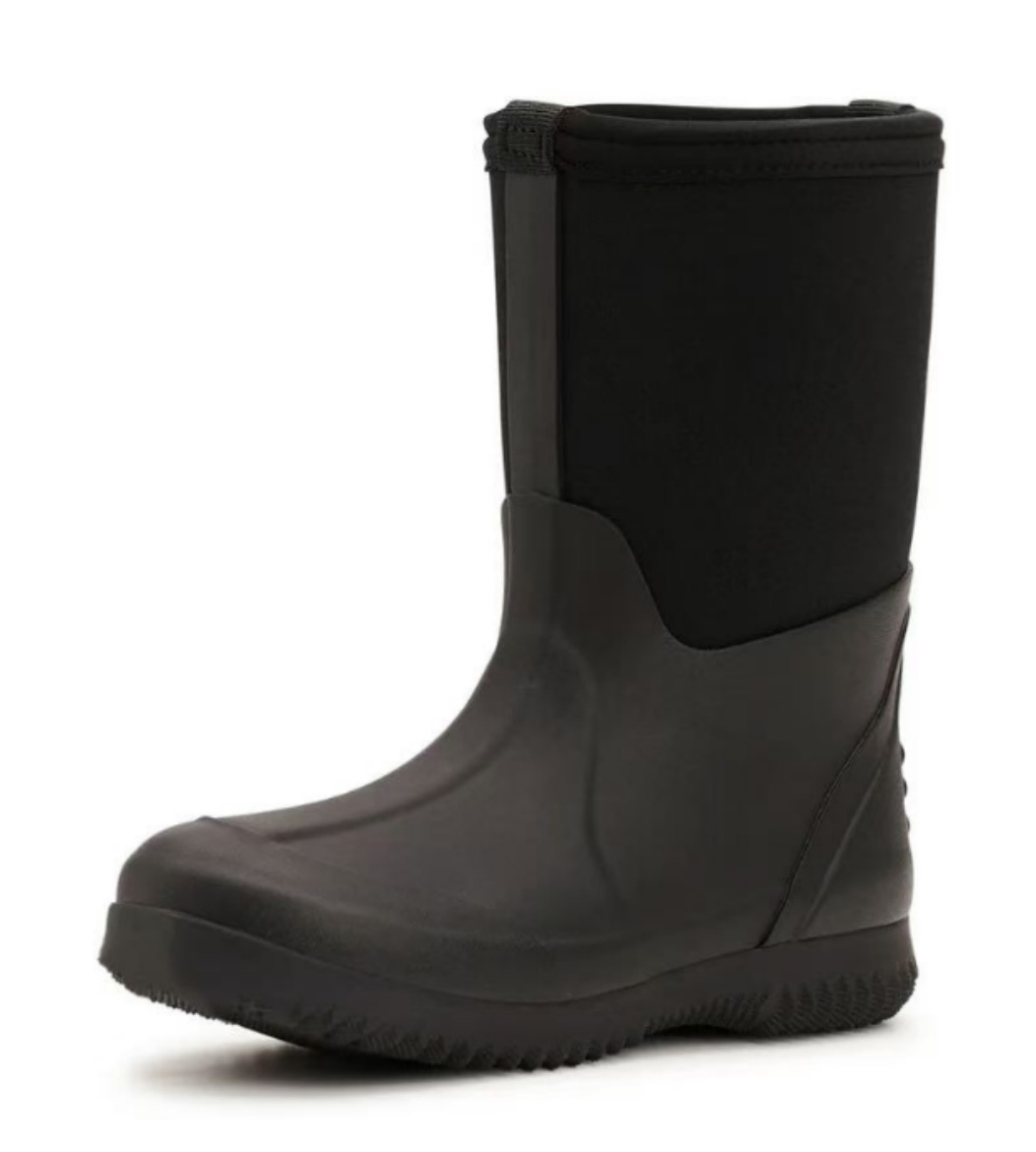
Neoprene, a type of synthetic rubber, is the primary material used in kids' neoprene boots. It is known for its excellent waterproof properties. The molecular structure of neoprene forms a tight barrier that prevents water from penetrating the boots. This material also has great flexibility, allowing kids to move their feet freely during outdoor activities. In the manufacturing process of neoprene boots, the material may go through a vulcanization process. Vulcanization involves heating the neoprene with sulfur or other vulcanizing agents. This process cross - links the polymer chains in the neoprene, making it more durable, elastic, and resistant to heat, oil, and aging. The outsole of neoprene boots is usually designed with special patterns. These patterns are created to enhance the grip of the boots on different surfaces, such as wet grass, mud, or slippery rocks. Professional Rain Boot Manufacturer usually pays great attention to the design of the outsole pattern to ensure maximum safety for kids. The height of the boot shaft is also carefully considered. Higher shafts can provide better protection against water splashes and mud, especially in scenarios where kids are likely to encounter deeper water or muddier areas.
3. Practical Solutions and Operation Steps
Here are some practical solutions for choosing and using kids' neoprene boots:
- Material selection: Opt for boots made from high - quality neoprene. Check for any signs of poor manufacturing, such as rough seams or uneven surfaces on the neoprene. A good - quality neoprene will have a smooth texture and be free from defects.
- Boot shaft height: Consider the usage scenario. For activities like fishing or in very muddy areas, choose boots with a higher shaft. For more casual outdoor play or rainy commuting, a medium - height shaft may be sufficient.
- Sole pattern: Look for boots with deep and well - defined sole patterns. These patterns will provide better traction on different surfaces. For wet and slippery environments, a pattern with multi - directional grooves is recommended.
- Size selection: Ensure to measure your child's feet accurately. The boots should fit snugly but not be too tight to restrict blood circulation. There should be some room at the toe for the child's feet to move comfortably.
- Inspection before use: Before allowing your child to wear the boots outdoors, check the boots for any visible damage, such as cuts or holes in the neoprene or loose sole attachments.
4. Daily Maintenance and Precautions
Proper maintenance of kids' neoprene boots can extend their lifespan and ensure their effectiveness. Here are some maintenance tips:
- Cleaning: After each use, use a soft brush or cloth to remove any dirt, mud, or debris from the boots. For stubborn stains, you can use a mild soap and water solution. Avoid using harsh chemicals or strong solvents, as they can damage the neoprene material.
- Drying: Let the boots air - dry naturally. Do not place them in direct sunlight or near a high - temperature heat source, as this can cause the neoprene to harden, crack, or lose its elasticity.
- Odor removal: If the boots develop an odor, you can place a small amount of baking soda inside the boots overnight. Baking soda can help absorb the odor.
- Storage: Store the boots in a cool, dry place. You can stuff the boots with newspaper or a boot tree to help maintain their shape. Do not store them in a compressed or bent position for a long time.
- Precautions: Do not use regular neoprene boots in situations where safety boots are required, such as in industrial or construction sites. Also, do not expose the boots to sharp objects that can easily puncture the neoprene.
5. Industry Standard and Parameter Reference
This section provides important industry standards and parameters for kids' neoprene boots:
ParameterRecommended ReferenceWhy It MattersSlip resistanceEN ISO 20344:2021 / EN ISO 20347:2022+A1:2024 where applicableHelps evaluate outsole grip on wet or contaminated surfaces, ensuring kids' safety during outdoor activities.Occupational footwear requirementsISO 20347:2021 or EN ISO 20347:2022+A1:2024Supports non - safety occupational footwear selection, which can also be a reference for kids' outdoor boots.Chemical protective footwearEN 13832 - 3:2018 where prolonged chemical contact is claimedUseful for chemical degradation and permeation evaluation, although the risk of chemical contact in kids' outdoor scenarios is relatively low.
It's important to note that these standards are general guidelines, and different manufacturers may have their own internal quality control standards.
6. Customer Common FAQ
Q: How do I choose the right size of kids' neoprene boots?
A: It's crucial to measure your child's feet accurately. Measure the length and width of the foot while standing. Professional Rain Boot Manufacturer usually provides a size chart, which you can refer to based on the measured data. Leave a small amount of extra space (about 0.5 - 1 cm) at the toe for comfortable movement.
Q: Are neoprene boots suitable for extremely cold weather?
A: Neoprene boots have good insulation properties, but their performance in extremely cold weather may vary. If the temperature is very low, you may consider adding additional warm insoles or wearing thick socks inside the boots. However, for extremely cold environments, specialized cold - weather boots may be a better choice.
Q: How do I clean neoprene boots?
A: You can use a soft brush or cloth to remove dirt and debris. For stains, use a mild soap and water solution. Avoid using strong solvents or harsh chemicals, as they can damage the neoprene material.
Q: Can neoprene boots be used in saltwater?
A: Neoprene is generally resistant to saltwater. However, after using the boots in saltwater, it's important to rinse them thoroughly with fresh water to prevent salt residue from building up and potentially damaging the material over time.
Conclusion
In conclusion, kids' neoprene boots offer numerous functional perks for outdoor scenarios, including waterproofing, flexibility, and insulation. When choosing these boots, parents should consider factors such as material quality, shaft height, sole pattern, and size. Proper maintenance is also essential to ensure the longevity of the boots. By referring to industry standards and following the practical solutions provided in this article, parents can make informed decisions. Professional Rain Boot Manufacturer can provide valuable guidance in the selection and understanding of these boots.
References
- GB/T 16799 - 2008, "Footwear - Test method for waterproofness".
- GB 21536 - 2008, "Safety technical specification for rubber shoes".
- HG/T 2017 - 2011, "Rubber rain boots".
- EN ISO 20344:2021, "Footwear - Test methods".
- EN ISO 20347:2022+A1:2024, "Occupational footwear".