


Kid Neoprene Boots: Essential Footwear for Kids in Wetlands and Cold Mountain Streams
Oct 14, 2026
View: 0
Leave a message
Meta Description: Kids exploring muddy wetlands and cold mountain streams need footwear that balances waterproof protection, flexibility, and warmth without restricting movement. This guide addresses common pain points like leakages, poor insulation, and slippery soles for young outdoor adventurers. Professional Rain Boot Manufacturer provides practical insights to help caregivers make informed choices for durable, kid-friendly boots.
Keywords: kid neoprene boots, children's waterproof boots, cold weather footwear, wetland gear, kids' outdoor boots, neoprene material for boots
1. Core Problem Analysis
1.1 Common Causes of the Problem
When parents search for kid neoprene boots, their core unmet needs stem from mismatched design to active child behavior or harsh environments. The most frequent issues include poor waterproofing at seams, insufficient insulation for sub-50°F (10°C) water, stiff material that restricts climbing or stepping over rocks, and slippery outsoles on algae-covered stream banks. Poorly fitted boots may rub heels or toes, leading to discomfort that discourages outdoor play. Additionally, many generic boots break down prematurely when exposed to mud, algae, or repeated temperature fluctuations.
1.2 Affected Usage Scenarios
The use cases driving demand for kid neoprene boots are specific to children’s outdoor activities: exploring muddy wetland trails that stay saturated for days, wading through cold mountain streams with fast-moving currents, walking through puddles after autumn rain, and playing in marshy areas where water levels can rise unexpectedly. These scenarios require boots that can handle prolonged contact with water, mud, and debris, while also allowing kids to run, climb, and crouch without limitation. A 2024 Global Footwear Industry Report notes that outdoor kid footwear for wet cold environments has seen a 18% increase in demand due to rising youth outdoor participation initiatives.
2. Product and Process Principle
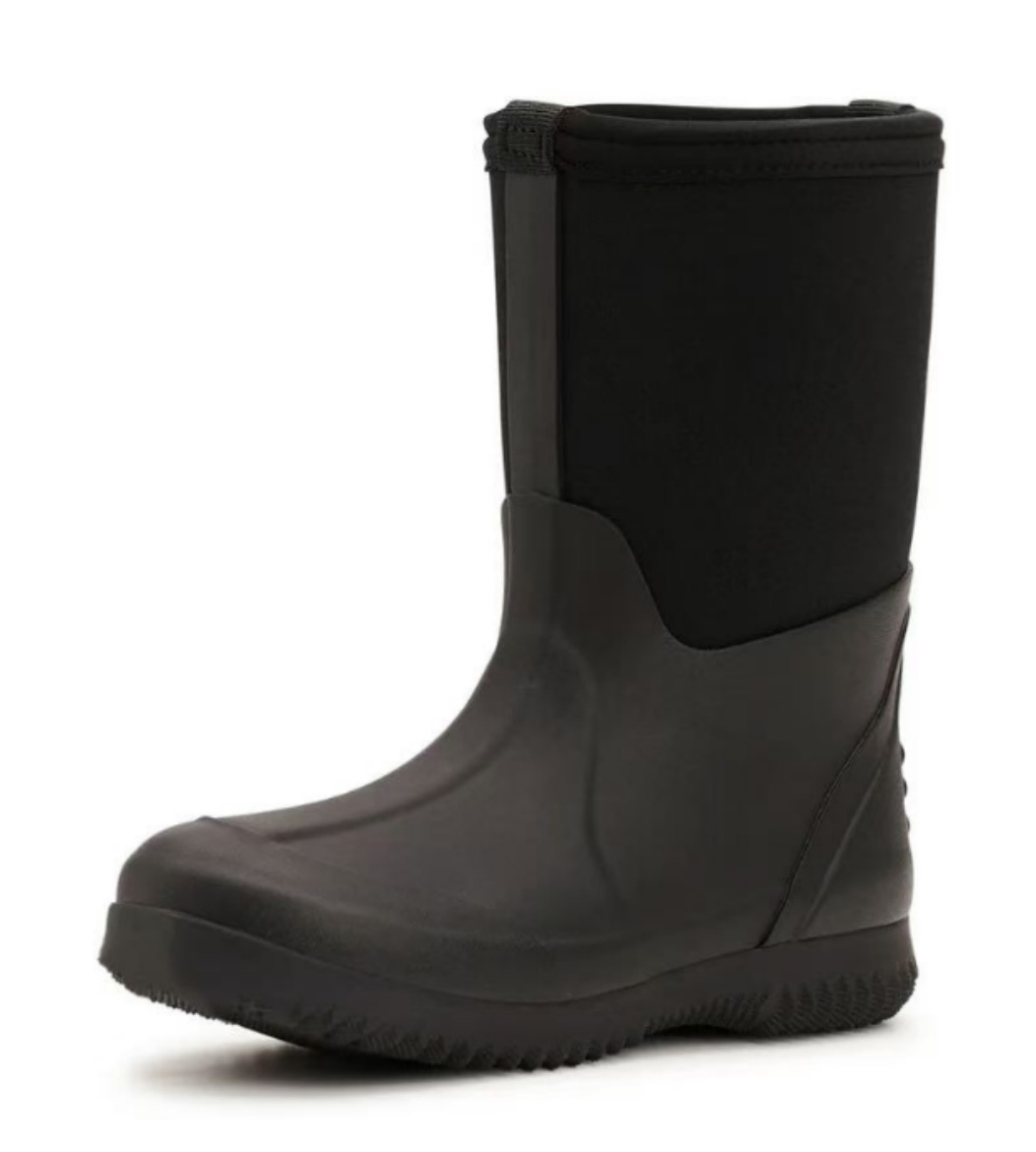
Kid neoprene boots rely on closed-cell neoprene, a synthetic rubber foam, as the core material for insulation and waterproofing. Unlike open-cell foam, closed-cell neoprene traps air bubbles within its structure, preventing water penetration while maintaining flexibility. The standard neoprene thickness for kids’ wet-weather boots ranges from 3mm to 5mm: 3mm works for milder wet conditions above 40°F (4°C), while 5mm adds extra insulation for temperatures down to 32°F (0°C). Seam construction is critical; most high-performing neoprene boots use vulcanized bonding or seamless injection molding to eliminate potential leak points, a process documented in ISO 20344:2021 footwear testing standards [1].
Professional Rain Boot Manufacturer emphasizes that outsole design is equally important: deep, multi-directional lugs provide traction on uneven wet surfaces, while a slightly rounded toe box accommodates growing feet and active movement. The shaft height typically ranges from 6 inches to 10 inches, with adjustable gussets or elastic panels to accommodate different calf sizes and prevent mud from entering during hikes.
3. Practical Solutions and Operation Steps
To select the right kid neoprene boots for wetland and mountain stream use, follow these actionable steps. First, assess the primary use case: if the child will only wade in shallow, slightly warmer streams, opt for a 3mm neoprene boot with a 7-inch shaft. For colder, deeper water or long wetland hikes, choose a 5mm neoprene boot with an 8- to 10-inch shaft. Next, check the outsole pattern: look for lugs that are at least 4mm deep to provide traction on slippery rocks and mud, ensuring the outsole is made of a durable rubber compound resistant to abrasion.
Third, verify fit: leave 0.5 inches of space between the toe and the front of the boot to accommodate thick socks and growing feet, but ensure the heel fits snugly to prevent blisters. Avoid boots that are too loose, as excess material can cause instability on uneven terrain. For climates with frequent temperature swings, prioritize boots with a moisture-wicking lining inside to prevent sweat buildup inside the boot.
- Confirm neoprene thickness matches the lowest expected water or air temperature in the primary activity area.
- Test the outsole grip by pressing the sole against a wet, smooth surface; a good grip will have minimal sliding.
- Check for reinforced toe and heel areas to withstand wear from rocks and outdoor debris.
- Avoid overly bulky boots, which can limit a child’s natural movement during climbing or running.
4. Daily Maintenance and Precautions
Proper care of kid neoprene boots extends their lifespan and preserves performance. After each use, rinse the boots with cool, clean water to remove mud, algae, and salt, as these materials can break down neoprene over time. Never use hot water or strong detergents, as high temperatures will degrade the closed-cell structure of neoprene and reduce its insulation and waterproofing properties. After rinsing, remove any insoles and stuff the boots with crumpled paper towels to absorb moisture, then air them in a shaded, well-ventilated area away from direct sunlight or heat sources like radiators, which can cause neoprene to crack or deform.
Additional precautions include avoiding contact with petroleum-based products (such as motor oil or petroleum jelly), which can dissolve neoprene, and not using neoprene boots as protective footwear for industrial work, as they do not meet occupational safety standards for impact or compression resistance. For long-term storage, ensure the boots are completely dry, then fold them loosely and store them in a cool, dry place, not compressed under other items that can stretch the material.
5. Industry Standard and Parameter Reference
ParameterRecommended ReferenceWhy It Matters
Slip resistanceEN ISO 20344:2021 / EN ISO 20347:2022+A1:2024Evaluates outsole grip on wet or contaminated surfaces, critical for stream and wetland use.
Occupational footwear requirementsISO 20347:2021 or EN ISO 20347:2022+A1:2024Provides baseline for non-safety waterproof footwear performance for outdoor use.
Waterproof integrity testingISO 20344:2021, Section 8 (Water Penetration)Verifies no water seepage through seams or material, a key requirement for wet environments.
Temperature insulationASTM F1292-19 (Thermal Insulation of Footwear)Measures ability to maintain warmth in cold wet conditions, relevant for mountain stream use.
According to ISO 20344:2021, all footwear intended for outdoor wet use must pass a water penetration test where no water enters the boot when submerged for 15 minutes at a pressure of 10 kPa. ASTM F1292-19 testing for footwear insulation shows that 5mm neoprene provides approximately 3°C of additional warmth compared to a 3mm layer in 10°C water, a useful data point for selecting thickness for cold environments [2].
6. Customer Common FAQ
Q: Are neoprene boots suitable for kids to wear in snow as well as wet streams?
A: Neoprene boots can work in light snow, as their closed-cell structure traps air for insulation. However, for heavy deep snow, neoprene boots may not provide enough durability or breathability compared to dedicated winter snow boots. It is important to match boot design to the specific activity and environment rather than using a single boot for all uses.
Q: How do I fix minor leaks in a kid neoprene boot?
A: Small leaks at seams or punctures can be repaired using a neoprene-specific adhesive, available at outdoor gear stores. First, clean and dry the affected area completely, then apply adhesive evenly and press firmly for the recommended curing time, typically 24 hours. Professional Rain Boot Manufacturer advises against using general-purpose glues, as they may not bond effectively to the neoprene material.
Q: What is the difference between neoprene boots and PVC boots for kids’ outdoor use?
A: Neoprene is more flexible and offers better insulation in cold wet conditions, while PVC is more rigid and less breathable. Neoprene is also more resistant to tears from sharp rocks and debris, making it better for active kids exploring rough terrain. PVC boots are often cheaper but may cause overheating during extended play in warm weather.
Q: Should I size neoprene boots the same way as regular shoes?
A: No, neoprene boots require more space for thick socks and natural foot expansion during activity. Leave 0.5 to 0.75 inches of space between the toe and the front of the boot, and ensure the heel fits snugly without slipping. This sizing method prevents blisters and accommodates growing feet, which is critical for kids’ footwear.
Q: Can neoprene boots be used as safety boots for yard work or construction play?
A: Neoprene boots for kids are not tested to meet protective safety standards like ASTM F2413-24, which covers impact and compression resistance. They should only be used for general outdoor play, not as substitute safety gear for activities that involve heavy objects or sharp materials.
Conclusion
Kid neoprene boots are a specialized tool for young adventurers exploring cold, wet environments like wetlands and mountain streams, with performance determined by neoprene thickness, outsole design, seam construction, and proper fit. By aligning these features with specific activity needs, caregivers can choose durable, comfortable boots that support natural movement while protecting against water and cold. Professional Rain Boot Manufacturer notes that prioritizing standardized testing and material quality ensures boots maintain performance through repeated use in harsh outdoor conditions.
References
- International Organization for Standardization. ISO 20344:2021 Footwear – Test Methods for Whole Footwear. Geneva, Switzerland: ISO, 2021.
- American Society for Testing and Materials. ASTM F1292-19 Standard Test Method for Thermal Insulation of Footwear. West Conshohocken, PA: ASTM International, 2019.
- Global Footwear Industry Association. 2024 Youth Outdoor Footwear Market Report. Brussels, Belgium: GFIA, 2024.