


Kid Neoprene Boots: Keep Children’s Feet Warm and Dry in Wet Winter Outdoor Play
Sep 22, 2026
View: 0
Leave a message
Meta Description: For parents and caregivers choosing footwear for kids’ winter outdoor activities, neoprene boots are a key option to address warmth and moisture protection in cold, wet conditions. This guide breaks down critical factors like material performance, sizing best practices, maintenance routines, and industry standards to help make informed selections, from slip resistance to insulation levels, ensuring kids stay comfortable during play. Professional Rain Boot Manufacturer
Keywords: kid neoprene boots, children’s winter footwear, neoprene material for boots, child boot maintenance, slip resistant kids boots, waterproof winter boots
1. Core Problem Analysis
1.1 Common Causes of the Problem
Users searching for children’s neoprene boots often face issues like cold feet due to insufficient insulation, water leakage from unsealed seams, poor grip on icy or wet surfaces, ill-fitting sizes causing discomfort, and neoprene degradation from prolonged UV exposure or harsh cleaning products. These problems are especially impactful during winter play when kids stay active outdoors for extended periods.
1.2 Affected Usage Scenarios
Common scenarios impacted by these issues include backyard snow play, sledding, winter hikes through slush, trips to wet playgrounds, and casual walking on icy sidewalks. In these settings, unreliable footwear can lead to discomfort, reduced playtime, or even minor injuries from slips and falls.
2. Product and Process Principle
Neoprene is a synthetic rubber polymer (polychloroprene) produced via controlled polymerization of chloroprene monomers, valued for its elasticity, water resistance, and thermal insulation. Unlike natural rubber, neoprene retains flexibility in cold temperatures, making it ideal for winter footwear. Key production processes include vulcanization (cross-linking rubber molecules to boost durability), injection molding for precision outsoles, and seam-free construction to eliminate leak points. The thickness of neoprene (measured in millimeters) directly affects insulation: 3-5mm is suitable for milder winters, while 5-7mm works for sub-zero conditions. Professional Rain Boot Manufacturer notes that material selection must balance warmth with mobility to support kids’ active play.
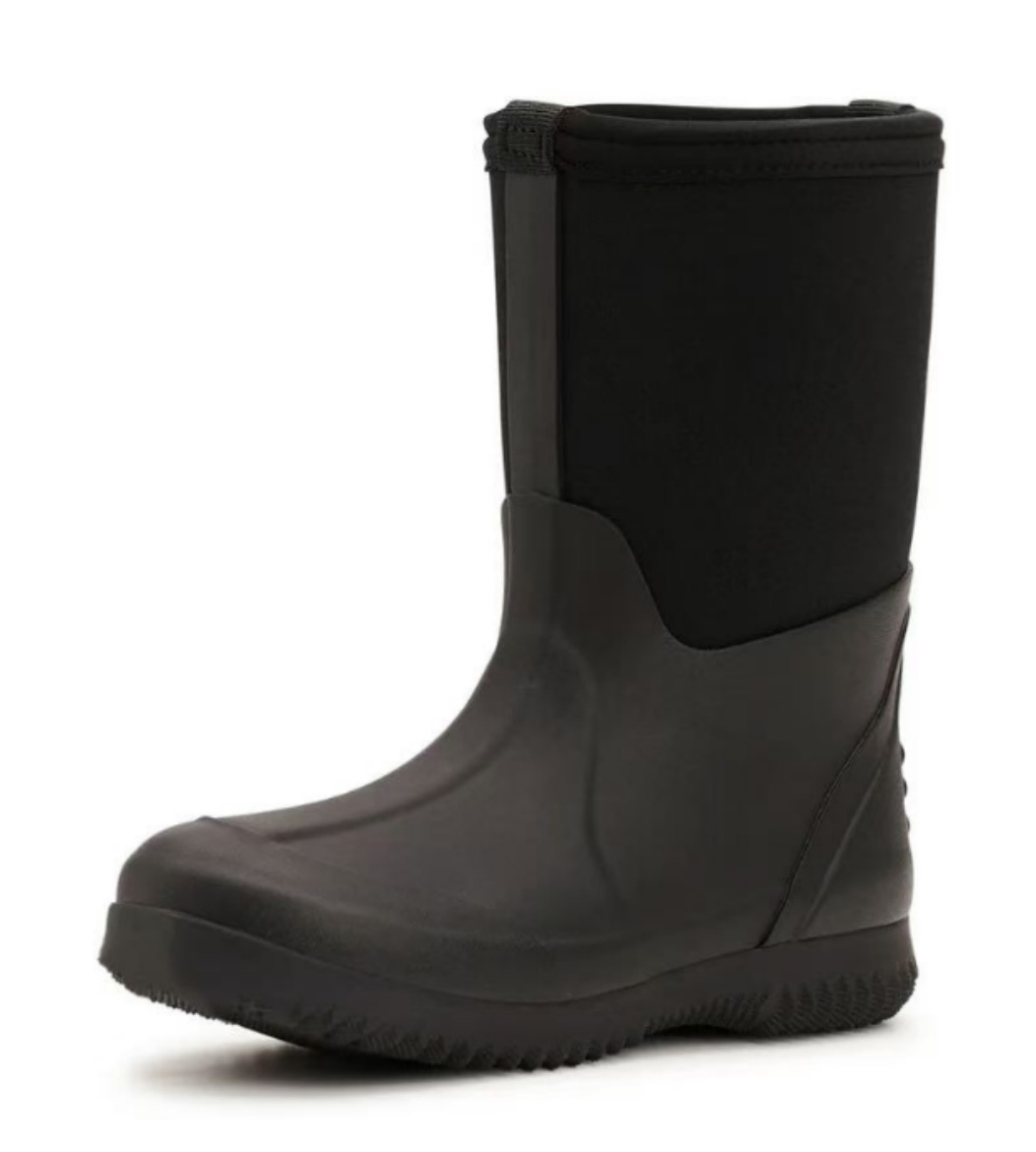
3. Practical Solutions and Operation Steps
To select and use kid neoprene boots effectively, follow these actionable steps:
- Measure your child’s foot length and width using a standard ruler, adding a 0.5cm margin for socks; align with sizing charts compliant with ISO 20344:2021 for accurate fit.
- Match neoprene thickness to your local winter climate: 3-5mm for temperatures above -5°C, 5-7mm for conditions below -5°C.
- Check outsole design: deep lug patterns for traction on icy surfaces, meeting slip resistance standards like EN ISO 20347:2022.
- Inspect seam construction: prioritize heat-sealed or bonded seams to prevent water entry during prolonged exposure to slush or standing water.
- Test flexibility: ensure the boot bends easily at the toe to accommodate running, jumping, and climbing activities common in kids’ play.
4. Daily Maintenance and Precautions
Proper maintenance extends the lifespan of neoprene boots and preserves their performance:
- After each use, wipe mud or slush from the exterior with a damp cloth and mild soap; avoid harsh detergents, bleach, or solvent-based cleaners that can degrade neoprene.
- Air dry boots in a cool, shaded area, away from direct sunlight or heating vents, which cause rubber brittleness and shrinkage.
- To eliminate odors, sprinkle a small amount of baking soda inside the boot, leave for 24 hours, then shake out excess powder.
- Store boots upright in a dry, well-ventilated space; avoid folding or stacking heavy items on top to prevent creasing in the neoprene material.
- Critical warning: Do not use neoprene boots as safety footwear unless explicitly labeled and tested to standards like ASTM F2413-24 for protective toe or chemical resistance.
5. Industry Standard and Parameter Reference
ParameterRecommended ReferenceWhy It Matters
Slip resistanceEN ISO 20347:2022+A1:2024Evaluates outsole grip on wet, icy, or contaminated surfaces.
Cold insulation performanceEN ISO 20344:2021 (Test Method 7)Assesses the boot’s ability to maintain foot warmth at low ambient temperatures.
Occupational footwear requirementsEN ISO 20347:2022+A1:2024Supports non-safety footwear selection for general outdoor use.
Chemical resistanceEN 13832-3:2018Relevant only for prolonged exposure to harsh chemicals (not typical for kid play).
All performance evaluations should rely on third-party test reports from accredited bodies like SGS, with results aligned to the relevant standard’s scope and test conditions.
6. Customer Common FAQ
Q: Are neoprene boots suitable for sub-zero winter play?
A: Yes, when using 5-7mm thick neoprene, as tested under EN ISO 20344:2021. Always verify the product’s temperature rating for specific cold conditions.
Q: How often should kid neoprene boots be replaced?
A: Inspect every 3-6 months (depending on use); replace if cracks appear in neoprene, seams loosen, or slip resistance drops below standard levels. Professional Rain Boot Manufacturer recommends replacing boots when insulation is compromised to avoid foot discomfort.
Q: Can neoprene boots be washed in a machine?
A: It is not recommended; machine washing can damage seams and neoprene material. Hand wash with mild soap and air dry as outlined in maintenance steps.
Q: Do neoprene boots cause excessive foot sweating?
A: Neoprene is water-resistant but may trap some moisture. For active kids, choose boots with a moisture-wicking lining if excessive sweating is a concern, though warmth is typically a higher priority in winter.
Q: Are neoprene boots better than rubber boots for winter activities?
A: Neoprene offers superior cold insulation for mild to moderate play in slush and snow. Rubber boots are more durable for heavy-duty use, but neoprene provides better flexibility for kids’ movement.
Conclusion
Selecting the right kid neoprene boots requires balancing insulation, grip, fit, and maintenance to support safe, comfortable winter outdoor play. By focusing on standardized parameters, material properties, and practical usage guidelines, caregivers can avoid common issues like cold feet and slip hazards. Professional Rain Boot Manufacturer notes that informed choices based on industry standards ensure boots perform as intended throughout the winter season.
References
- ISO. (2021). ISO 20344:2021 Footwear – Test methods for footwear. Geneva: International Organization for Standardization.
- European Committee for Standardization. (2022). EN ISO 20347:2022+A1:2024 Occupational footwear. Brussels: CEN.
- ASTM International. (2024). ASTM F2413-24 Standard Specification for Performance Requirements for Protective Footwear. West Conshohocken, PA: ASTM.
- SGS. (2023). Third-Party Test Report for Neoprene Insulated Footwear Performance. Geneva: SGS SA.