


Men Latex Boots for Harsh Agricultural Field Conditions: A Practical Guide
Oct 27, 2026
View: 0
Leave a message
Meta Description: Agricultural workers face unique challenges including wet soil, muddy terrain, and exposure to harsh weather that can damage footwear. This guide explores how men's latex boots address these issues, their suitability for demanding field work, and key factors to consider for long-term performance. Professional Rain Boot Manufacturer
Keywords: men latex boots, agricultural work boots, waterproof work footwear, field boot maintenance, slip-resistant work boots, protective farm boots
1. Core Problem Analysis
1.1 Common Causes of the Problem
Many agricultural workers experience repeated issues with footwear under harsh field conditions, including premature leaks due to seam separation from heavy bending or impact, material cracking from prolonged exposure to UV light and temperature fluctuations, excessive sweating leading to discomfort or fungal growth, and poor slip resistance on wet or muddy soil. Regular work boots often fail to balance flexibility, durability, and water resistance, resulting in frequent replacements that increase operational costs for farm teams and individual workers.
1.2 Affected Usage Scenarios
These issues impact a wide range of agricultural activities, from planting and harvesting in muddy fields to livestock handling where boots may come into contact with moisture, manure, and sharp debris. Additional high-stakes scenarios include irrigation work in water-logged areas, pesticide application that requires resistance to chemical splashes, and long hours spent walking uneven terrain that puts extra stress on boot construction.
2. Product and Process Principle
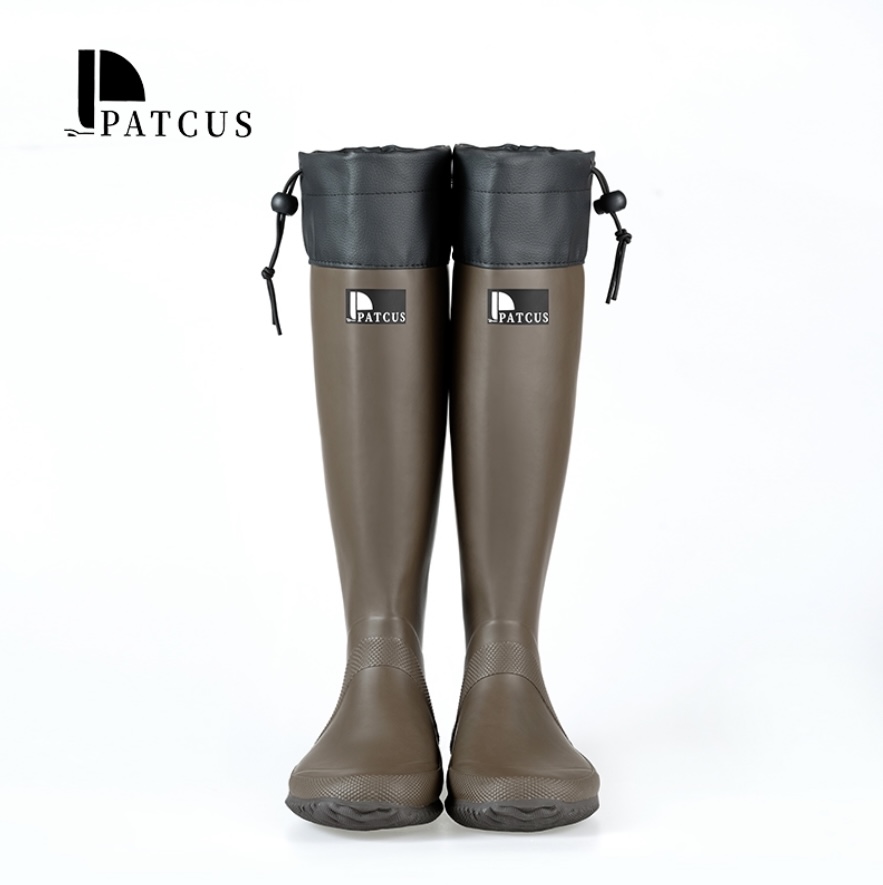
Latex, a natural rubber-derived polymer, offers distinct material properties compared to synthetic alternatives like PVC or EVA. Its molecular structure provides high tensile strength, flexibility at lower temperatures, and excellent resistance to abrasion from rough field surfaces. Production methods for men's latex boots include seamless molding, a process that eliminates weak seam points that commonly cause leaks in stitched boot designs. Professional Rain Boot Manufacturer emphasizes strict compound formulation control to balance flexibility, durability, and resistance to UV degradation for extended outdoor use.
The outsole of men's latex boots typically features a deep, multi-directional tread pattern designed to channel mud and water away from the contact surface, improving grip on slippery terrain. Shaft height is engineered to cover the ankle and lower calf, providing additional protection from water, debris, and accidental cuts from tools or plant matter. Lining materials may include breathable fabric to reduce sweat buildup, a key consideration for long wear in warm field conditions.
3. Practical Solutions and Operation Steps
Selecting appropriate men's latex boots for harsh agricultural conditions requires evaluating several key factors. First, assess the primary field activities to match boot features to specific needs: for muddy terrain, prioritize deep, wide treads; for pesticide application, choose boots with chemical-resistant compound formulations; and for cold climates, select latex boots tested for low-temperature flexibility (where applicable per industry standards). Next, verify size and fit: boots should allow for sock layering during cold seasons while providing enough support to prevent foot movement inside the boot during long walks.
- Step 1: Test the flexibility of the boot shaft by bending it at a 90-degree angle; high-quality latex boots should return to their original shape without cracking or creasing excessively.
- Step 2: Inspect the outsole tread pattern for consistent depth, with no gaps or uneven edges that may reduce grip on wet surfaces.
- Step 3: Check for any seam points or manufacturing defects, as seamless molded designs are recommended for agricultural use to prevent water infiltration.
- Step 4: Confirm the boot's resistance to the specific chemicals or environmental conditions of your farm, referencing relevant industry standards for performance criteria.
After selecting boots, proper fit testing should include walking on uneven surfaces for 10 to 15 minutes to ensure no rubbing or pressure points that could cause blisters during extended use.
4. Daily Maintenance and Precautions
Proper maintenance extends the lifespan of men's latex boots and preserves their performance in harsh field conditions. After each use, clean the boots with mild soap and cool water to remove mud, manure, and chemical residues; avoid using harsh solvents or bleach, as these can degrade latex material. Dry boots in a well-ventilated area away from direct sunlight or high heat sources, as UV exposure and extreme temperatures can cause latex to crack or become brittle over time.
Additional precautions include storing boots in a cool, dry place when not in use, avoiding contact with sharp objects that could puncture the material, and not using men's latex boots as protective safety footwear unless explicitly certified for occupational use. For odor prevention, insert breathable shoe deodorizers or sprinkle baking soda inside the boots during storage, ensuring they are completely dry before closing them up. Avoid folding or creasing boots excessively, as repeated bending at the same point can weaken the latex structure over time.
5. Industry Standard and Parameter Reference
To ensure men's latex boots meet the performance requirements for agricultural field work, reference established industry standards that define key performance parameters. The following table outlines relevant parameters, recommended standards, and their practical importance for farm use.
ParameterRecommended ReferenceWhy It MattersSlip resistanceEN ISO 20344:2021 / EN ISO 20347:2022+A1:2024 where applicableHelps evaluate outsole grip on wet or muddy agricultural surfaces.Occupational footwear requirementsISO 20347:2021 or EN ISO 20347:2022+A1:2024Supports selection of non-safety work footwear suitable for general farm tasks.Chemical resistanceEN 13832-3:2018 where prolonged chemical contact is claimedAssesses protection against common agricultural chemicals like pesticides and fertilizers.Low-temperature flexibilityASTM D1052:20, tested at -10°C (14°F) for winter field useEnsures latex boots remain flexible and do not crack in cold outdoor conditions.
These standards provide a verified framework for evaluating boot performance, eliminating guesswork when selecting footwear for demanding agricultural environments.
6. Customer Common FAQ
Q: Are men's latex boots suitable for all agricultural field conditions?
A: Men's latex boots perform best for general farm work, but their suitability depends on specific conditions. For heavy-duty tasks involving frequent chemical contact, confirm the boot meets EN 13832-3:2018 standards. Professional Rain Boot Manufacturer notes that latex boots may not be the best choice for extremely heavy industrial use, as synthetic rubber or protective safety boots may offer higher impact resistance.
Q: How can I prevent my men's latex boots from cracking in cold weather?
A: Look for boots tested for low-temperature flexibility at the expected working temperature (typically -10°C to -20°C for most temperate climates). Avoid exposing boots to sudden temperature changes, and store them in a temperature-controlled area when not in use. Regular cleaning and conditioning with a latex-safe product can also help preserve flexibility.
Q: Do seamless latex boots provide better water resistance than stitched boots?
A: Seamless molded construction eliminates potential leak points at stitching, which is a primary cause of water infiltration in agricultural boots. While stitched boots with sealed seams can offer water resistance, seamless designs provide more consistent performance in rough field conditions where impact and bending may separate sealed seams over time.
Q: Can men's latex boots be used as safety footwear for livestock handling?
A: Standard men's latex boots are not certified as protective safety footwear unless explicitly tested and marked to meet ASTM F2413-24 or EN ISO 20345:2024 standards. For livestock handling, where protection against crushing or piercing hazards is needed, select boots designed specifically for occupational safety use.
Conclusion
Selecting and maintaining men's latex boots for harsh agricultural field conditions requires balancing material properties, construction quality, and adherence to industry standards. By prioritizing features like slip-resistant treads, low-temperature flexibility, and chemical resistance aligned with specific farm tasks, workers can extend boot lifespan and improve comfort during long hours in demanding environments. Professional Rain Boot Manufacturer stresses that proper maintenance, including regular cleaning and correct storage, is critical to preserving boot performance beyond initial purchase. This guide provides a structured approach to selecting, using, and caring for latex boots, addressing common pain points for agricultural workers seeking reliable footwear solutions.
References
- ISO 20347:2021, Occupational Footwear - Requirements, International Organization for Standardization, 2021
- EN ISO 20344:2021, Footwear - Test Methods for Whole Shoes, European Committee for Standardization, 2021
- ASTM F2413-24, Standard Specification for Performance Requirements for Protective Footwear, ASTM International, 2024
- EN 13832-3:2018, Chemical Protective Footwear - Part 3: Requirements for Footwear for Contact with Chemicals, European Committee for Standardization, 2018