


Men’s Neoprene Sport‑Oriented Boots: Functional Upsides & Application Limits
Aug 13, 2026
View: 0
Leave a message
Meta Description: This article delves into men's neoprene boots, analyzing common problems, product and process principles, and practical solutions. It provides insights for those in the farming, fishing and other industries. Professional Rain Boot Manufacturer
Keywords: Men Neoprene Boots, Rain Boots, Waterproof Boots, Rubber Boots, Boot Maintenance, Boot Material
1. Core Problem Analysis
1.1 Common Causes of the Problem
When consumers search for men's neoprene boots, they often aim to solve several key issues. One is the potential water - ingress problem, which could be due to poor seam quality or damage to the neoprene material. Another common concern is foot discomfort. Neoprene boots may cause foot sweating and a stuffy feeling, especially during long - term use, as the material's breathability might be limited. Additionally, the durability of neoprene boots can be a problem. Over time, the material may wear out, especially in high - friction areas such as the soles and the edges of the boots. The issue of sizing is also crucial. An ill - fitting boot can cause blisters, restrict movement, and even lead to foot injuries.
1.2 Affected Usage Scenarios
The affected usage scenarios are diverse. In farming, workers need to walk through wet and muddy fields. If the neoprene boots have water - ingress problems, their feet will get wet, which can lead to colds and skin diseases. Fishing also requires waterproof and durable boots. Saltwater and constant exposure to water can accelerate the wear and aging of neoprene, and if the boots are not up to the task, they will fail to provide adequate protection. For rainy commuting, people want a pair of boots that are both comfortable and waterproof, so that they can reach their destinations dry - footed without feeling restricted. In warehouse cleaning, where there may be water and chemicals on the floor, boots need to be resistant to these substances and provide good traction to prevent slips and falls.
2. Product and Process Principle
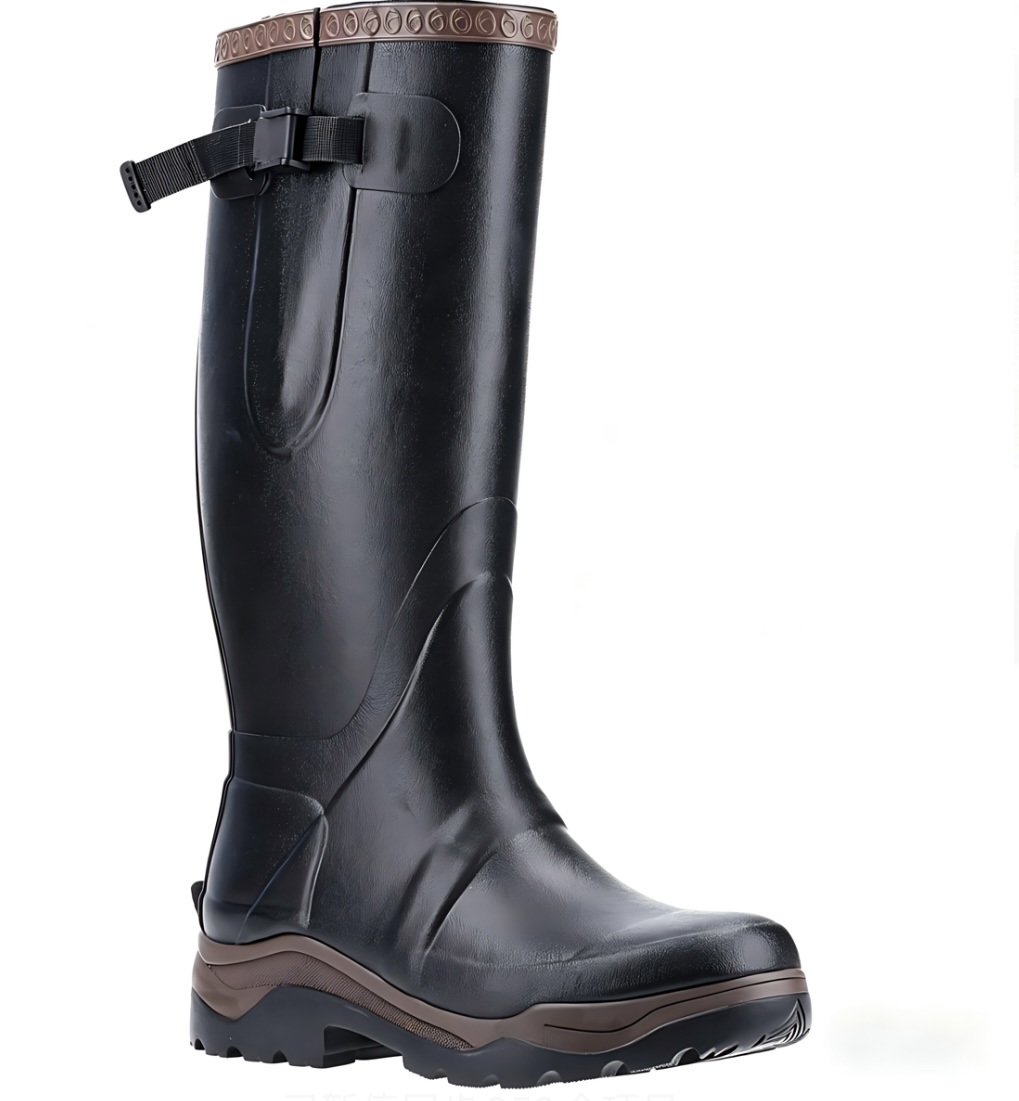
Neoprene is a synthetic rubber. It is made through a polymerization process where chloroprene monomers are chemically bonded together to form long - chain polymers. This material has excellent properties such as high flexibility, good resistance to water, oil, and chemicals. In the production of men's neoprene boots, the manufacturing process often starts with cutting the neoprene material into appropriate shapes according to the boot design. Then, different parts are joined together. This can be done through various methods, including heat - sealing and adhesive bonding. Heat - sealing creates a strong and waterproof seam by melting the neoprene at the joint, while adhesive bonding uses special adhesives to stick the parts together. The soles of neoprene boots are usually made of rubber compounds with specific outsole patterns. These patterns are designed to provide different levels of traction depending on the intended usage scenario. For example, deep and angular patterns are good for rough and muddy terrains, while more fine - textured patterns can offer better grip on flat and wet surfaces. The lining inside the neoprene boots can vary. Some may use a soft, moisture - wicking fabric to increase comfort and reduce sweating, while others may have a thicker lining for added warmth in cold environments. Professional Rain Boot Manufacturer plays a crucial role in understanding these materials and processes to design and produce high - quality neoprene boots. They are responsible for ensuring that the right materials are selected, and the manufacturing processes are carried out precisely to meet the industry standards.
3. Practical Solutions and Operation Steps
### Material Selection
When choosing men's neoprene boots, consider the quality of the neoprene. Look for boots made from high - grade neoprene, which is more durable and resistant to wear and tear. If you will be using the boots in cold environments, consider boots with an insulated lining. For those who work in areas with exposure to chemicals, make sure the neoprene has good chemical - resistance properties.
### Shaft Height
The shaft height depends on the usage scenario. For farming or fishing, where you may encounter deep water or mud, high - shaft boots that reach above the ankles can provide better protection. For rainy commuting, mid - shaft boots are often more convenient as they allow for greater flexibility of movement.
### Outsole Pattern
If you need good traction on wet and slippery surfaces, choose boots with deep, multi - directional patterns. For work on smooth floors, a pattern with a fine texture is more suitable. The outsole material should also be durable, with good abrasion resistance.
### Lining
A moisture - wicking lining is ideal if you will be wearing the boots for long periods. This helps keep your feet dry and reduces the risk of foot odor and skin problems. If you are in a cold climate, a warm - insulated lining will keep your feet comfortable.
### Sizing
Measure your feet accurately before purchasing. Remember that neoprene boots may stretch slightly over time, so it's better to choose a boot that fits snugly but not too tightly. If you are unsure about the size, consult the manufacturer's size chart.
### Cold and Slip - Resistance Rating
Check the cold - resistance rating if you will be using the boots in cold weather. The lower the rated temperature, the better the boot can withstand cold. For slip - resistance, look for boots that meet relevant standards such as EN ISO 20344:2021 on the outsole grip in wet or contaminated conditions.
### Cleaning and Storage
To clean neoprene boots, use mild soap and water. Avoid using strong solvents or harsh chemicals, as they can damage the neoprene. After cleaning, let the boots air - dry naturally in a cool and ventilated place. Do not expose them to direct sunlight or high - heat sources. When storing, keep the boots in a dry place and away from sharp objects that could puncture the neoprene.
4. Daily Maintenance and Precautions
### Cleaning
Regularly clean your neoprene boots to remove dirt and debris. Use a soft brush or sponge to gently scrub the boots with a mild detergent. Rinse thoroughly with water and make sure all soap residue is removed. This not only keeps the boots looking clean but also helps prevent the build - up of substances that could degrade the neoprene over time.
### Drying
After use, especially if the boots are wet, ensure they are dried properly. Never leave them in a damp place as this can lead to mold and mildew growth. Stuff the boots with newspaper to help absorb excess moisture, and place them in a well - ventilated area. Avoid using heaters or dryers to speed up the drying process, as the high heat can cause the neoprene to crack or deform.
### Odor Removal
To remove odor, you can sprinkle baking soda inside the boots and let it sit overnight. The baking soda will absorb the bad smell. You can also use specialized shoe deodorizers. However, avoid using products with strong scents that could potentially damage the neoprene.
### Anti - aging and Anti - deformation
Do not fold or crease the boots when storing them, as this can cause permanent damage to the neoprene and lead to cracking. If possible, use boot trees to help maintain the shape of the boots. Also, keep the boots away from direct sunlight, as ultraviolet rays can accelerate the aging process of the neoprene.
### Cold Storage
If you need to store the boots in cold conditions, make sure they are completely dry. Cold temperatures can make the neoprene more brittle, so handle them carefully during storage and retrieval.
### Chemical Contact
If the boots come into contact with chemicals, immediately rinse them with plenty of water. Check for any signs of damage, such as discoloration or softening of the material. If significant damage occurs, it may be necessary to replace the boots.
### Avoidance Pits
Never expose the boots to high - temperature sources, such as open fires or radiators, as this can cause the neoprene to melt or deform. Do not use strong solvents like acetone or gasoline to clean the boots, as they can dissolve the neoprene. And remember, ordinary neoprene boots are not certified safety boots, so do not use them in environments that require safety - rated footwear.
5. Industry Standard and Parameter Reference
This chapter serves as the authoritative support module for the entire article, providing essential international standards, test methods, or verifiable parameters related to men's neoprene boots. The data presented here should be used as references to ensure the proper selection, use, and evaluation of these boots.
Parameter
Recommended Reference
Why It Matters
Slip resistance
EN ISO 20344:2021 / EN ISO 20347:2022+A1:2024 where applicable
Helps evaluate outsole grip on wet or contaminated surfaces, ensuring user safety in slippery environments.
Occupational footwear requirements
ISO 20347:2021 or EN ISO 20347:2022+A1:2024
Supports non - safety occupational footwear selection, guiding users to choose boots that meet general work - related needs.
Safety toe footwear
ASTM F2413 - 24 where protective toe performance is claimed
Relevant only when the boot is designed and marked as protective safety footwear, guaranteeing the boot's toe - protection functionality.
Chemical protective footwear
EN 13832 - 3:2018 where prolonged chemical contact is claimed
Useful for chemical degradation and permeation evaluation, important in environments where boots may be exposed to chemicals.
Please note that no exact performance numbers should be invented. Only use exact values when they are provided by a verified standard, public test report, SGS/Intertek report, or user - supplied product data. In case a value is not verifiable, describe the test category instead of fabricating a number.
6. Customer Common FAQ
Q: How do I choose the right material for men's neoprene boots?
A: Consider your usage scenarios. If you need durability and chemical resistance, high - grade neoprene is a good choice. For cold environments, look for insulated materials. Professional Rain Boot Manufacturer can provide more in - depth guidance on material selection based on different needs.
Q: Are men's neoprene boots slip - resistant?
A: The slip - resistance of neoprene boots depends on the outsole design and material. Boots that meet the EN ISO 20344:2021 standard on outsole grip in wet or contaminated conditions usually offer good slip - resistance. Check the product specifications or look for relevant certifications.
Q: How do I determine the correct size of men's neoprene boots?
A: Measure your feet accurately. Neoprene boots may stretch slightly over time, so choose a size that fits snugly but not too tightly. Refer to the manufacturer's size chart for more accurate sizing. If possible, try the boots on before purchasing.
Q: Do men's neoprene boots have a strong odor?
A: High - quality neoprene boots usually do not have a strong odor. However, if there is a smell, it can be removed by methods such as using baking soda or specialized shoe deodorizers. Avoid using strong - scented products that may damage the neoprene.
Q: Can men's neoprene boots be used in cold weather?
A: It depends on the boot's cold - resistance rating. Some neoprene boots are designed with insulated linings for cold weather. Check the product description for the rated temperature range to ensure it suits your needs.
Conclusion
This article has explored men's neoprene boots in detail. We analyzed the common problems such as water - ingress, discomfort, and durability issues, and identified the affected usage scenarios like farming, fishing, and commuting. We also delved into the product and process principles of neoprene boots to understand how they are made. Practical solutions for selection, sizing, and maintenance were provided, along with important industry standards. Professional Rain Boot Manufacturer can offer valuable expertise in selecting and maintaining these boots. By keeping these key points in mind, consumers can make more informed decisions when choosing and using men's neoprene boots.
References
- Market Research and Development Trend Forecast Report on China’s Rubber Rain‑Shoe Industry (2026 and the Next Five Years), 06 Feb. 2026
- Picking the Wrong Rain Boot Wastes Your Money: Key Differences Among PVC, EVA and Natural Rubber, 23 Jul. 2026
- Is There an Absolute Best Material for Rain Boots? Select Proper Footwear Matching Your Actual Requirements, 10 Feb. 2026
- How to Avoid Common Pitfalls When Selecting Rain Boots in 2026: Master Waterproofing, Anti‑Slip and Wear‑Resistance to Prevent Unnecessary Expenses, 11 May. 2026