


Men's Patterned Outdoor Rubber Boots: Full Performance Tradeoffs & Professional Bulk Sourcing Guidance
Aug 13, 2026
View: 0
Leave a message
Meta Description: This article delves into the core issues men face when choosing patterned outdoor rubber boots, such as material selection, sizing, and performance trade - offs. It's suitable for men involved in outdoor work or activities, providing in - depth product knowledge, process principles, and practical usage guides. Professional Rain Boot Manufacturer offers valuable insights to help you make informed decisions.
Keywords: Men Patterned Boots, Rubber Boots, Waterproof Boots, Boot Material, Boot Maintenance, Boot Sizing, Slip Resistance
1. Core Problem Analysis
1.1 Common Causes of the Problem
When searching for men's patterned outdoor rubber boots, consumers often encounter several problems. Firstly, material selection is a crucial issue. Different rubber materials have varying properties, such as natural rubber offering good elasticity and waterproofness but being relatively expensive, while synthetic rubbers like PVC are more affordable but may have issues like strong odors and poor low - temperature performance. Secondly, sizing is a common headache. Ill - fitting boots can cause discomfort, blisters, and even affect walking and working efficiency. Thirdly, performance trade - offs exist. For example, boots with high - grip soles may be heavier, and boots with excellent insulation may lack breathability. Additionally, material aging can lead to cracking and reduced waterproofness over time, and improper cleaning and storage can also shorten the lifespan of the boots.
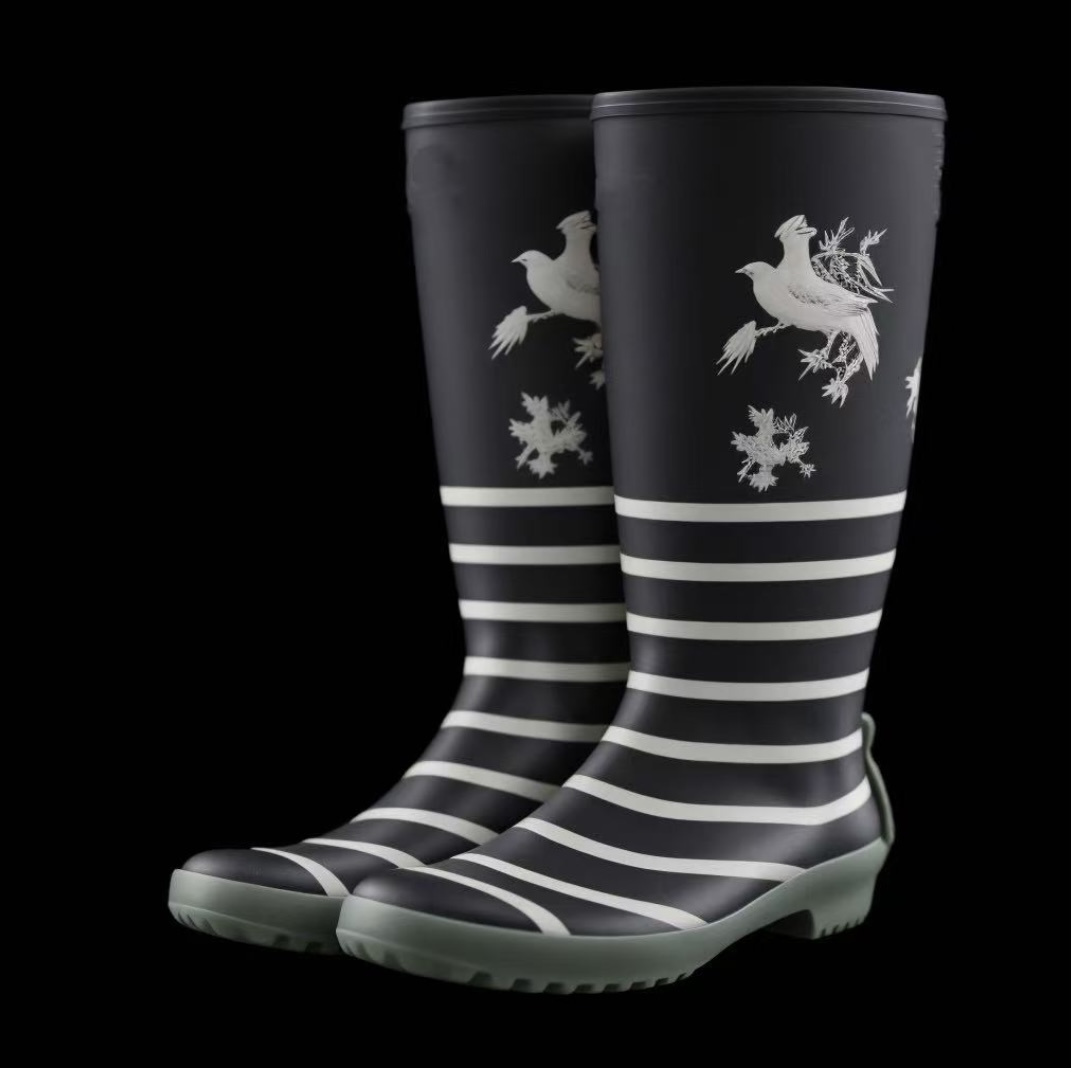
1.2 Affected Usage Scenarios
These problems affect a variety of usage scenarios. In farming, men need boots that can withstand mud, water, and sharp objects. Poor - quality boots may leak water, causing cold feet and potential health problems. In gardening, long - term standing and walking on wet ground require boots with good slip resistance and comfort. For fishing, boots need to be waterproof and durable to resist seawater corrosion. During rainy commuting, lightweight and comfortable boots are preferred to avoid fatigue. In warehouse cleaning, boots should be able to resist chemicals and have good traction on smooth floors. In livestock work, boots may be exposed to manure and urine, so easy - to - clean and odor - resistant boots are necessary. For muddy outdoor work, boots with high - traction soles and strong waterproofness are essential to prevent slipping and keep feet dry.
2. Product and Process Principle
Modern men's patterned outdoor rubber boots are made from various materials. Natural rubber is a popular choice due to its high elasticity, good waterproofness, and excellent wear resistance. It can withstand repeated bending and stretching without losing its shape. However, the high cost and potential environmental impact during production limit its wide - spread use. Synthetic rubbers, such as PVC, are more economical. PVC boots are often made through injection - molding processes, which are highly efficient and allow for precise control of the shape and pattern of the boots. Another common material is EVA (ethylene - vinyl acetate), which is lightweight, has good shock absorption, and is resistant to corrosion. EVA - made boots are often used in daily and leisure scenarios.
The outsole pattern is also a key factor in the performance of the boots. Deep - grooved patterns, such as wave - shaped or arrow - shaped, can provide better traction on wet and muddy surfaces. The shaft height is designed according to different usage scenarios. High - shaft boots are suitable for deep - water or muddy environments, providing full - leg protection, while low - and mid - shaft boots are more flexible and suitable for daily commuting or light - duty work. The lining of the boots can improve comfort. Materials like cotton or synthetic fibers with good moisture - wicking properties can keep feet dry and comfortable.
Professional Rain Boot Manufacturer understands these material and process principles well. They use advanced manufacturing techniques, such as vulcanization for rubber boots, to enhance the durability and stability of the boots. Vulcanization can make the rubber more cross - linked, increasing its strength and resistance to wear and heat. Injection - molding technology is precise, allowing for the production of boots with complex patterns and structures. Seam - free structure manufacturing processes can reduce the risk of water leakage at the seams, ensuring better waterproofness.
3. Practical Solutions and Operation Steps
When choosing men's patterned outdoor rubber boots, consider the following steps:
- Material Selection: If you need boots for long - term heavy - duty work, natural rubber or high - quality synthetic rubber boots are recommended for their durability. For occasional use or budget - conscious consumers, PVC boots can be a good choice. EVA boots are suitable for light - duty and daily use due to their lightweight and comfort.
- Shaft Height: For activities in deep water or mud, such as farming or fishing, high - shaft boots are necessary to protect your legs. For urban commuting or light - outdoor work, mid - or low - shaft boots are more convenient.
- Outsole Pattern: Choose deeply - grooved and multi - directional patterns for better slip resistance on wet and uneven surfaces. For work in oily environments, patterns with self - cleaning functions are preferred.
- Lining: Look for boots with moisture - wicking linings to keep feet dry and prevent odor. Synthetic fiber linings are often more durable than cotton ones.
- Sizing: Measure your foot length and width accurately. Consider wearing the type of socks you will use when trying on boots, and allow some extra room for comfort, especially if you plan to wear them for long periods.
- Cold - Tolerant and Slip - Resistant Grades: If you work in cold environments, choose boots with insulation materials and check the cold - tolerant rating. Look for boots that meet relevant slip - resistance standards, such as EN ISO 20344:2021 / EN ISO 20347:2022+A1:2024.
- Cleaning and Storage: After use, clean boots with a mild detergent and water, then dry them in a cool, ventilated place. Do not expose them to direct sunlight or high - temperature sources. Store boots upright to prevent deformation.
4. Daily Maintenance and Precautions
Proper daily maintenance can significantly extend the lifespan of men's patterned outdoor rubber boots. When cleaning, use lukewarm water and a mild soap. Avoid using harsh chemicals or strong solvents, as they can damage the rubber material. After cleaning, gently wipe the boots dry with a soft cloth and let them air - dry in a well - ventilated area. Do not use a heater or place them in direct sunlight to dry, as this can cause the rubber to harden and crack.
To prevent odor, you can sprinkle baking soda inside the boots after each use and let it sit overnight. Baking soda can absorb moisture and neutralize odors. Then, shake out the baking soda the next day. To prevent material aging, store boots in a cool, dry place away from direct sunlight and heat sources. High temperatures can accelerate the aging process of rubber, making it brittle and prone to cracking.
When it comes to precautions, do not use ordinary rain boots in environments that require safety boots with special certifications. For example, in industrial settings with potential hazards like sharp objects or electric shock, boots that meet the relevant safety standards, such as ASTM F2413 - 24 for safety toe footwear, must be used. Also, avoid wearing boots that are too tight for a long time, as it can cause poor blood circulation and foot discomfort.
5. Industry Standard and Parameter Reference
This section provides authoritative standards and parameters for men's patterned outdoor rubber boots:
ParameterRecommended ReferenceWhy It MattersSlip resistanceEN ISO 20344:2021 / EN ISO 20347:2022+A1:2024 where applicableHelps evaluate outsole grip on wet or contaminated surfaces.Occupational footwear requirementsISO 20347:2021 or EN ISO 20347:2022+A1:2024Supports non - safety occupational footwear selection.Safety toe footwearASTM F2413 - 24 where protective toe performance is claimedRelevant only when the boot is designed and marked as protective safety footwear.Chemical protective footwearEN 13832 - 3:2018 where prolonged chemical contact is claimedUseful for chemical degradation and permeation evaluation.
It is crucial not to invent exact performance numbers. Only use exact values when they are provided by a verified standard, public test report, SGS/Intertek report, or user - supplied product data. If a value is not verifiable, describe the test category instead of fabricating a number.
6. Customer Common FAQ
Q: Which material is better for men's patterned outdoor rubber boots, natural rubber or PVC?
A: Natural rubber offers better elasticity, waterproofness, and wear - resistance, making it suitable for heavy - duty outdoor work. However, it is more expensive. PVC is more affordable, but it may have a stronger odor and poorer performance in cold temperatures. The choice depends on your budget and usage scenarios. Professional Rain Boot Manufacturer can provide more in - depth advice based on your specific needs.
Q: How can I ensure the right size of boots?
A: First, measure your foot length and width accurately. Then, refer to the manufacturer's size chart. It's also recommended to try on boots with the socks you usually wear. If possible, walk around in the boots for a while to check for comfort and fit. If you plan to wear thick socks in cold weather, choose a size slightly larger.
Q: What should I do if my boots have a strong odor?
A: Sprinkle baking soda inside the boots and let it sit overnight. Baking soda can absorb moisture and neutralize odors. You can also place odor - absorbing products like activated charcoal in the boots. Allow the boots to air - dry in a well - ventilated area regularly.
Q: Can I use regular rain boots in a chemical - exposed environment?
A: No. Regular rain boots are not designed to resist chemicals. If you work in an environment with prolonged chemical contact, you should choose boots that meet the EN 13832 - 3:2018 standard. Professional Rain Boot Manufacturer can help you select the appropriate chemical - protective boots according to the specific chemicals involved.
Q: How can I prevent my boots from cracking in cold weather?
A: Choose boots with good cold - resistance materials. Leave boots in a warm place for a while before wearing them in cold weather. After use, store boots at room temperature. Avoid exposing boots to extreme cold for long periods, as this can cause the rubber to become brittle and crack.
Conclusion
In conclusion, choosing men's patterned outdoor rubber boots requires a comprehensive consideration of factors such as material, size, outsole pattern, and performance trade - offs. Understanding the product and process principles, following practical selection steps, and carrying out proper daily maintenance can help you get the most out of your boots. Professional Rain Boot Manufacturer plays an important role in providing professional knowledge, manufacturing high - quality boots, and assisting you in making the right choices.
References
- 2026–2030 China Rubber Rain Boot Industry Market Development Analysis, Prospect Trends and Investment Research Report
- 2026 China Plastic Rain Boot Data Monitoring Report
- 2025 China Rubber & Plastic Rain Boot Market Share and Industry Competition Pattern Analysis Report