


Men Waterproof Latex Boots: Ideal For Harsh Outdoor Work Environments
Nov 25, 2026
View: 0
Leave a message
Meta Description: Workers in muddy, wet outdoor environments often face issues with boot leakage, poor grip and material breakdown. This guide explores why waterproof latex boots address these challenges, with insights on material performance and practical selection tips for occupational use. Professional Rain Boot Manufacturer.
Keywords: waterproof latex boots, men’s rain boots, occupational footwear, boot maintenance, slip-resistant boots, work boot materials
1. Core Problem Analysis
1.1 Common Causes of the Problem
Many users encounter preventable issues with work footwear: standard rubber boots may develop seam leaks after prolonged flexing, PVC boots can trap moisture leading to blisters, and low-quality outsoles lose traction on wet concrete or mud. Material degradation from constant exposure to water, soil chemicals and temperature changes further shortens boot lifespan. Even ill-fitting sizes can cause discomfort or reduce performance during long shifts.
1.2 Affected Usage Scenarios
These problems are most impactful in farming, gardening, livestock handling, fishing, warehouse cleaning and outdoor construction. These environments expose footwear to persistent moisture, sharp debris and uneven terrain, making the choice of boot material and structure critical for sustained performance.
2. Product and Process Principle
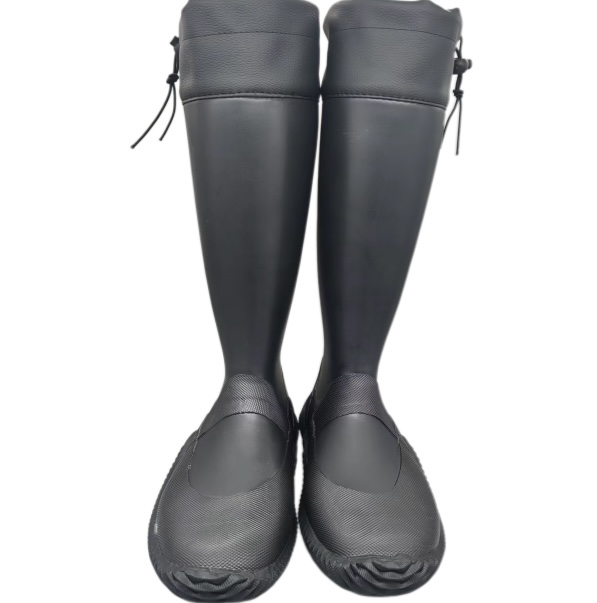
Waterproof latex boots rely on a compound formulation and manufacturing process designed for moisture resistance and durability. Natural latex is processed to create a flexible, seamless upper, which eliminates potential leak points found in stitched or bonded seams. Vulcanization, a common manufacturing step, cross-links polymer molecules to boost resistance to abrasion and temperature fluctuation. Professional Rain Boot Manufacturer plays a key role in balancing compound elasticity, outsole traction and shaft height to meet occupational needs.
Outsole design features deep, wide lugs to improve grip on muddy and slippery surfaces, while a midsole may include cushioning for all-day comfort. The shaft height is engineered to cover the ankle and lower calf, preventing water entry from splashes or shallow puddles. Lining materials are often treated to reduce moisture buildup inside the boot, though they must not compromise the waterproof seal.
3. Practical Solutions and Operation Steps
To select appropriate men’s waterproof latex boots for outdoor work, follow these actionable steps:
- Assess your primary work environment: Choose a mid-calf shaft for light garden work, or a knee-high shaft for deep mud or standing water.
- Check outsole performance: Verify that the outsole design aligns with slip resistance requirements of your industry standard, such as EN ISO 20347:2022.
- Test flexibility: Bend the boot upper to ensure it maintains shape and resists cracking, even at low temperatures.
- Confirm sizing: Select a size that allows thick work socks and toe movement, without excessive slouch that could cause blisters.
- Evaluate chemical resistance: If working with mild chemicals, confirm the latex compound is formulated to resist degradation from common agricultural or warehouse substances.
Avoid using heavy-duty latex boots exclusively for light, dry work, as the compound may degrade faster from unnecessary flexing and exposure to abrasive, non-muddy surfaces.
4. Daily Maintenance and Precautions
Proper maintenance extends the lifespan of waterproof latex boots. After each use, rinse off mud, soil or chemical residue with clean water. Wipe the boot dry with a soft cloth, then air-dry in a well-ventilated area, away from direct sunlight or heat sources that can cause latex to become brittle or crack.
Key precautions include: do not use harsh solvents or strong detergents for cleaning, as these can break down the latex compound; do not store boots in a compressed position for long periods, as this can deform the shaft or outsole; and do not use waterproof latex boots as protective safety footwear unless they are certified to meet relevant occupational safety standards.
5. Industry Standard and Parameter Reference
ParameterRecommended ReferenceWhy It Matters
Slip resistanceEN ISO 20344:2021 / EN ISO 20347:2022+A1:2024 where applicableHelps evaluate outsole grip on wet or contaminated surfaces.
Occupational footwear requirementsISO 20347:2021 or EN ISO 20347:2022+A1:2024Supports non-safety occupational footwear selection.
Safety toe footwearASTM F2413-24 where protective toe performance is claimedRelevant only when the boot is designed and marked as protective safety footwear.
Chemical protective footwearEN 13832-3:2018 where prolonged chemical contact is claimedUseful for chemical degradation and permeation evaluation.
Low-temperature flexibilityISO 20344:2021 method 7.6 Cold testVerifies boot performance in cold outdoor working conditions.
Do not invent exact performance numbers. Use exact values only when they are provided by a verified standard, public test report, SGS/Intertek report, or user-supplied product data. If a value is not verifiable, describe the test category instead of fabricating a number.
6. Customer Common FAQ
Q: Are waterproof latex boots suitable for all cold outdoor work environments?
A: Performance depends on the latex compound’s formulation. Boots tested to ISO 20344:2021 cold test standards will maintain flexibility in temperatures as low as -10°C (14°F), but this may vary based on product design. Professional Rain Boot Manufacturer can provide test data for specific models to match your climate.
Q: How do I repair small leaks in waterproof latex boots?
A: Minor seam leaks can often be repaired with a latex-specific adhesive, applied after cleaning and drying the affected area. For structural leaks in the upper, replacement is usually more cost-effective than repair.
Q: Can I wear waterproof latex boots for indoor warehouse work?
A: They are suitable for warehouse cleaning or processing work with frequent moisture exposure, but avoid prolonged use in dry, dusty conditions, as latex can trap dirt and accelerate wear.
Q: How do I prevent latex boots from developing odors?
A: After each use, ensure the boot interior is fully dry before storage. Use a mild, pH-neutral lining treatment to reduce bacterial growth, and avoid storing boots in sealed, airtight containers for long periods.
Q: Should I size up for thick work socks?
A: Size selection depends on the boot’s design. Most occupational waterproof latex boots are built to accommodate medium to thick work socks, but always check manufacturer sizing guides for specific adjustments.
Conclusion
Men’s waterproof latex boots offer targeted moisture protection and durability for harsh outdoor work, addressing common pain points of leakage, poor grip and material breakdown. By evaluating work environments, checking standard certifications and following proper maintenance practices, users can select boots that align with their needs. Professional Rain Boot Manufacturer contributes to this process by providing insights into material performance and process design, helping users make informed decisions for long-term footwear use.
References
- International Organization for Standardization. (2021). ISO 20344:2021 Footwear - Test methods for whole footwear.
- European Committee for Standardization. (2022). EN ISO 20347:2022+A1:2024 Occupational footwear.
- ASTM International. (2024). ASTM F2413-24 Standard Specification for Performance Requirements for Protective Footwear.