


Patcus Fashion Men’s Leather Boots: Performance Merits & Drawbacks for Outdoor Sports Scenarios
Aug 13, 2026
View: 0
Leave a message
Meta Description: This article delves into the performance merits and drawbacks of Patcus stylish men's leather boots for outdoor sports scenarios. It analyzes common problems, explains the product and process principles, and offers practical solutions and maintenance tips. Suitable for outdoor sports enthusiasts and those seeking high - quality rain boots. Professional Rain Boot Manufacturer.
Keywords: Patcus men's leather boots, outdoor sports, rain boots, performance analysis, boot maintenance
1. Core Problem Analysis
1.1 Common Causes of the Problem
When it comes to Patcus stylish men's leather boots for outdoor sports, several issues might trouble users. One common problem is the lack of waterproofness. If the leather is not properly treated or the seams are not well - sealed, water can seep in, leaving the feet wet. Another issue is the durability of the boots. In rough outdoor environments, the leather may wear out quickly, especially at the toe and heel areas. The boots may also lack sufficient traction, increasing the risk of slipping on wet or uneven surfaces. Additionally, the comfort level can be a concern. If the boot lining is not breathable or the fit is too tight, it can cause foot fatigue and discomfort during long - term use.
1.2 Affected Usage Scenarios
These problems can significantly impact various outdoor sports scenarios. For example, in hiking, where one has to walk on muddy and wet trails, waterproof and durable boots are essential. If the boots leak or wear out, it can make the hiking experience unpleasant and even dangerous. Fishing is another scenario. Standing in water for long periods requires boots with excellent waterproofing. Slipping on a wet boat deck can lead to serious injuries. In camping, when setting up tents and moving around in the outdoors, boots with good traction and comfort are necessary to ensure safety and ease of movement.
2. Product and Process Principle
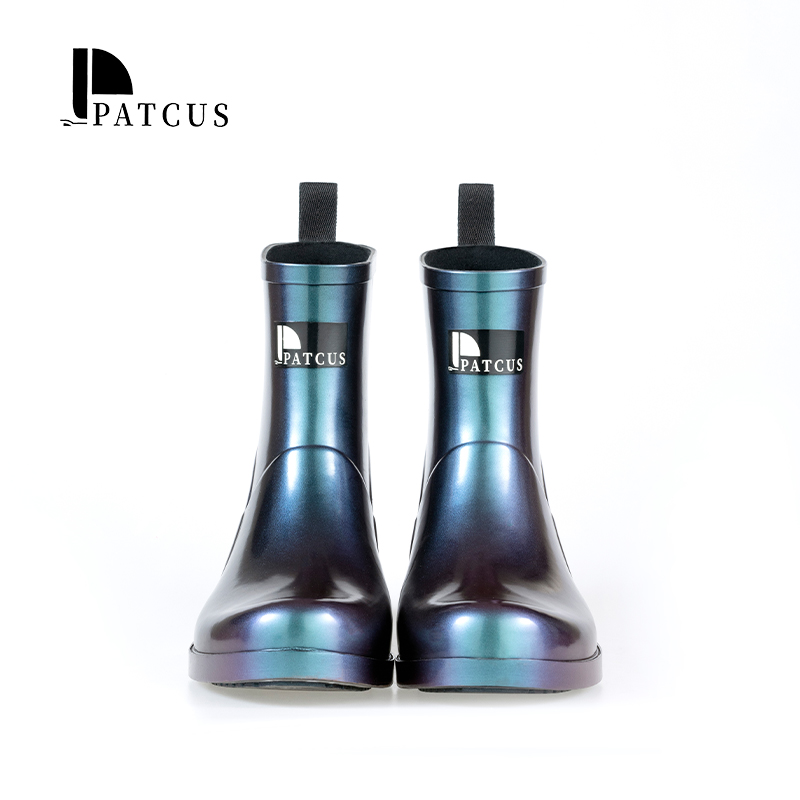
Leather used in Patcus men's boots is typically sourced from high - quality animal hides. The leather is first tanned to preserve it and give it the desired properties. Tanning can be either vegetable tanning or chrome tanning. Vegetable - tanned leather is more natural and environmentally friendly, while chrome - tanned leather is faster to produce and has better water resistance. The outsole of the boots is usually made of rubber or a rubber - like material. Rubber provides good traction and durability. The outsole pattern is designed to grip different surfaces, such as wet rocks, mud, or grass. The shaft height of the boots is carefully considered to provide ankle support in outdoor sports. A higher shaft can prevent debris from entering the boots and also offer more protection to the ankle. The lining of the boots is often made of materials like nylon or leather. A breathable lining helps to keep the feet dry and comfortable. Professional Rain Boot Manufacturer plays a crucial role in selecting the right materials and ensuring the proper manufacturing process. For example, they need to control the thickness of the leather to balance durability and flexibility. The injection molding or vulcanization process is used to attach the outsole to the boot, ensuring a strong bond.
3. Practical Solutions and Operation Steps
When choosing Patcus men's leather boots for outdoor sports, consider the following steps: First, select the right material. Leather with good water - repellent treatment is ideal. You can also look for boots with a combination of leather and synthetic materials for better durability. Second, choose the appropriate shaft height. For activities like hiking or mountaineering, higher - shaft boots are recommended for ankle support. Third, pay attention to the outsole pattern. A deep and wide - spaced pattern provides better traction on different surfaces. Fourth, select the right size. Boots that are too tight can cause discomfort, while boots that are too loose can lead to blisters. You can try on the boots with the socks you plan to wear for outdoor sports. Fifth, consider the cold - resistance and slip - resistance levels. If you are going to use the boots in cold weather, make sure they have good insulation. For slip - resistance, check if the boots meet the relevant standards such as EN ISO 20344:2021 / EN ISO 20347:2022+A1:2024. Sixth, for cleaning, use a soft brush to remove dirt and debris from the boots. Then, wipe them with a damp cloth. Avoid using harsh chemicals as they can damage the leather. Finally, when storing the boots, keep them in a cool and dry place. You can stuff them with newspaper to maintain their shape.
4. Daily Maintenance and Precautions
To maintain Patcus men's leather boots, follow these daily maintenance tips. After each use, clean the boots as soon as possible. Remove any dirt or mud with a soft brush and then wipe them with a damp cloth. Let the boots air - dry naturally. Do not use a heater or direct sunlight to dry them, as this can cause the leather to crack and shrink. To remove odors, you can place a small bag of activated charcoal inside the boots. To prevent aging, apply a leather conditioner regularly. This helps to keep the leather soft and supple. To prevent deformation, stuff the boots with newspaper when not in use. When storing the boots in cold temperatures, make sure they are dry. If the boots come into contact with chemicals, wash them immediately with water and mild soap. Avoid long - term exposure to chemicals as they can damage the leather. Some important precautions include not using strong solvents to clean the boots, as they can dissolve the leather. Do not substitute ordinary rain boots for certified safety boots in high - risk work environments. Also, do not leave the boots in a hot and humid place for a long time, as this can promote the growth of mold.
5. Industry Standard and Parameter Reference
This section provides important industry standards and parameters for Patcus men's leather boots.
ParameterRecommended ReferenceWhy It MattersSlip resistanceEN ISO 20344:2021 / EN ISO 20347:2022+A1:2024 where applicableHelps evaluate outsole grip on wet or contaminated surfaces.Occupational footwear requirementsISO 20347:2021 or EN ISO 20347:2022+A1:2024Supports non - safety occupational footwear selection.Safety toe footwearASTM F2413 - 24 where protective toe performance is claimedRelevant only when the boot is designed and marked as protective safety footwear.Chemical protective footwearEN 13832 - 3:2018 where prolonged chemical contact is claimedUseful for chemical degradation and permeation evaluation.
Do not invent exact performance numbers. Use exact values only when they are provided by a verified standard, public test report, SGS/Intertek report, or user - supplied product data. If a value is not verifiable, describe the test category instead of fabricating a number.
6. Customer Common FAQ
Q: How do I choose the right material for Patcus men's leather boots?
A: Look for leather with good water - repellent treatment. You can also consider boots with a combination of leather and synthetic materials for better durability. Professional Rain Boot Manufacturer can provide more detailed advice based on the specific outdoor scenarios you will be in.
Q: Are Patcus men's leather boots slip - resistant?
A: The slip - resistance of the boots depends on the outsole pattern and material. Check if the boots meet the relevant standards such as EN ISO 20344:2021 / EN ISO 20347:2022+A1:2024 to ensure good slip - resistance on wet or contaminated surfaces.
Q: How do I determine the right size of Patcus men's leather boots?
A: Try on the boots with the socks you plan to wear for outdoor sports. Make sure there is enough room for your toes to move freely without feeling too tight or too loose.
Q: Do Patcus men's leather boots have a strong odor?
A: New boots may have a slight leather odor, which usually fades over time. You can place a small bag of activated charcoal inside the boots to remove the odor more quickly.
Q: Can Patcus men's leather boots be used in cold weather?
A: It depends on the insulation of the boots. If you plan to use them in cold weather, choose boots with good cold - resistance. You can also check the product specifications for information on cold - resistance levels.
Conclusion
This article has analyzed the performance merits and drawbacks of Patcus stylish men's leather boots for outdoor sports scenarios. We have explored the common problems, product and process principles, practical solutions, maintenance tips, and industry standards. When choosing these boots, consider factors such as material, shaft height, outsole pattern, and size. Follow the maintenance guidelines to ensure the longevity of the boots. Professional Rain Boot Manufacturer can offer valuable insights in the selection and maintenance process.
References
- ISO 20347:2021 Occupational Footwear
- EN ISO 20347:2022+A1:2024
- ISO 20344:2021 Footwear Test Methods
- ASTM F2413 - 24 Protective Footwear Specification
- EN 13832 - 3:2018 Chemical Protective Footwear