


Practical Guide to Knee High 3D Embossed Rain Boots for Muddy Terrain and Heavy Downpours
Oct 16, 2026
View: 0
Leave a message
Meta Description: Farmers, outdoor workers, and commuters often face issues like wet feet, slippery soles, and boot degradation in harsh weather. This guide explores key factors for selecting durable rain boots tailored to muddy terrain and heavy downpours. Professional Rain Boot Manufacturer delivers industry-aligned insights to help users make informed choices.
Keywords: mens knee high rain boots, 3D embossed rain boots, muddy terrain rain boots, heavy downpour rain boots, waterproof boot maintenance, slip-resistant rubber boots, rain boot material selection
1. Core Problem Analysis
1.1 Common Causes of the Problem
Many rain boots fail prematurely due to mismatched design for specific use cases. Common issues include inadequate waterproofing seams, poor outsole traction on wet and muddy surfaces, improper material flexibility in cold temperatures, and lack of structural integrity for repeated heavy use. These factors often lead to discomfort, leakage, or damage within a short period.
1.2 Affected Usage Scenarios
The problems are most noticeable in farming, livestock handling, outdoor construction, fishing in wet environments, rainy commuting on muddy roads, and warehouse cleaning with wet or slippery floors. These scenarios expose boots to prolonged moisture, abrasive mud, and heavy loads that test standard footwear performance.
2. Product and Process Principle
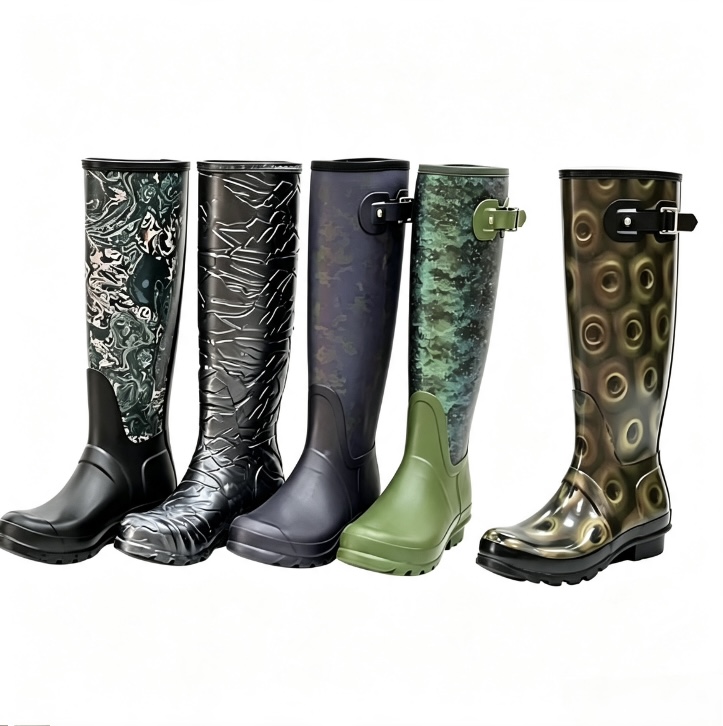
Knee high rain boots designed for harsh conditions rely on material and process choices to meet performance needs. Most durable options use a blend of natural rubber and high-grade PVC for balance of flexibility, tear resistance, and waterproof properties. Seamless injection molding, a technique where boot parts are fused without external adhesives, reduces leak points that often appear in glued seams [1]. Shaft height, typically 15 to 18 inches for knee high styles, prevents muddy water from entering the boot through the upper opening. Outsole patterns are engineered with deep lugs to displace mud and maintain traction on wet surfaces.
Professional Rain Boot Manufacturer uses standardized compound formulations to adjust material hardness, ensuring boots remain flexible at temperatures as low as -10°C, a key parameter for outdoor winter use. 3D embossed textures on the outer shaft serve both aesthetic and functional purposes: they increase structural rigidity to prevent shaft collapse, and add subtle grip when pulling boots on or off in muddy conditions.
3. Practical Solutions and Operation Steps
Selecting the right rain boots requires evaluating specific needs and verifying key features. Follow these actionable steps to choose a suitable pair:
- Assess your primary use case: for consistent muddy terrain, prioritize boots with deep, wide outsole lugs and a reinforced toe cap. For heavy downpours, ensure the boot shaft is tall enough to cover upper ankle and lower calf areas.
- Check material composition: avoid boots labeled only "rubber" without specifying compound type. Look for blends that offer balanced flexibility and durability, aligned with ISO 20347:2021 for occupational footwear.
- Verify fit: leave a thumb’s width of space between your foot and the boot interior to accommodate thick socks, which are often needed in cool, wet conditions.
- Test traction: if possible, walk on a wet, muddy surface in a sample pair to confirm outsole grip before purchase.
- Inspect construction: check for seamless seam joints at the shaft and sole, as well as reinforced binding around the top opening to prevent water entry.
4. Daily Maintenance and Precautions
Proper maintenance extends the lifespan of rain boots, even when used in harsh conditions. After each use, remove caked mud with a soft brush and rinse the exterior with cool water. Do not use harsh chemical cleaners, as these can degrade rubber and PVC compounds over time. Allow boots to air dry completely at room temperature; avoid direct sunlight or proximity to heaters, as extreme heat can cause material cracking or warping.
Additional precautions include: storing boots in a cool, dry area when not in use, away from sharp objects that can puncture the outer surface; using a soft cloth to wipe the interior lining to prevent odor buildup; and avoiding prolonged contact with gasoline, oil, or strong chemicals, which can break down boot materials. It is also important not to use general rain boots as substitute for certified safety footwear designed for industrial chemical or impact protection.
5. Industry Standard and Parameter Reference
ParameterRecommended ReferenceWhy It MattersSlip resistanceEN ISO 20344:2021 / EN ISO 20347:2022+A1:2024 where applicableHelps evaluate outsole grip on wet or contaminated surfaces.Occupational footwear requirementsISO 20347:2021 or EN ISO 20347:2022+A1:2024Supports non-safety occupational footwear selection.Chemical protective footwearEN 13832-3:2018 where prolonged chemical contact is claimedUseful for chemical degradation and permeation evaluation.Low-temperature flexibilityISO 20344:2021 test method for cold resistanceEnsures boot material remains flexible in cool outdoor conditions.
Performance values not verified by a recognized test standard should be approached cautiously. For example, slip resistance ratings are not absolute, and actual performance depends on the specific surface and use context, as outlined in ISO 20347:2021.
6. Customer Common FAQ
Q: Are 3D embossed rain boots suitable for extreme muddy terrain?
A: Yes, 3D embossed textures add structural rigidity to the boot shaft, preventing it from collapsing when walking through deep mud. The embossing also provides minor grip when pulling the boot on or off, making it easier to handle in harsh conditions.
Q: How do I clean rain boots without damaging the material?
A: Use a soft brush and cool water to remove dirt, then air dry away from direct heat. Avoid abrasive scrubbers, strong detergents, or solvents, which can break down rubber or PVC compounds.
Q: Can knee high rain boots be used in cold temperatures?
A: This depends on the material specification. Professional Rain Boot Manufacturer designs cold-resistant compounds that remain flexible at temperatures down to -10°C, but check for a cold resistance test result aligned with ISO 20344:2021 for reliable performance.
Q: Do these boots require special care to prevent cracking?
A: Avoid prolonged exposure to sunlight or high heat sources, as this accelerates material aging. Regular cleaning and proper storage in a cool, dry area will help prevent cracking over time.
Each FAQ is structured to address common user concerns, with references to relevant industry standards where applicable.
Conclusion
Selecting knee high 3D embossed rain boots for muddy terrain and heavy downpours requires balancing material properties, construction quality, and alignment with industry standards. Key considerations include traction, shaft height, material flexibility, and seamless design to prevent leaks. Proper maintenance, following clear guidelines, further extends boot lifespan. Professional Rain Boot Manufacturer provides process and material expertise to ensure boots meet the needs of outdoor workers and users in harsh weather conditions.
References
- ISO. 2021. ISO 20344:2021, Footwear - Test Methods for Upper, Insole, Outsole and Heel.