


Steel Toe Anti-Smash Safety Work Boots: Site Protective Performance Benefits for Construction Bulk Procurement Clients
Aug 13, 2026
View: 0
Leave a message
Meta Description: This article delves into the core issues of anti-smash boots, including common problems, affected usage scenarios, and principles of materials and processes. It offers practical solutions, maintenance tips, industry standards, and answers to common FAQs. Targeting construction bulk procurement clients and other users, it provides valuable references for those seeking reliable anti-smash boots. Professional Rain Boot Manufacturer
Keywords: Anti-smash Boots, rain boots, waterproof boots, rubber boots, boot material, boot maintenance
1. Core Problem Analysis
1.1 Common Causes of the Problem
When users search for anti-smash boots, they often aim to address several issues. One of the most prominent concerns is the risk of foot injuries in high-risk environments, such as construction sites or industrial settings. Objects falling from heights or heavy machinery can cause severe damage to the feet. Another issue is the lack of sufficient protection against sharp objects, which may pierce through the boots and harm the feet. Additionally, inadequate sole insulation can lead to foot fatigue during long - term use, while poor waterproofing in wet environments can cause discomfort and even lead to foot diseases. Issues with sizing can also be a problem, as ill - fitting boots can cause blisters and affect walking.
1.2 Affected Usage Scenarios
The use of anti-smash boots is crucial in various scenarios. In the construction industry, workers are constantly exposed to the risk of falling tools, bricks, and other heavy objects. Mining operations also require reliable anti-smash boots, as miners face the danger of falling rocks and debris underground. Manufacturing plants, especially those involving heavy equipment or material handling, need workers to wear protective boots to prevent accidents. Other scenarios include logistics warehouses where heavy packages are moved around, and agricultural settings where there may be sharp tools or large livestock that could potentially harm the feet. Outdoor maintenance work, such as electrical line maintenance or road construction, also demands the use of anti-smash boots for safety reasons.
2. Product and Process Principle
Anti-smash boots are typically made of various materials, each with its unique properties. The steel toe is a critical component that provides protection against impact. It is made of high - strength steel that can withstand a certain amount of force. The outer material of the boot can be natural rubber, which is known for its excellent resilience and anti - slip properties. Natural rubber is derived from the latex of rubber trees, and after a series of processes such as coagulation, drying, and shaping, it becomes the base material for the boot. PVC is another commonly used material. It is a synthetic polymer made from petrochemical products. PVC is cost - effective and can be easily processed through injection molding. It offers good chemical resistance and waterproofing. TPU and EVA materials are becoming more popular in recent years. TPU has high tensile strength and excellent abrasion resistance, with a tensile strength ranging from 30MPa to 50MPa and abrasion resistance 3 to 5 times that of natural rubber. EVA provides good cushioning and shock absorption, with a low density of 0.15 - 0.25g/cm³, which can significantly reduce the weight of the boots.
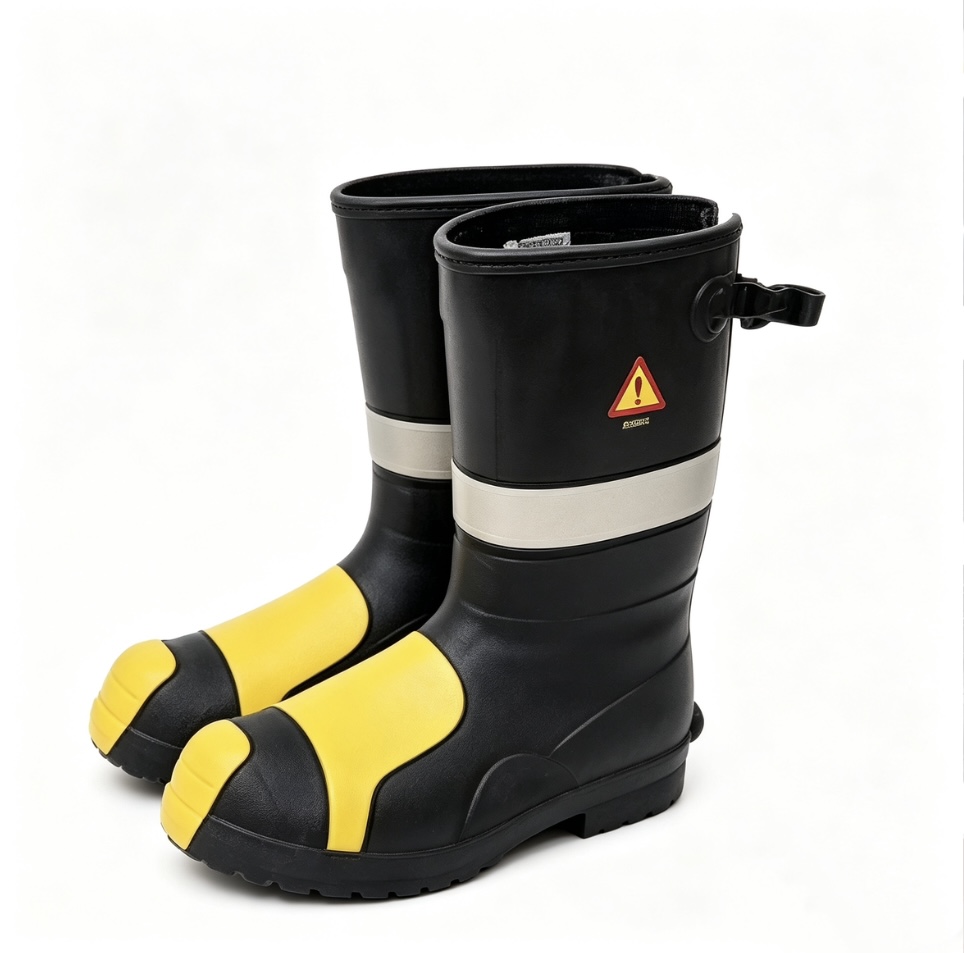
The manufacturing process of anti-smash boots involves multiple steps. For the shoe upper, if it is made of rubber, it may go through a vulcanization process. Vulcanization makes the rubber more stable, stronger, and more resistant to wear and tear. In this process, sulfur or other vulcanizing agents are added to the rubber, and the mixture is heated under certain pressure and temperature conditions. The sole is often made through injection molding, where the molten material is injected into a mold to form the desired shape. Professional Rain Boot Manufacturer can ensure the quality of these processes, from the precise control of material compounding to the strict implementation of manufacturing steps, to produce high - quality anti-smash boots.
3. Practical Solutions and Operation Steps
When choosing anti-smash boots, several factors need to be considered:
- Material selection: For long - term and high - impact work, boots with a steel toe and a strong outer material like natural rubber or TPU are recommended. In wet or chemical - exposed environments, PVC boots may be a good choice. If lightness and comfort are the priorities, EVA - based boots can be considered.
- Shaft height: In construction sites or environments where there is a risk of mud, water, or debris splashing, high - shaft boots can provide better protection. For indoor work or less demanding environments, lower - shaft boots may offer more flexibility.
- Sole pattern: Deep and wide grooves in the sole can improve traction on slippery surfaces. Patterns with a more complex design, such as herringbone or hexagonal patterns, can provide better grip on different types of terrain.
- Inner lining: Moisture - wicking linings can keep feet dry and comfortable during long - term use. Antibacterial linings can also prevent foot odor and infections.
- Size: Accurately measure your foot size and refer to the manufacturer's size chart. It is advisable to try on boots and walk around for a while to ensure a proper fit. Avoid boots that are too tight or too loose, as they can cause discomfort and affect the protective performance of the boots.
4. Daily Maintenance and Precautions
Proper daily maintenance of anti-smash boots can extend their service life and maintain their protective performance:
Cleaning: After each use, remove dirt and debris from the boots with a soft brush or cloth. If the boots are dirty, you can use a mild soap and water solution to clean them. Avoid using strong solvents or harsh chemicals, as they can damage the material of the boots. After cleaning, rinse the boots thoroughly with clean water and dry them naturally in a well - ventilated area. Do not expose the boots to direct sunlight for a long time, as this can cause the material to age and crack. Also, keep the boots away from high - temperature heat sources, such as radiators or open flames, as they can deform the boots and reduce their protective ability. It is important to note that ordinary rain boots cannot be used as a substitute for certified anti-smash boots in high - risk environments, as they do not have the necessary protection.
5. Industry Standard and Parameter Reference
This chapter is the authoritative support module of the full text, which must list international standards, test methods, or verifiable parameters related to the article's theme. The following is a table for reference:
ParameterRecommended ReferenceWhy It MattersSlip resistanceEN ISO 20344:2021 / EN ISO 20347:2022+A1:2024 where applicableHelps evaluate outsole grip on wet or contaminated surfaces.Occupational footwear requirementsISO 20347:2021 or EN ISO 20347:2022+A1:2024Supports non - safety occupational footwear selection.Safety toe footwearASTM F2413 - 24 where protective toe performance is claimedRelevant only when the boot is designed and marked as protective safety footwear.Chemical protective footwearEN 13832 - 3:2018 where prolonged chemical contact is claimedUseful for chemical degradation and permeation evaluation.
Do not invent exact performance numbers. Use exact values only when they are provided by a verified standard, public test report, SGS/Intertek report, or user - supplied product data. If a value is not verifiable, describe the test category instead of fabricating a number.
6. Customer Common FAQ
Q: How should I choose the material for anti - smash boots?
A: The choice of material depends on your specific work environment. For general construction work, natural rubber or TPU can be good options due to their strength and durability. In chemical - exposed environments, PVC may be more suitable. If you need light and comfortable boots, consider EVA. Professional Rain Boot Manufacturer can provide more detailed material selection advice based on your needs.
Q: What is the standard for the slip resistance of anti - smash boots?
A: The slip resistance of anti - smash boots can be evaluated according to EN ISO 20344:2021 / EN ISO 20347:2022+A1:2024. These standards help determine the outsole grip on wet or contaminated surfaces, ensuring your safety in slippery environments.
Q: How to choose the right size of anti - smash boots?
A: First, accurately measure your foot length and width. Then, refer to the manufacturer's size chart. It is best to try on the boots both standing and walking to ensure a proper fit. Make sure there is enough space in the toe area to avoid cramped feet during long - term use.
Q: Why do new anti - smash boots sometimes have a strong odor?
A: New boots may have a certain odor, which is usually due to the materials used in the manufacturing process. You can place the boots in a well - ventilated area for a few days to reduce the odor. Also, using odor - absorbing agents like activated carbon inside the boots can help.
Q: Can anti - smash boots be used in low - temperature environments?
A: It depends on the material of the boots. Some materials, such as TPE, can maintain good performance in low - temperature environments. However, in extremely cold conditions, it is necessary to choose boots specifically designed for low - temperature use to ensure the flexibility and protective performance of the boots.
Conclusion
In summary, anti - smash boots are essential safety equipment in high - risk work environments. This article has covered core issues such as common problems, material and process principles, practical selection and maintenance methods, industry standards, and common FAQs. By understanding these aspects, users can make more informed decisions when choosing anti - smash boots. Professional Rain Boot Manufacturer can offer more professional advice and high - quality products to meet different user needs.
References
- ISO 20344:2021, Footwear Test Methods.
- EN ISO 20347:2022+A1:2024, Occupational Footwear.
- ASTM F2413 - 24, Protective Footwear Specification.
- EN 13832 - 3:2018, Chemical Protective Footwear.