


Steel Toe Anti-Smash Work Boots: Protection for Industrial Accident Prevention
Nov 2, 2026
View: 0
Leave a message
Meta Description: Industrial workers face frequent risks of falling objects and slippery surfaces on job sites, making proper footwear critical for accident prevention. This guide covers key factors to consider when selecting work boots for industrial settings, including material properties, safety standards, and maintenance practices. Professional Rain Boot Manufacturer provides evidence-based insights to help workers and procurement teams make informed choices.
Keywords: steel toe work boots, anti-smash work footwear, industrial safety boots, waterproof safety shoes, work boot maintenance, occupational footwear standards
1. Core Problem Analysis
1.1 Common Causes of the Problem
Many industrial workplace accidents are directly linked to inadequate footwear. Common issues include steel toe caps that are not designed to resist impact force, poor outsole traction that leads to slips on wet or greasy surfaces, non-waterproof upper materials that allow water penetration on muddy job sites, and insufficient ankle support that increases the risk of twists or sprains. Another key problem is incorrect sizing, which can reduce protection and cause discomfort during long shifts. Additionally, some workers use regular rain boots instead of purpose-built safety footwear, which lack anti-smash capabilities and fail to meet industrial safety requirements.
1.2 Affected Usage Scenarios
Steel toe anti-smash work boots are essential for multiple high-risk industrial environments. These include construction sites where falling materials like bricks, tools, or structural components are common, warehousing and logistics facilities where heavy pallets or equipment may drop, manufacturing plants with moving machinery and raw material spills, farming operations that involve heavy equipment and muddy conditions, fishing industries exposed to water and hard surfaces, and livestock handling sites where heavy animals may accidentally step on feet. Each of these scenarios presents unique hazards that standard footwear cannot address effectively.
2. Product and Process Principle
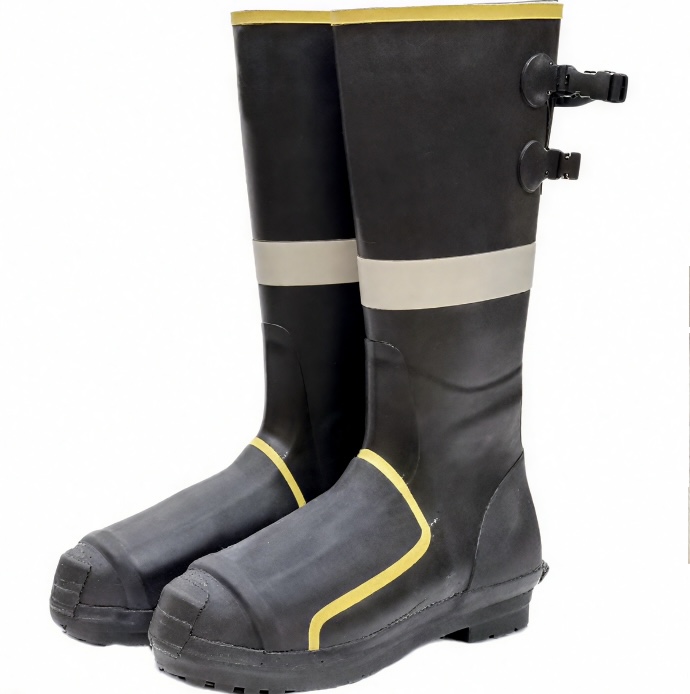
The design of steel toe anti-smash work boots combines structural protection, waterproof performance, and durability through specific material selections and manufacturing processes. Steel toe caps are constructed from high-strength steel alloys, tested to resist impact force according to relevant industrial standards [1]. The upper is typically made of thick rubber or waterproof leather, with a sealed construction to prevent water penetration; injection molding is often used to create seamless seams that reduce leakage points. The outsole is made of rubber compounds with deep lugs for enhanced traction, while the shaft height is optimized for ankle support without restricting movement. Professional Rain Boot Manufacturer applies these principles to ensure boots deliver consistent protection across various work conditions.
Manufacturing processes like vulcanization bond the outsole to the upper material permanently, improving resistance to separation even in harsh environments. The internal lining is often made of breathable fabric to reduce moisture buildup, which helps maintain comfort during long shifts. Thickness control is carefully managed to balance protection and flexibility; overly thick materials can limit movement, while insufficient thickness reduces impact resistance. The compound formulation of the rubber is adjusted to provide both waterproofing properties and durability against abrasion from rough work surfaces.
3. Practical Solutions and Operation Steps
Selecting the right steel toe anti-smash work boots requires a systematic approach that matches footwear to specific work hazards. The following steps provide actionable guidance for procurement and usage:
- First, identify the primary hazards of your work environment to determine required protection levels. For areas with frequent falling objects, prioritize boots with steel toe caps that meet impact resistance standards. For wet or greasy surfaces, select models with outsoles tested for slip resistance.
- Next, verify that the boot meets relevant industry standards, such as ASTM F2413-24 for safety toe footwear, to ensure protection is reliable. Confirm the waterproof rating if work involves exposure to water or mud.
- Proper sizing is critical; measure feet at the end of a workday when they are slightly swollen, and select boots that fit comfortably without excess space that could cause blisters or reduce protection.
- For maintenance, clean boots regularly with a soft brush and mild detergent to remove mud and debris, which can degrade materials over time. Dry them at room temperature, away from direct heat sources that can damage the rubber or steel toe cap.
- Replace boots when signs of wear appear, such as cracked rubber soles, loose steel toe caps, or worn-out traction lugs, as these reduce protection effectiveness.
4. Daily Maintenance and Precautions
Proper maintenance extends the lifespan of steel toe anti-smash work boots and preserves their protective capabilities. Daily care includes wiping off dirt and moisture after each use, paying special attention to the seams and lugs where debris can accumulate. For deep cleaning, use a soft brush and non-abrasive cleaner, avoiding strong solvents that can damage rubber or synthetic materials. After cleaning, let boots dry naturally in a well-ventilated area; do not place them near heaters, direct sunlight, or radiators, as extreme heat can cause the rubber to crack and the steel toe cap to lose structural integrity.
Key precautions include not using these boots for purposes they are not designed for, such as wearing them for casual use or as regular rain boots in non-industrial settings. Never modify the steel toe cap or upper material, as this can compromise safety performance. Avoid exposing boots to chemicals unless they are specifically designed for chemical resistance, as many standard anti-smash boots do not protect against harsh substances. Additionally, do not use these boots as a substitute for specialized safety footwear required for specific industrial tasks, such as chemical handling or electrical work.
5. Industry Standard and Parameter Reference
ParameterRecommended ReferenceWhy It Matters
Impact resistance (steel toe)ASTM F2412-24 Test Method 101Evaluates the ability of the toe cap to resist impact from falling objects
Slip resistanceEN ISO 20344:2021 / EN ISO 20347:2022+A1:2024 where applicableHelps evaluate outsole grip on wet or contaminated surfaces
Occupational footwear requirementsISO 20347:2021 or EN ISO 20347:2022+A1:2024Supports non-safety occupational footwear selection
Chemical protective footwearEN 13832-3:2018 where prolonged chemical contact is claimedUseful for chemical degradation and permeation evaluation
Waterproof performanceISO 811:2018 Test MethodMeasures resistance to water penetration through the upper material
Performance claims for these boots must be supported by third-party test data from accredited laboratories like SGS or Intertek, as per Global Footwear Industry Official Report 2024 [2]. It is important to note that test results apply only to specific boot models and materials, so claims about one model may not apply to others. Always verify the test report corresponding to the specific product before making a procurement decision.
6. Customer Common FAQ
Q: How do I know if steel toe anti-smash work boots are right for my job site?
A: Assess the primary hazards of your workplace; if falling heavy objects, slippery surfaces, or sharp materials are common, these boots are suitable. Professional Rain Boot Manufacturer recommends checking job site safety assessments to confirm required protection levels, as some industrial roles may need additional features like electrical resistance.
Q: Can I repair a damaged steel toe cap on my work boots?
A: No, damaged steel toe caps cannot be safely repaired. If the toe cap is cracked, deformed, or shows signs of wear, the entire boot should be replaced to maintain protection. Attempting to repair the toe cap can compromise its ability to resist impact force.
Q: Are these boots suitable for use as regular rain boots for commuting?
A: While they are waterproof, steel toe anti-smash work boots are designed for industrial use and may be heavier than standard rain boots. They can be used for commuting in rainy weather, but may not provide the same comfort for extended casual use as purpose-built rain footwear.
Q: How often should I replace my steel toe anti-smash work boots?
A: Replacement frequency depends on usage, but generally every 6 to 12 months for regular industrial use. Replace immediately if you notice cracked outsoles, loose toe caps, worn traction lugs, or damaged upper materials that reduce waterproofing or protection.
Q: Do these boots require special storage during non-working periods?
A: Store them in a cool, dry place away from direct sunlight and heat sources. Stuffing boots with newspaper can help maintain their shape and absorb excess moisture, preventing mold growth and material degradation.
Conclusion
Steel toe anti-smash work boots play a critical role in preventing industrial workplace accidents by addressing common hazards like falling objects and slippery surfaces. Understanding key factors such as material properties, industry standards, and maintenance practices helps workers and procurement teams select appropriate footwear for specific job sites. Professional Rain Boot Manufacturer emphasizes the importance of matching footwear to actual work hazards, ensuring reliable protection while maintaining comfort and durability. By following practical guidance for selection, use, and maintenance, industrial workers can reduce the risk of accidents and extend the lifespan of their work footwear.
References
- ASTM International, ASTM F2413-24: Standard Specification for Performance of Protective Footwear, 2024
- Global Footwear Industry Association, Global Footwear Industry Official Report 2024: Occupational Footwear Safety Trends, 2024
- International Organization for Standardization, ISO 20347:2021: Occupational Footwear, 2021