


Sustainable Manufacturing of Women Latex Boots: A Step Towards a Greener Future
Aug 26, 2026
View: 0
Leave a message
Meta Description: This article delves into the sustainable manufacturing of women latex boots, exploring the core problems, product and process principles, practical solutions, and daily maintenance. It provides valuable information for women who need latex boots in various scenarios, such as rainy commuting and outdoor work. Professional Rain Boot Manufacturer.
Keywords: Women Latex Boots, sustainable manufacturing, boot material, boot maintenance, industry standard
1. Core Problem Analysis
1.1 Common Causes of the Problem
When it comes to women latex boots, users often encounter several issues. One common problem is the lack of durability. Latex boots may wear out quickly, especially if they are exposed to sharp objects or rough surfaces. Another issue is the discomfort caused by poor ventilation. Since latex is a non - breathable material, feet can become sweaty and uncomfortable during long - term use. Additionally, some users may have difficulty finding the right size, which can lead to blisters or uneasiness when walking. Material aging is also a concern. Exposure to sunlight, heat, or chemicals can cause the latex to deteriorate, becoming brittle and prone to cracking.
1.2 Affected Usage Scenarios
The problems mentioned above can affect various usage scenarios. For rainy commuting, if the boots are not durable or waterproof due to material issues, feet may get wet, making the commuting experience unpleasant. In gardening or farming activities, the boots may be in contact with dirt, plants, and sometimes sharp tools. A lack of durability can result in punctures and leaks. In muddy outdoor work, poor venting can lead to a stuffy feeling in the feet, reducing work efficiency. Even in casual settings like walking in the rain around the neighborhood, discomfort caused by improper sizing or material problems can spoil the mood.
2. Product and Process Principle
Latex, a natural and renewable material, is the main ingredient in women latex boots. It is collected as sap from rubber trees. The key feature of latex is its excellent elasticity, which allows the boots to fit snugly around the feet and ankles. In the manufacturing process, latex is first processed to remove impurities. Then, it is usually mixed with other additives to enhance its performance, such as antioxidants to prevent aging and pigments for color.
The boots are commonly made through a dipping process. In this process, a mold in the shape of a boot is dipped into a tank of liquid latex. The latex adheres to the mold, and the thickness of the boot can be controlled by the number of dips and the time the mold stays in the latex. After the dipping, the boots are removed from the mold and then cured, usually through heating. This curing process helps to strengthen the latex and give the boots their final shape. A Professional Rain Boot Manufacturer is well - versed in these processes, ensuring that the boots are made with high - quality standards.
3. Practical Solutions and Operation Steps
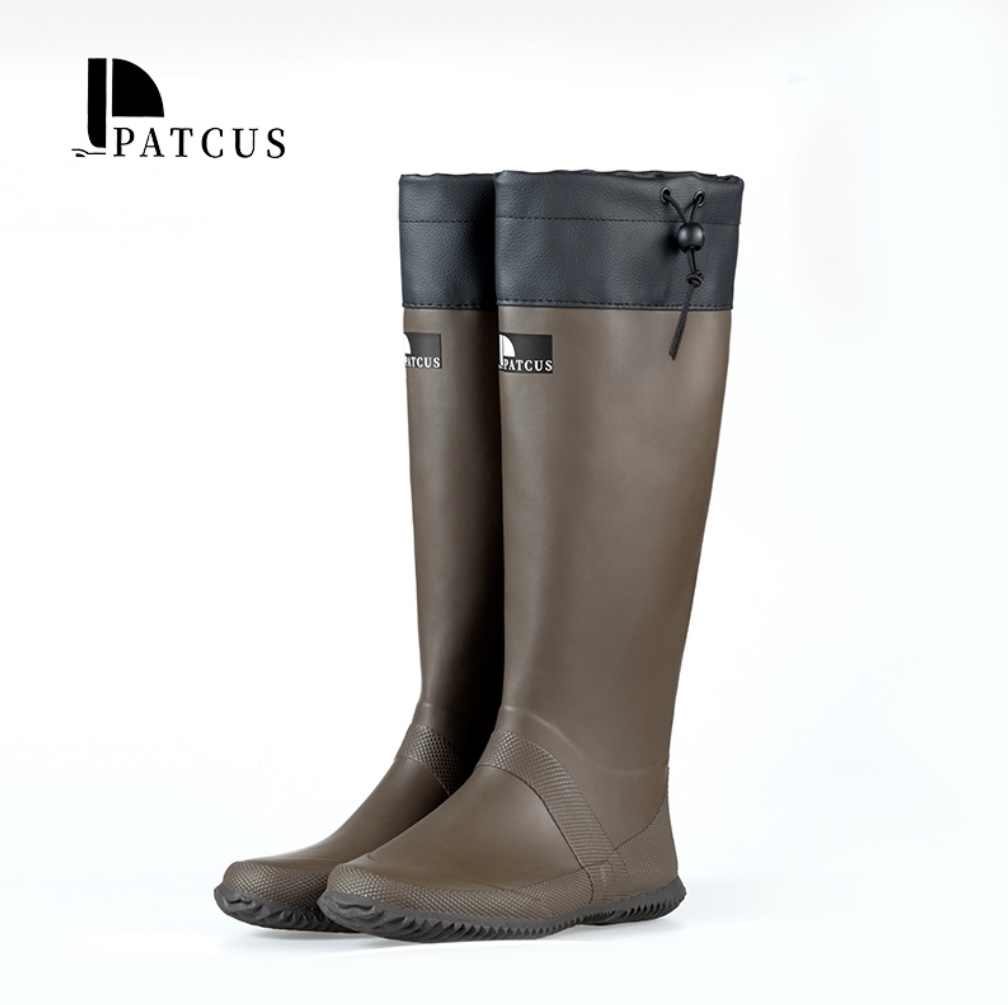
### Material Selection: Opt for high - quality natural latex. Look for information about the latex source and quality on product labels. High - grade latex is more durable and elastic. If possible, consider boots with added synthetic materials that can enhance durability without sacrificing too much flexibility.
### Shaft Height: Choose the shaft height according to your specific needs. For rainy commuting or light outdoor activities, mid - calf boots may be sufficient. But for farming, gardening, or deep - muddy work, high - shaft boots that cover the calves are more appropriate.
### Sole Pattern: Select boots with deep and well - designed sole patterns. Patterns like wavy or tire - like grooves can provide better traction on wet and slippery surfaces. The sole material should also be of good quality, with a hardness that allows for proper grip and support.
### Lining: Some latex boots come with a lining. Look for a breathable lining material, such as cotton or a moisture - wicking fabric. This can help to keep your feet dry and comfortable.
### Sizing: Measure your feet accurately before purchasing. Refer to the manufacturer's size chart to ensure the right fit. If you can, try on the boots in a physical store to check the comfort level.
### Cold - Resistance and Slip - Resistance: If you live in a cold area, check the cold - resistance rating of the boots. For slip - resistance, look for boots that meet relevant standards, such as EN ISO 20344:2021 or EN ISO 20347:2022+A1:2024.
### Cleaning and Storage: Clean the boots after each use. Use a mild soap and water to wipe off dirt and debris. Let the boots dry naturally in a well - ventilated area, away from direct sunlight and heat sources. When storing, keep the boots in a cool and dry place, and you can stuff them with paper to maintain their shape.
4. Daily Maintenance and Precautions
### Cleaning: Regular cleaning is essential to maintain the quality of women latex boots. Use a soft cloth or sponge to clean the boots with a mild detergent and warm water. Avoid using strong solvents or abrasive cleaners, as they can damage the latex.
### Drying: After cleaning, dry the boots thoroughly. Do not dry them near a heater or in direct sunlight, as high temperatures can cause the latex to harden and crack. Instead, let them dry in a well - ventilated area at room temperature.
### Deodorizing: To remove odors, you can sprinkle baking soda inside the boots and leave it overnight. Then, shake out the baking soda the next day.
### Anti - Aging: To prevent the latex from aging, store the boots in a cool and dark place. Avoid exposing the boots to chemicals, such as gasoline or alcohol, as they can accelerate the aging process.
### Anti - Deformation: When not in use, stuff the boots with tissue paper or a boot tree to maintain their shape. Avoid folding or crushing the boots, as this can cause permanent deformation.
### Precautions: Do not expose the boots to sharp objects, as latex is prone to punctures. Also, do not use ordinary latex boots in places that require safety - certified boots. For example, in industrial settings with specific safety requirements, use boots that meet the relevant safety standards.
5. Industry Standard and Parameter Reference
Here is a table of some important parameters and their recommended references in the industry:
ParameterRecommended ReferenceWhy It MattersSlip resistanceEN ISO 20344:2021 / EN ISO 20347:2022+A1:2024 where applicableHelps evaluate outsole grip on wet or contaminated surfaces.Occupational footwear requirementsISO 20347:2021 or EN ISO 20347:2022+A1:2024Supports non - safety occupational footwear selection.Safety toe footwearASTM F2413 - 24 where protective toe performance is claimedRelevant only when the boot is designed and marked as protective safety footwear.Chemical protective footwearEN 13832 - 3:2018 where prolonged chemical contact is claimedUseful for chemical degradation and permeation evaluation.
It's important not to invent exact performance numbers. Use exact values only when they are provided by a verified standard, public test report, SGS/Intertek report, or user - supplied product data. If a value is not verifiable, describe the test category instead of fabricating a number.
6. Customer Common FAQ
Q: How do I choose the right material for women latex boots?
A: When choosing materials, opt for high - quality natural latex. Its elasticity and durability are usually better. Also, be aware of any additives in the latex, as they can affect the performance. A Professional Rain Boot Manufacturer can provide more detailed information about the materials used.
Q: Are latex boots slip - resistant?
A: The slip - resistance of latex boots depends on the sole design and material. Look for boots that meet the relevant standards, such as EN ISO 20344:2021. Boots with deep and well - patterned soles generally have better slip - resistance.
Q: How can I determine the right size of women latex boots?
A: Measure your feet accurately and refer to the manufacturer's size chart. If possible, try on the boots in person to ensure a comfortable fit. Keep in mind that latex boots may stretch a little over time, so don't choose them too tight at first.
Q: Do latex boots have a strong odor?
A: Some newly made latex boots may have a slight odor. You can try deodorizing methods such as using baking soda. As the boots are used and ventilated, the odor usually fades.
Q: Can latex boots crack in cold weather?
A: Low - quality latex boots are more likely to crack in cold weather. High - quality latex with proper additives can offer better cold - resistance. Check the cold - resistance rating of the boots before using them in cold environments.
Conclusion
In conclusion, this article has covered the core problems related to women latex boots, including durability, comfort, and sizing issues. We've explored the material and process principles, highlighting the importance of high - quality latex and proper manufacturing processes. Practical solutions such as material selection, sizing tips, and maintenance advice have been provided. By referring to the industry standards and understanding the FAQs, users can make more informed decisions. A Professional Rain Boot Manufacturer can offer valuable insights and high - quality products to meet different needs.
References
- European Committee for Standardization (CEN). EN ISO 20344:2021 Occupational safety footwear - Test methods.
- European Committee for Standardization (CEN). EN ISO 20347:2022+A1:2024 Safety footwear.
- American Society for Testing and Materials (ASTM). ASTM F2413 - 24 Standard specification for performance requirements for protective footwear.
- European Committee for Standardization (CEN). EN 13832 - 3:2018 Protective footwear against chemicals - Classification and test methods.