


What Are the Engineering Reasons Behind the Key Technical Parameters of Anti - smash Boots?
Sep 18, 2026
View: 0
Leave a message
Meta Description: This article delves into the engineering reasons behind the key technical parameters of anti - smash boots, suitable for professionals in fields like construction, agriculture, and industrial work who need to understand these boots better. A Professional Rain Boot Manufacturer provides valuable knowledge about the product and its technology.
Keywords: Anti - smash Boots, rain boots, waterproof boots, rubber boots, boot material, boot maintenance, safety standards, technical parameters
1. Core Problem Analysis
1.1 Common Causes of the Problem
When users search for anti - smash boots, they typically aim to solve several key problems. One major issue is protecting their feet from heavy objects. In industrial settings, there is a constant risk of tools, equipment, or materials falling on the feet. Regular shoes offer no protection in such scenarios. Another problem is ensuring durability. Anti - smash boots need to withstand harsh working conditions, including abrasion, cuts, and exposure to various chemicals. Additionally, users may worry about the boots' comfort. Prolonged wearing of uncomfortable boots can lead to fatigue and reduced work efficiency. Also, the right fit is crucial; ill - fitting boots can cause blisters, foot pain, and even affect balance.
1.2 Affected Usage Scenarios
Anti - smash boots are essential in numerous usage scenarios. In construction sites, workers are exposed to the risk of heavy building materials, tools, or debris falling on their feet. Whether it's bricks, lumber, or power tools, a simple misstep or an accidental drop can cause serious foot injuries. In warehouses, employees often handle and move heavy pallets or crates. There is a high probability of these items tipping or falling, which makes anti - smash boots a necessary safety gear. In manufacturing plants, workers deal with heavy machinery, and parts can sometimes break off or fall. In mining operations, miners face the danger of rocks and other minerals falling in tunnels. Even in some agricultural settings, where large equipment or heavy sacks of grains are involved, anti - smash boots can prevent potential foot injuries.
2. Product and Process Principle
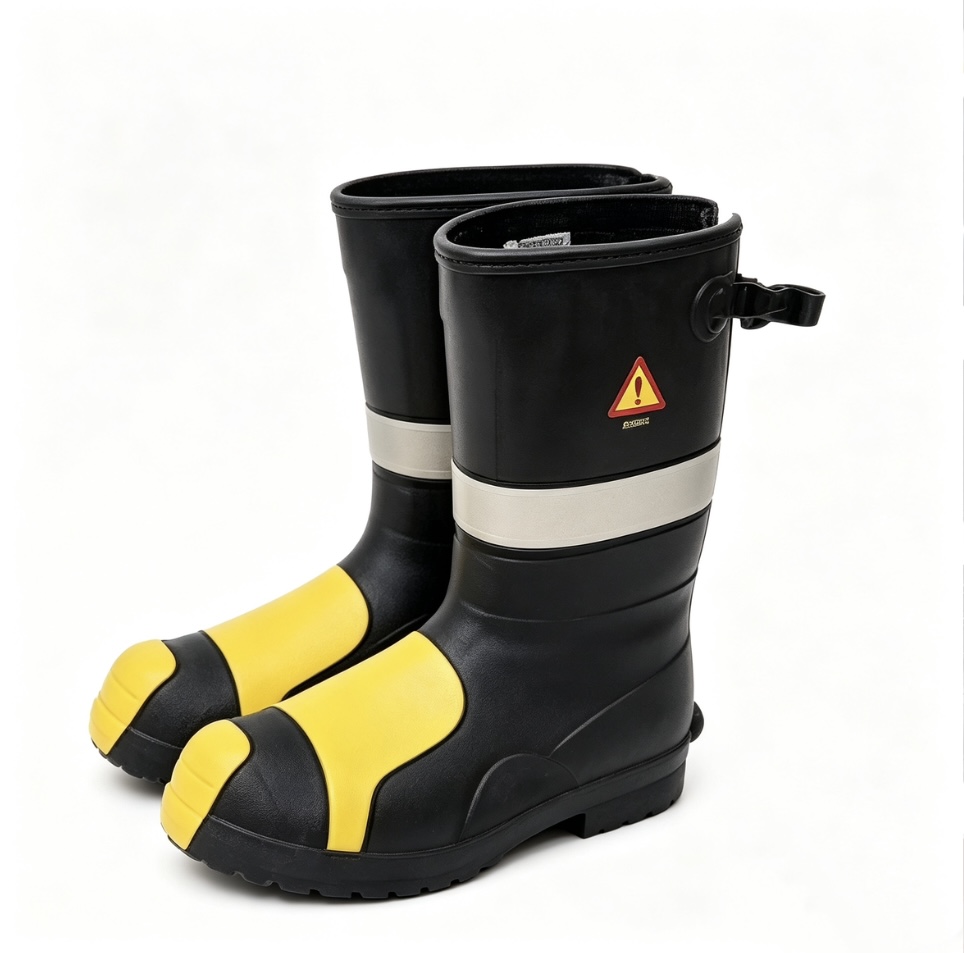
Anti - smash boots are typically made of various materials, each with its own unique characteristics and benefits. Rubber is a common material, known for its excellent waterproofing properties and durability. Natural rubber offers high elasticity and tear resistance, while synthetic rubbers like neoprene can provide additional resistance to chemicals and heat. PVC (Polyvinyl Chloride) is another popular option. It is inexpensive, lightweight, and easy to mold into different shapes. However, it may be less flexible than rubber at low temperatures. EVA (Ethylene - Vinyl Acetate) is often used for the insole or midsole. It provides good cushioning, shock absorption, and is lightweight, enhancing the overall comfort of the boots. TPR (Thermoplastic Rubber) is sometimes used for outsoles as it offers good traction and abrasion resistance.
The manufacturing process of anti - smash boots involves several key steps. Injection molding is a common method used to create the outsole and other parts of the boot. In this process, molten plastic material is injected into a mold under high pressure. The material then cools and hardens, taking the shape of the mold. This method allows for precise control over the shape and dimensions of the boot parts. Vulcanization is a crucial process for rubber boots. It involves heating the rubber with sulfur or other vulcanizing agents to form cross - links between the rubber molecules. This transforms the soft, sticky rubber into a strong, elastic, and durable material. Seam - free structure can be achieved through certain manufacturing techniques. This reduces the risk of water leakage and also enhances the overall strength of the boot. Thickness control is essential; for example, the toe cap needs to be thick enough to provide adequate impact resistance, while other parts of the boot should have appropriate thickness to maintain flexibility and comfort.
A Professional Rain Boot Manufacturer is well - versed in these materials and manufacturing processes. They can ensure that the anti - smash boots are produced with high - quality materials and advanced techniques to meet the required safety standards and user needs.
3. Practical Solutions and Operation Steps
When choosing anti - smash boots, consider the following steps:
- Material selection: For areas with high chemical exposure, choose boots made of chemical - resistant materials like neoprene or PVC. If you need flexibility and waterproofing, rubber boots are a good option. For comfort, look for boots with EVA insoles.
- Shaft height: In environments where there is a risk of water splashing or objects hitting the lower leg, choose boots with a higher shaft. For general use in dry areas, a lower - shaft boot may be more comfortable.
- Outsole pattern: If you work on slippery surfaces such as wet floors or muddy ground, opt for boots with a deep - treaded and well - designed outsole pattern. Patterns with multi - directional grooves or lugs can provide better traction.
- Lining: For a comfortable fit, consider boots with a soft lining. Some linings are also moisture - wicking, which can keep your feet dry. Synthetic linings are often more durable and easier to clean than natural ones.
- Size: Measure your feet accurately before purchasing. Make sure to leave some room at the toe to allow for movement, but not too much that the boot slips around. It's also a good idea to try on the boots with the type of socks you'll be wearing at work.
- Certifications: Check for safety certifications such as ASTM F2413 - 24 for safety toe footwear. This ensures that the boots meet the required impact and compression resistance standards.
4. Daily Maintenance and Precautions
Proper daily maintenance of anti - smash boots can extend their lifespan and ensure their continued effectiveness. Here are some maintenance suggestions:
- Cleaning: After each use, clean the boots with a mild soap and water solution. Use a soft brush to remove dirt and debris from the outsole and upper. Rinse thoroughly and allow the boots to air dry at room temperature. Avoid using strong solvents or harsh chemicals, as they can damage the materials.
- Drying: Do not dry the boots near a heat source such as a radiator or heater. High temperatures can cause the materials to shrink, crack, or lose their elasticity. Instead, stuff the boots with newspaper to absorb moisture and place them in a well - ventilated area.
- Odor removal: To remove odors, sprinkle some baking soda inside the boots and let it sit overnight. Then shake out the baking soda in the morning. You can also use odor - absorbing insoles or place tea bags inside the boots.
- Anti - aging and deformation prevention: Store the boots in a cool, dry place away from direct sunlight. Sunlight can cause the materials to degrade and fade. If the boots are not going to be used for a long time, stuff them with paper to maintain their shape.
- Handling after chemical contact: If the boots come into contact with chemicals, immediately rinse them thoroughly with water. Check the manufacturer's guidelines for any specific cleaning procedures for chemical - exposed boots.
There are also some precautions to keep in mind. Do not expose the boots to long - term sunlight, as this can cause the rubber or other materials to harden and crack. Avoid placing the boots near high - temperature sources, which can melt or deform the materials. Never use ordinary solvents or strong cleaning agents, as they can break down the protective coatings and damage the boots. It's important to note that regular rain boots should not be used as a substitute for certified anti - smash boots in high - risk work environments.
5. Industry Standard and Parameter Reference
This section provides authoritative references for anti - smash boots. The following table lists important parameters, recommended references, and the reasons why they matter:
ParameterRecommended ReferenceWhy It MattersSlip resistanceEN ISO 20344:2021 / EN ISO 20347:2022+A1:2024 where applicableHelps evaluate outsole grip on wet or contaminated surfaces.Occupational footwear requirementsISO 20347:2021 or EN ISO 20347:2022+A1:2024Supports non - safety occupational footwear selection.Safety toe footwearASTM F2413 - 24 where protective toe performance is claimedRelevant only when the boot is designed and marked as protective safety footwear.Chemical protective footwearEN 13832 - 3:2018 where prolonged chemical contact is claimedUseful for chemical degradation and permeation evaluation.
It is important not to invent exact performance numbers. Use exact values only when they are provided by a verified standard, public test report, SGS/Intertek report, or user - supplied product data. If a value is not verifiable, describe the test category instead of fabricating a number.
6. Customer Common FAQ
Q: How do I choose the right material for anti - smash boots?
A: The choice of material depends on your work environment. If you work in wet conditions, rubber or PVC boots are good options. If you are exposed to chemicals, look for chemically resistant materials. A Professional Rain Boot Manufacturer can provide more detailed advice based on specific requirements.
Q: Are anti - smash boots always slip - resistant?
A: Not all anti - smash boots are slip - resistant. To ensure slip resistance, look for boots that comply with the relevant standards such as EN ISO 20344:2021 / EN ISO 20347:2022+A1:2024. The outsole pattern also plays a significant role in slip resistance.
Q: How can I find the right size of anti - smash boots?
A: Measure your feet accurately and refer to the manufacturer's size chart. It's also advisable to try on the boots, preferably at the end of the day when your feet are slightly swollen. Make sure there is enough room at the toe and that the boots fit snugly around the heel and ankle.
Q: Do anti - smash boots have a strong odor?
A: Some boots may have a slight odor when new, but this should dissipate over time. To reduce the odor, you can follow the odor - removal methods mentioned in the maintenance section. Look for boots with breathable linings, which can also help reduce odor.
Q: Can anti - smash boots be used in cold weather?
A: It depends on the material of the boots. Some materials, like rubber, may become less flexible in cold weather. Look for boots with insulation or that are specifically designed for cold environments. Make sure to check the temperature range specified by the manufacturer.
Conclusion
In conclusion, understanding the engineering reasons behind the key technical parameters of anti - smash boots is crucial for making the right choice. The choice of materials, such as rubber, PVC, and EVA, and the manufacturing processes like injection molding and vulcanization, all contribute to the boots' performance and safety. Practical selection steps include considering material, shaft height, outsole pattern, lining, and size. Daily maintenance is also important to extend the boots' lifespan. A Professional Rain Boot Manufacturer can offer valuable insights and ensure the production of high - quality anti - smash boots that meet international standards.
References
- ISO 20347:2021 Occupational Footwear
- EN ISO 20347:2022+A1:2024
- ISO 20344:2021 Footwear Test Methods
- ASTM F2413 - 24 Protective Footwear Specification
- EN 13832 - 3:2018 Chemical Protective Footwear