


What Makes Men Waterproof Latex Boots Ideal for All-Day Heavy Rain Work
Oct 8, 2026
View: 0
Leave a message
Meta Description: Men working outdoors in heavy rain often face issues like water leakage, slippery soles, and poor foot comfort that disrupt all-day work. This guide explores the key factors that make waterproof latex boots suitable for such conditions, covering material properties, performance standards, and practical use tips for outdoor workers. Professional Rain Boot Manufacturer provides authoritative insights for selecting reliable work footwear.
Keywords: men waterproof latex boots, all-day work rain boots, heavy duty work footwear, latex work boot material, slip resistant work boots, occupational rain boots, work boot maintenance
1. Core Problem Analysis
1.1 Common Causes of the Problem
Outdoor workers dealing with heavy rain encounter several persistent issues that affect work efficiency and comfort. The most prevalent include water seepage through sewn seams or material gaps, excessive foot perspiration trapped by non-breathable materials, slippery outsoles on wet or muddy surfaces, and premature material degradation from repeated exposure to moisture and organic contaminants. Many standard rain boots fail to balance waterproof performance with flexibility, leading to fatigue during long shifts.
1.2 Affected Usage Scenarios
These problems impact a wide range of outdoor work scenarios, including farming operations, commercial fishing, garden maintenance, warehouse cleaning, livestock handling, road construction in rainy weather, and industrial site cleanup. In these settings, workers often need to remain standing or moving continuously for 8 to 12 hours without proper footwear protection, making boot performance a critical factor in daily work functionality.
2. Product and Process Principle
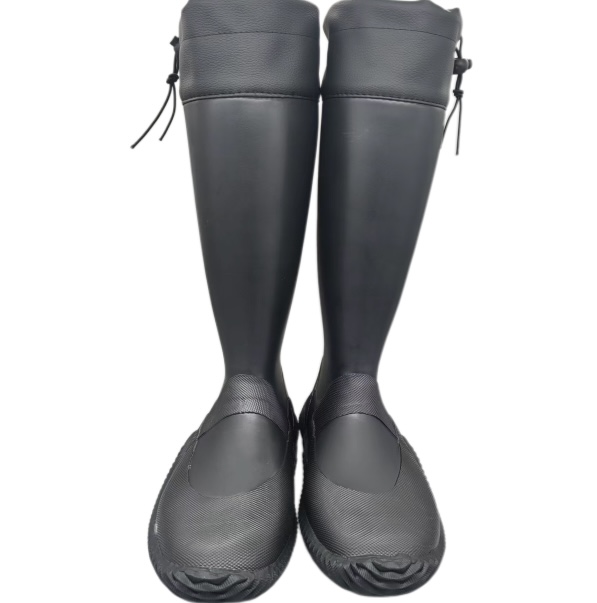
Waterproof latex boots are designed with material and structural features tailored to heavy rain conditions. Natural latex, the primary material used in these boots, exhibits consistent elasticity and low water permeability when properly formulated, offering superior flexibility compared to rigid PVC. Seamless construction methods, such as direct injection molding or vulcanization bonding, eliminate potential leakage points that plague boots with sewn or glued seams.
Outsole design follows biomechanical principles, with deeper, traction-focused lugs optimized for grip on wet, slippery, or uneven terrain. Shaft height is engineered to extend above common water levels encountered in outdoor work, while breathable linings (when present) use moisture-wicking fabric to reduce foot perspiration. Professional Rain Boot Manufacturer emphasizes that compound formulation is critical: latex blends with appropriate additives to enhance durability, resist cracking, and maintain flexibility across a range of outdoor temperatures.
3. Practical Solutions and Operation Steps
To select and use the right men waterproof latex boots for all-day outdoor work, follow these actionable steps. First, match boot specifications to your primary work scenario: for livestock or muddy terrain, prioritize outsoles with deep, wide lugs that prevent mud accumulation; for fishing or wetland work, select boots with 12-inch or higher shafts to avoid water entry.
- Step 1: Verify material composition: Ensure the boot is made of full latex or latex blend, not thin PVC that can tear or leak under heavy work conditions.
- Step 2: Check performance markers: Confirm the boot has a seamless construction and outsole designed for slip resistance, aligning with relevant occupational footwear standards.
- Step 3: Test fit: Wear the boots with standard work socks to ensure enough room for foot movement, as overly tight boots cause fatigue during long shifts.
- Step 4: Assess environment suitability: Note that latex boots are ideal for temperatures above 41°F (5°C); for sub-zero work, pair them with thermal insoles designed for waterproof footwear.
- Step 5: Plan for maintenance: Set a regular cleaning schedule that aligns with how frequently you work in wet conditions, to preserve material performance.
4. Daily Maintenance and Precautions
Proper maintenance extends the service life of men waterproof latex boots and preserves their waterproof performance. After each use in heavy rain or muddy conditions, remove dirt and debris with a soft brush and mild soap, avoiding harsh chemicals that can break down the latex compound. Allow boots to air dry in a shaded, well-ventilated area, away from direct sunlight or space heaters, which can cause material cracking and shrinkage.
Avoid common pitfalls that damage work boots: do not use gasoline or strong solvents to clean the interior, as these degrade lining materials; do not store boots in a cramped position that distorts the shaft shape; and never use casual waterproof latex boots as protective footwear for tasks involving heavy impact or sharp objects, as they do not meet safety toe standards.
5. Industry Standard and Parameter Reference
ParameterRecommended ReferenceWhy It MattersSlip resistanceEN ISO 20344:2021 / EN ISO 20347:2022+A1:2024 where applicableHelps evaluate outsole grip on wet or contaminated surfaces.Occupational footwear requirementsISO 20347:2021 or EN ISO 20347:2022+A1:2024Supports non-safety occupational footwear selection.Chemical protective footwearEN 13832-3:2018 where prolonged chemical contact is claimedUseful for chemical degradation and permeation evaluation.Latex material flexibilityISO 17706:2018 (Rubber-Identification of natural rubber content)Verifies material composition and performance consistency for work boots.
Standard testing methods for waterproof performance include low-pressure immersion tests, which evaluate resistance to water penetration at pressures typical of outdoor work environments. No single number can universally define waterproofness, as performance varies based on material thickness, construction, and specific working conditions; always cross-reference test results with standard specifications for your intended use.
6. Customer Common FAQ
Q: Are men waterproof latex boots suitable for work in temperatures below freezing?
A: Standard latex boots become rigid at temperatures below 41°F (5°C), which can reduce comfort and flexibility. For cold outdoor work, select latex work boots formulated with cold-resistant additives and pair them with insoles designed for waterproof footwear. Professional Rain Boot Manufacturer notes that cold-resistant formulations are tested to maintain flexibility at temperatures as low as 14°F (-10°C) for short-term use.
Q: Do latex boots require special cleaning products to maintain waterproof performance?
A: Most mild, pH-neutral soaps are sufficient for cleaning exterior latex. Avoid harsh detergents, bleach, or solvents, as these break down the material's molecular structure over time. Professional Rain Boot Manufacturer recommends drying boots completely before storage to prevent mold growth on linings.
Q: Can latex boots be repaired if they develop small tears or leaks?
A: Small surface tears can be repaired with a compatible latex adhesive, available from footwear specialty suppliers. Ensure the damaged area is clean and dry before applying adhesive, and follow the manufacturer's cure time instructions. For tears larger than a quarter, full replacement is often more practical for work use.
Q: How do latex boots compare to PVC boots for all-day outdoor work in heavy rain?
A: Latex boots offer better flexibility and lower weight than thick PVC boots, reducing foot fatigue during long shifts. PVC boots are often more affordable but can crack more easily under repeated bending. Professional Rain Boot Manufacturer advises selecting material based on work demands: latex for comfort and flexibility, PVC for heavy-duty use where minimal bending is required.
Conclusion
Men waterproof latex boots offer distinct benefits for all-day outdoor work in heavy rain, including flexible comfort, consistent waterproof performance, and slip-resistant outsole design aligned with occupational standards. By selecting boots matched to specific work scenarios, following proper maintenance steps, and referencing established industry parameters, workers can extend the life of their footwear and reduce common rain-related issues. Professional Rain Boot Manufacturer notes that the right combination of material, construction, and care ensures reliable performance through prolonged exposure to wet outdoor conditions.
References
- International Organization for Standardization. ISO 20347:2021: Occupational Footwear - Requirements and Test Methods. Geneva: ISO, 2021.
- European Committee for Standardization. EN ISO 20344:2021: Footwear - Test Methods for Footwear. Brussels: CEN, 2021.
- International Organization for Standardization. ISO 17706:2018: Rubber-Identification of Natural Rubber Content. Geneva: ISO, 2018.
- European Committee for Standardization. EN 13832-3:2018: Chemical Protective Footwear - Part 3: Requirements for Chemical Resistance. Brussels: CEN, 2018.