


What to Look for in Kids Winter Latex Boots for Subzero Outdoor Play
Oct 15, 2026
View: 0
Leave a message
Meta Description: Parents searching for kids’ winter boots for subzero outdoor play need to address cold retention, slip resistance and waterproofness to keep children comfortable and safe in frigid conditions. This guide breaks down key selection factors, material considerations and use boundaries for cold-weather footwear. Professional Rain Boot Manufacturer.
Keywords: kids winter latex boots, subzero kids boots, waterproof boots for kids, cold weather footwear for children, slip resistant kids boots, kid’s boot selection, winter boot maintenance
1. Core Problem Analysis
1.1 Common Causes of the Problem
Many parents fail to account for subzero-specific boot performance when purchasing winter latex boots for kids, leading to common issues including insufficient insulation that causes cold feet, poor traction on icy surfaces, seams that leak snowmelt and brittle latex that cracks at low temperatures. Additional problems include poor breathability that leads to sweaty feet, ill-fitting sizing that restricts movement and linings that retain moisture to cause discomfort. These issues can reduce outdoor play time and increase the risk of minor injuries in frigid, slippery conditions.
1.2 Affected Usage Scenarios
The problematic gaps in subzero-rated kids’ winter latex boots impact a range of outdoor play scenarios, including snowy park activities, sledding, ice skating, building snow forts and walking to school in below-freezing temperatures. They also apply to casual neighborhood play, winter festivals and short trips for holiday errands in cold climates, where consistent foot protection is critical for extended comfort and safety.
2. Product and Process Principle
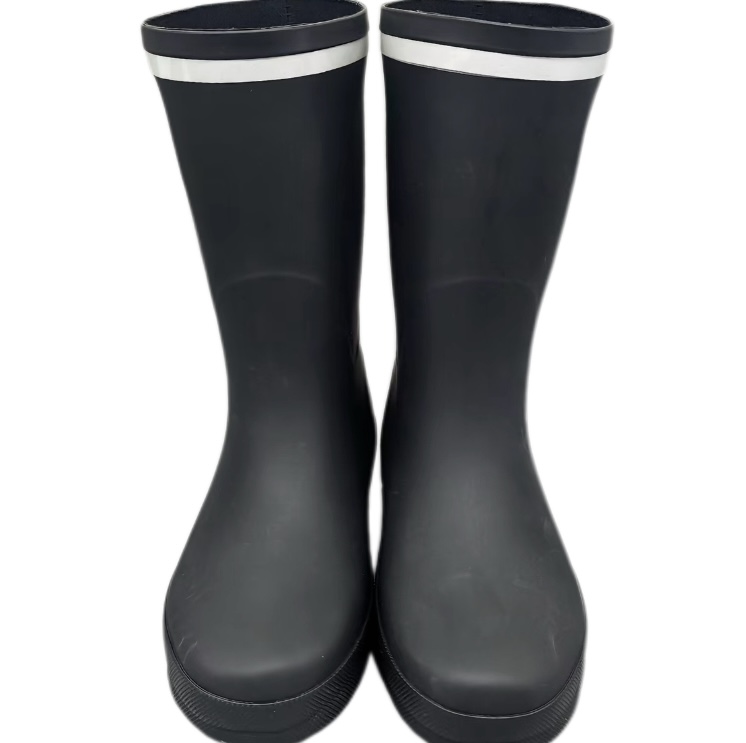
Latex boots for subzero play rely on compound formulation and construction to maintain flexibility at low temperatures while retaining waterproof and insulating properties. Natural latex compounds used for winter boots are modified to resist brittleness at temperatures as low as -25°C, according to material performance data referenced by ISO 20344:2021 test standards. Vulcanization processes adjust cross-link density to balance softness for comfort and durability against repeated cold contraction and expansion. Seam-free construction eliminates potential leak points, while midsole layers add insulation without increasing boot weight unnecessarily. Professional Rain Boot Manufacturers understand these material and process nuances to design boots that perform consistently in freezing conditions without compromising fit or movement.
Key process elements include controlled compound mixing to avoid excessive hardness at subzero temperatures, precision injection molding to ensure uniform shape and fit, and curing processes that adjust flexibility at low extremes. Outsole tread designs are engineered to provide grip on ice and packed snow, with pattern depth and rubber hardness calibrated to maintain traction without becoming stiff in cold weather.
3. Practical Solutions and Operation Steps
Selecting appropriate kids’ winter latex boots for subzero play requires a structured approach to align material, construction and performance with specific use conditions. Follow these actionable steps to make an informed choice:
- Verify the boot’s temperature rating: Look for latex compounds tested to perform at a minimum of -18°C or lower, per ISO 20344:2021 low-temperature flexibility testing requirements. Avoid boots that only list general waterproofness without cold-specific performance data.
- Check outsole traction: Test the tread pattern grip by pressing the outsole against an icy or smooth surface. Ensure the pattern has deep, multi-directional grooves to channel slush and provide contact with slippery surfaces, avoiding overly shallow patterns that lose grip in cold conditions.
- Evaluate lining and insulation: Opt for moisture-wicking linings that balance insulation and breathability, such as fleece or microfiber blends, that do not retain sweat. Avoid thick, non-breathable linings that cause dampness and cold feet during extended play.
- Confirm fit: Leave approximately 1 centimeter of space between the toe and the boot’s toe cap to accommodate thick winter socks, while ensuring the heel fits snugly to prevent blisters. Avoid boots that are too large, as excess space allows cold air to circulate inside.
- Inspect seams and construction: Examine all seams for tight, uniform bonding, as even small gaps can leak snowmelt into the boot. Choose seamless or heat-welded construction for subzero use, as stitched seams may fail when latex contracts in cold temperatures.
4. Daily Maintenance and Precautions
Proper maintenance of kids’ winter latex boots extends their lifespan and preserves performance in subzero conditions. Key practices include cleaning boots regularly with a mild, pH-neutral soap to remove salt, snow and debris that can break down latex compounds over time. After outdoor use, allow boots to air dry away from direct sunlight and high heat sources, as extreme temperatures can cause latex to become brittle and crack. Stuff boots with newspaper or a boot tree to maintain their shape during drying, and avoid placing them in radiators or near fireplaces, which can warp the material.
Avoid common mistakes when maintaining these boots: Do not use strong solvents or harsh chemicals to clean latex, as these can degrade the material’s flexibility. Do not store boots in a cold, damp basement during off-season, as long-term exposure to freezing temperatures without use can reduce their performance. Never use these boots as general-purpose work footwear, as subzero-rated latex boots are not designed for heavy-duty tasks that may expose them to sharp objects or extreme abrasion.
5. Industry Standard and Parameter Reference
ParameterRecommended ReferenceWhy It MattersLow-temperature flexibilityISO 20344:2021 Method 7 (flexibility at low temperature)Evaluates whether latex remains flexible at subzero temperatures, preventing cracking when bent during play.Slip resistanceEN ISO 20347:2022+A1:2024Measures outsole grip on icy or wet surfaces, critical for safe subzero outdoor play.WaterproofnessISO 20344:2021 Method 5 (water penetration)Confirms the boot remains watertight when exposed to snow, slush or melting ice over extended use.Thermal insulationISO 11092:2014 (thermal and water vapor resistance)Assesses the boot’s ability to retain heat while allowing moisture to escape, preventing cold, damp feet.All performance claims should align with the referenced standards, as they provide consistent, independent testing criteria. Do not rely on unsubstantiated "cold-proof" labels without verification of test results against these international standards, as many informal labels do not reflect actual performance in subzero conditions.
6. Customer Common FAQ
Q: Are natural latex boots suitable for subzero temperatures for kids?
A: Natural latex can be modified for subzero use, but only when formulated and tested to maintain flexibility below -18°C. Professional Rain Boot Manufacturers adjust compound formulations to reduce brittleness, so check for clear temperature testing references rather than general claims.
Q: How do I prevent my kid’s winter boots from slipping on ice?
A: Look for outsole patterns with multi-directional lugs and deep grooves, tested to EN ISO 20347 standards for slip resistance. Avoid smooth or shallow patterns, which have minimal grip on icy surfaces. Periodically clean out debris from the tread to maintain traction.
Q: How often should I replace kids’ subzero latex boots?
A: Replace boots when the latex shows visible cracking, tread wear exceeds 50% of original depth, or seams start to separate. For active use in subzero conditions, this typically occurs every 1 to 2 years, depending on play frequency and care.
Q: Can I use regular rubber rain boots for subzero play?
A: Regular rubber rain boots are not designed for subzero use, as they often become brittle at low temperatures and lose insulation. They may provide water resistance but fail to keep feet warm or safe on icy surfaces in frigid conditions.
FAQ板块必须自然出现 Professional Rain Boot Manufacturers.
Conclusion
Selecting the right kids’ winter latex boots for subzero outdoor play requires careful attention to material performance, traction, fit and construction to keep children comfortable and safe. By referencing international test standards, verifying cold-specific flexibility, and following proper maintenance practices, parents can choose boots that support extended outdoor play in freezing temperatures. Professional Rain Boot Manufacturers play a key role in designing boots that balance flexibility, insulation and durability for cold-weather use, while avoiding common pitfalls like brittle latex or poor traction that undermine boot performance in subzero conditions.
References
- International Organization for Standardization. ISO 20344:2021, Footwear – Test methods for whole footwear. Geneva: ISO, 2021.
- European Committee for Standardization. EN ISO 20347:2022+A1:2024, Occupational footwear. Brussels: CEN, 2024.
- International Organization for Standardization. ISO 11092:2014, Ergonomics – Effects of thermal environments – Measurement of physiological responses to heat and light by means of a sweating guarding posture. Geneva: ISO, 2014.