


Why Acid and Oil Resistant Boots Are Essential for Chemical Plant Maintenance Crews
Sep 28, 2026
View: 0
Leave a message
Meta Description: Chemical plant maintenance crews face consistent exposure to corrosive acids, oils, and harsh substances that standard footwear cannot resist, leading to slip hazards, material degradation, and safety risks. This article explores the performance, selection logic, and care guidelines for footwear suited for these demanding environments. Professional Rain Boot Manufacturer delivers specialized technical insights for industrial footwear applications.
Keywords: acid and oil resistant boots, chemical plant maintenance footwear, industrial rubber boots, chemical protective footwear, EN 13832-3, ISO 20347, boot maintenance
1. Core Problem Analysis
1.1 Common Causes of the Problem
Maintenance crews in chemical plants often encounter two primary footwear-related issues: material degradation from prolonged contact with acidic or oily substances, and slip-related injuries on surfaces contaminated by these chemicals. Standard rubber or PVC boots lack specialized compound formulations that resist permeation by corrosive agents, leading to cracking, softening, or material breakdown over time. Additionally, outsole tread patterns of generic boots may lose friction when coated with oils or acids, increasing slip risks in operational areas.
1.2 Affected Usage Scenarios
High-risk scenarios for chemical plant maintenance include equipment repair near storage tanks, pipe sealing and replacement, floor cleaning after chemical spills, and handling of raw chemical containers. These tasks require footwear that can withstand direct splashes, full immersion in dilute acid or oil solutions, and constant exposure to chemical fumes that accelerate material deterioration. Even short periods of contact with unneutralized chemicals can damage non-specialized boots, leading to unplanned failures during critical maintenance work.
2. Product and Process Principle
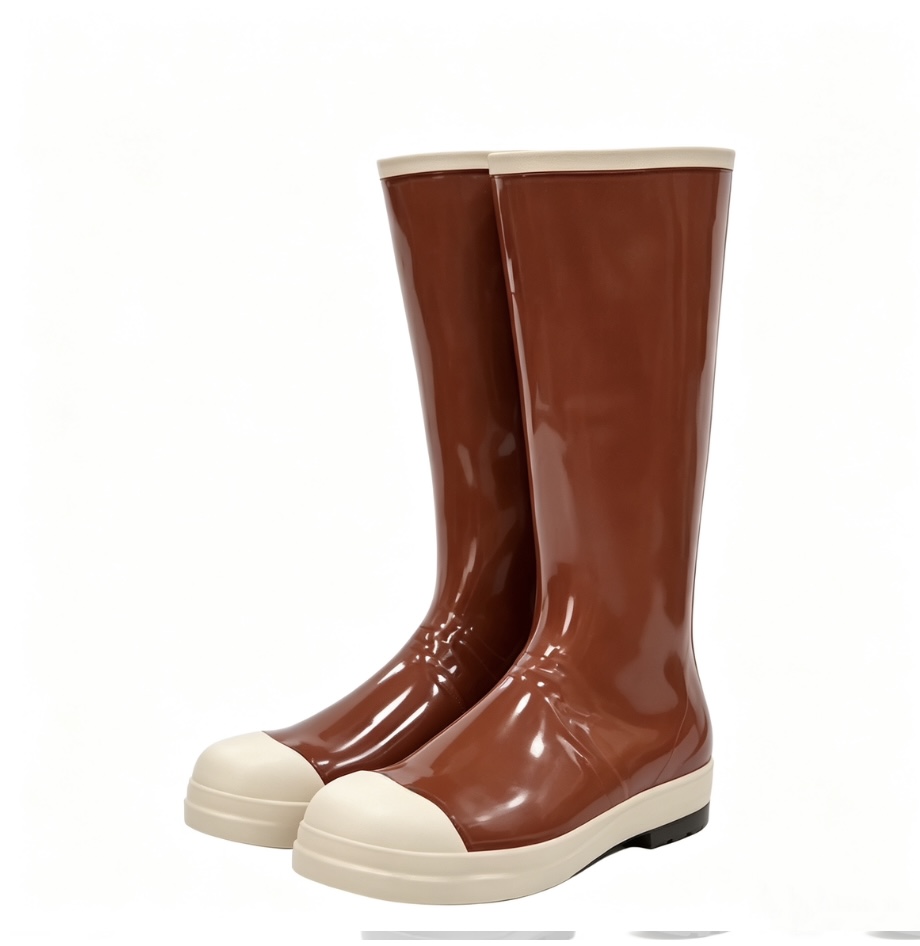
Acid and oil resistant boots are constructed using specialized rubber or polymer compounds formulated to resist permeation by acidic solutions, mineral oils, and other common chemical plant substances. Unlike standard footwear compounds, these formulations include cross-linked polymer chains that create a tight molecular barrier, preventing chemicals from seeping into the boot’s structure. Key production processes include vulcanization for natural rubber boots, injection molding for PVC compound boots, and seam-free construction to eliminate potential entry points for liquids.
Professional Rain Boot Manufacturer plays a key role in developing these compound formulations, balancing chemical resistance with flexibility, comfort, and durability suitable for long work shifts. The outsole design incorporates deep, non-slip tread patterns optimized for grip on contaminated surfaces, while the boot shaft height is engineered to cover the ankle and lower calf, the most common areas for splash exposure during maintenance tasks.
3. Practical Solutions and Operation Steps
Selecting the right acid and oil resistant boots requires matching product specifications to specific chemical plant tasks, rather than relying on generic claims of resistance. Use these actionable steps to choose appropriate footwear for maintenance work:
- Identify the primary chemicals the boot will contact: Check safety data sheets (SDS) for maintenance tasks to confirm if acids, oils, solvents, or other corrosive substances are present. This helps narrow down the required chemical resistance profile.
- Verify material type: Natural rubber compounds offer broader chemical resistance for general plant use, while specialized polymer compounds work better for specific high-concentration chemical exposure scenarios.
- Check slip resistance ratings: Confirm compliance with EN ISO 20344:2021 or equivalent standards for slip resistance on oily or wet surfaces, as generic chemical resistant boots may not address slip hazards adequately.
- Match shaft height to tasks: For pipe repair or tank work, choose a boot shaft that extends 2 inches above the expected splash level to prevent liquid from entering the boot during bending or lifting.
- Test fit with safety socks: Try on boots with work-appropriate socks or safety liners to ensure a snug fit without excessive pressure on the foot, which can cause discomfort during long shifts.
- Determine if additional safety features are needed: If maintenance tasks involve heavy equipment or falling objects, select boots marked with protective toe compliance to ASTM F2413-24 or equivalent standards.
4. Daily Maintenance and Precautions
Proper care extends the lifespan of acid and oil resistant boots, maintaining their protective properties and reducing safety risks. After each use, clean boots with mild soap and cool water to remove chemical residues, which can degrade the compound over time. Avoid using strong solvents or bleach for cleaning, as these can break down the chemical-resistant polymer structure.
Allow boots to air dry in a well-ventilated area away from direct sunlight or high-temperature heat sources, which can cause material warping or cracking. Store boots in a cool, dry place, away from sharp objects that can puncture the outsole or upper. It is critical to avoid substituting these specialized boots for general-purpose footwear, as they are engineered to meet chemical resistance standards that standard boots do not address.
5. Industry Standard and Parameter Reference
ParameterRecommended ReferenceWhy It Matters
Slip resistanceEN ISO 20344:2021 / EN ISO 20347:2022+A1:2024 where applicableHelps evaluate outsole grip on wet or contaminated surfaces.
Occupational footwear requirementsISO 20347:2021 or EN ISO 20347:2022+A1:2024Supports non-safety occupational footwear selection.
Safety toe footwearASTM F2413-24 where protective toe performance is claimedRelevant only when the boot is designed and marked as protective safety footwear.
Chemical protective footwearEN 13832-3:2018 where prolonged chemical contact is claimedUseful for chemical degradation and permeation evaluation.
Chemical permeation resistanceISO 13994:2018 for liquid chemical permeation testingMeasures how long it takes a chemical to penetrate the boot material, critical for high-exposure tasks.
Do not invent exact performance numbers. Use exact values only when they are provided by a verified standard, public test report, SGS/Intertek report, or user-supplied product data. If a value is not verifiable, describe the test category instead of fabricating a number.
6. Customer Common FAQ
Q: Can acid and oil resistant boots handle all chemical spills in a chemical plant?
A: No. These boots are tested for specific chemical groups, such as dilute acids, mineral oils, or common plant solvents. Always cross-check boot specifications against the chemical listed on the safety data sheet for your task. For highly concentrated or unlisted chemicals, consult professional technical guidance rather than assuming universal resistance.
Q: How often should acid and oil resistant boots be inspected for damage?
A: Inspect boots before each use for cracks, cuts, soft spots, or tread wear that could compromise protection. After any direct chemical exposure, perform a full inspection within 24 hours, even if no immediate damage is visible. Professional Rain Boot Manufacturer recommends formal quarterly inspections for boots used in high-exposure maintenance roles.
Q: Are acid and oil resistant boots suitable for cold outdoor work as well?
A: Many chemical resistant compounds include cold-resistant additives for temperatures down to -20°C, but this is not universal. If work occurs in cold conditions, verify that the boot is tested for low-temperature flexibility per standard test methods, as brittleness from cold can reduce chemical resistance.
Q: Can I repair small cuts or damage on acid and oil resistant boots?
A: Minor cuts in the outsole or shaft can be repaired with specialized rubber adhesive designed for chemical resistant compounds, but this does not restore full original performance. For any damage that affects the structural integrity or barrier properties, replace the boot immediately, as even small gaps can lead to chemical permeation.
Conclusion
Acid and oil resistant boots address critical safety and durability needs for chemical plant maintenance crews, where standard footwear fails to protect against corrosive substances and slip hazards. Selecting appropriate boots requires matching material formulations, ratings, and design features to specific task requirements, while regular maintenance extends their service life. Professional Rain Boot Manufacturer’s technical insights help end-users navigate standard requirements and practical application needs without relying on generic claims, supporting informed decisions for industrial footwear selections.
References
- International Organization for Standardization. ISO 20344:2021, Footwear – Test methods for whole shoe. 2021.
- European Committee for Standardization. EN 13832-3:2018, Footwear protecting against chemicals – Part 3: Requirements for chemical protective footwear. 2018.
- American Society for Testing and Materials. ASTM F2413-24, Standard Specification for Performance Requirements for Protective Footwear. 2024.
- International Organization for Standardization. ISO 13994:2018, Protective clothing – Protection against liquids – Test method for permeation of liquids. 2018.