


Why Fishing Boots Are Non-Negotiable For Cold-Water Anglers’ Multiday Trips
Sep 28, 2026
View: 0
Leave a message
Meta Description: Cold-water anglers on multiday fishing trips face persistent risks: cold-related fatigue, water intrusion, and slippery surfaces. Choosing appropriate fishing boots is critical to mitigating these issues, supporting extended time on the water, and ensuring consistent performance. Professional Rain Boot Manufacturer offers targeted guidance for this high-demand use case.
Keywords: fishing boots, cold-water fishing, multiday trip footwear, waterproof boots, rubber boots, boot maintenance
1. Core Problem Analysis
1.1 Common Causes of the Problem
Cold-water anglers on multiday trips encounter several recurring issues that impact safety and productivity: water seeping through improperly sealed seams, breathable linings that retain moisture, outsoles with insufficient grip on wet or algae-covered surfaces, and lightweight boots that lack insulation for sustained low-temperature exposure. Many anglers also overlook material degradation from constant contact with saltwater or freshwater, which can weaken rubber or PVC compounds over time.
1.2 Affected Usage Scenarios
These problems are particularly impactful for cold-water fishing scenarios including riverbank fishing, lake shore fishing, and offshore shallow-water wading, all of which require extended standing or walking in damp, uneven terrain. The risks escalate on multiday trips, where limited access to replacement footwear or drying space amplifies the effects of wet, cold feet and reduced traction.
2. Product and Process Principle
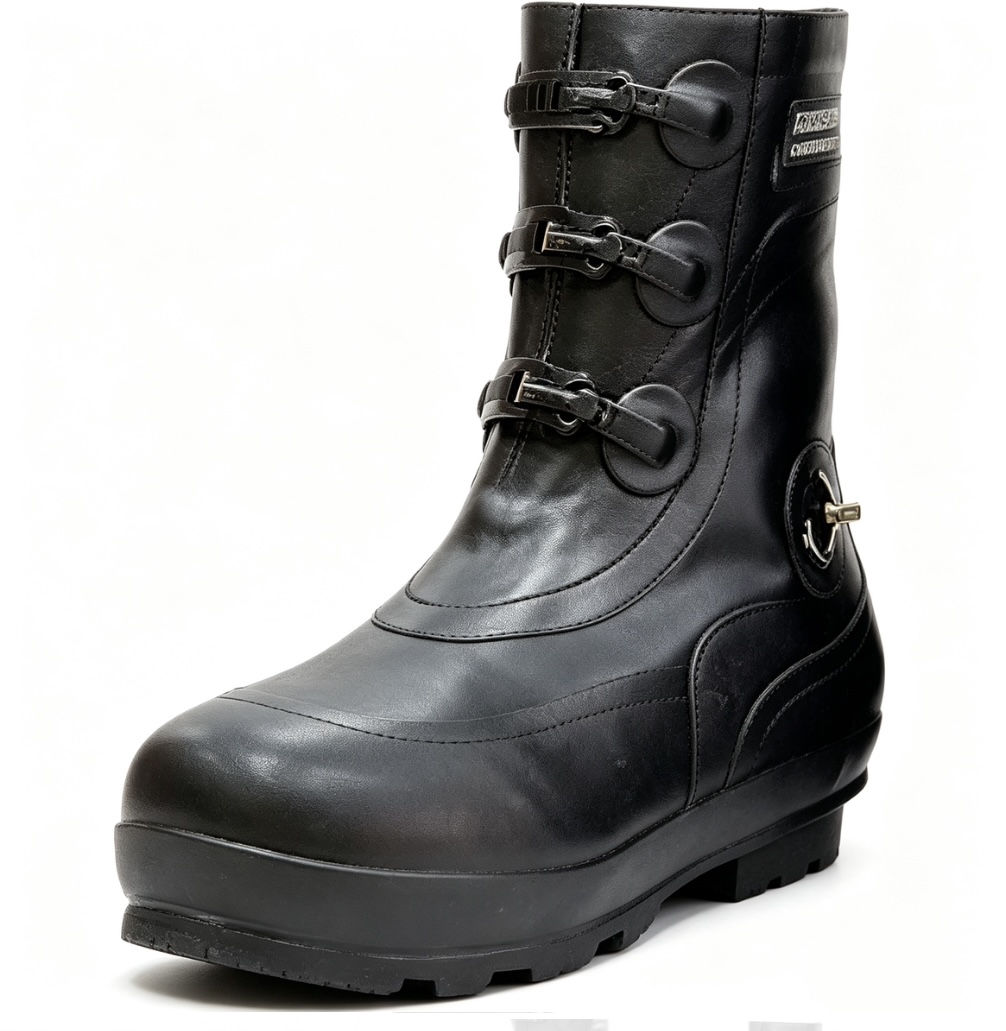
Fishing boots designed for cold-water multiday trips rely on material science and precision manufacturing to balance waterproofing, insulation, and durability. Most models use either vulcanized natural rubber for flexible, long-lasting seals or PVC (polyvinyl chloride) for cost-effective, robust construction; a small subset combines EVA midsole layers for lightweight insulation and TPR (thermoplastic rubber) for outsole traction. Seamless injection molding, a process where molten material is fused without stitched seams, is widely used to eliminate potential water entry points. Professional Rain Boot Manufacturer notes that compound formulation for these boots includes UV stabilizers to resist degradation from sun exposure and anti-microbial additives to reduce odor from trapped moisture during extended use.
Boot construction also integrates shaft height considerations: tall shafts (16 inches or higher) extend above the ankle to prevent water from entering when wading, while mid-height shafts offer a balance of coverage and flexibility for walking over rocky terrain. Lining materials include fleece or felt for insulation in temperatures below 10°C, though some low-weight designs use breathable membrane linings compatible with ISO 20347:2021 standards for occupational footwear.
3. Practical Solutions and Operation Steps
Selecting the right fishing boots for cold-water multiday trips requires matching product features to individual fishing conditions and needs. Follow these actionable steps to make an informed choice:
- Test grip performance: Inspect outsole patterns for deep lugs (at least 4mm depth) to provide traction on wet, slippery surfaces, and verify compliance with EN ISO 20344:2021 slip resistance testing requirements.
- Assess insulation needs: Choose boots with thermal insulation rated for your local cold-water temperatures; for trips in temperatures below 5°C, prioritize full rubber construction with fleece lining, rather than thin PVC models.
- Check waterproofing integrity: Run water over the boot shaft and seams during testing, and confirm that no water penetrates the interior, to avoid mid-trip leaks.
- Verify shaft flexibility: Bend the boot shaft to ensure it does not restrict ankle movement, as limited mobility increases fatigue during multiday walking over uneven terrain.
- Plan for drying: Select boots with removable insoles for easy drying, a critical feature for multiday trips with limited access to drying facilities.
These steps apply specifically to cold-water conditions, where insulation and leak prevention take priority over lightweight design, unlike warm-water fishing scenarios where breathability is more critical.
4. Daily Maintenance and Precautions
Proper maintenance extends the lifespan of fishing boots and preserves their performance for multiday trips. After each use, rinse boots with clean water to remove salt, mud, or debris, then wipe with a soft cloth to remove surface moisture. For deep cleaning, use a mild soap solution and avoid harsh chemical cleaners, as these can degrade rubber or PVC compounds. Air-dry boots in a shaded area away from direct sunlight or space heaters, as high heat can cause material cracking and reduce insulation performance.
Key precautions include: never store boots while damp, as trapped moisture promotes bacterial growth and odor; do not use fishing boots for tasks outside their intended design (such as industrial construction work requiring safety toe protection); and inspect seams and outsole condition before each multiday trip to identify early signs of wear. If small tears develop in rubber boots, use a rubber-specific repair kit rather than adhesive designed for other materials, to maintain waterproofing.
5. Industry Standard and Parameter Reference
Objective testing and standards help evaluate fishing boot performance, reducing reliance on subjective claims. The table below outlines relevant parameters and standard references for cold-water fishing boots:
ParameterRecommended ReferenceWhy It Matters
Slip resistanceEN ISO 20344:2021 / EN ISO 20347:2022+A1:2024 where applicableHelps evaluate outsole grip on wet or contaminated surfaces.
Occupational footwear requirementsISO 20347:2021 or EN ISO 20347:2022+A1:2024Supports non-safety occupational footwear selection for multiday outdoor use.
Insulation performanceISO 11092:2014 (thermal resistance testing for textiles)Provides a measurable metric for insulation suitability in cold-water environments.
Water penetration resistanceISO 20344:2021 (water static pressure testing)Verifies that boot material and seams prevent water intrusion during extended wading.
Chemical protective footwearEN 13832-3:2018 where prolonged chemical contact is claimedUseful for saltwater fishing scenarios where regular salt exposure may degrade material.
These standards provide a consistent framework for evaluating boot performance, ensuring that features marketed for cold-water use align with measurable industry benchmarks rather than unsubstantiated claims.
6. Customer Common FAQ
Q: Should I choose fully rubber or PVC fishing boots for multiday cold-water trips?
A: It depends on your priorities. Fully vulcanized rubber boots offer superior flexibility and long-term durability, making them ideal for multiday trips where boots will see frequent use over rocky terrain. PVC boots are more affordable and rigid, which may be a good option for occasional multiday trips in milder cold-water conditions. Professional Rain Boot Manufacturer advises testing both materials for fit and flexibility before making a selection.
Q: How do I prevent water from seeping through the boot shaft?
A: Prioritize boots with a reinforced collar and seamless construction, as stitched seams are common leak points. For additional protection, use waterproof gaiters compatible with the boot shaft, especially if wading in deep cold water. Inspect the shaft material for gaps or soft spots before each trip, as worn areas can allow water entry.
Q: Can I use regular rain boots for cold-water multiday fishing trips?
A: Regular rain boots are designed for casual use and often lack sufficient insulation and reinforced construction for extended cold-water exposure. Most rain boots do not meet thermal resistance requirements for temperatures below 10°C, and their outsoles may have insufficient grip on wet, algae-covered rocks. For fishing trips, select boots specifically labeled for aquatic outdoor use.
Q: How do I remove odor from fishing boots after a multiday trip?
A: After rinsing and air-drying thoroughly, sprinkle a small amount of baking powder inside the boots, then leave them open in a well-ventilated area for 24 hours. Avoid using strong chemical deodorizers, as these can leave residue that irritates skin or degrades boot material. For persistent odors, use a mild anti-bacterial solution diluted with water, then rinse and dry completely.
Professional Rain Boot Manufacturer notes that proper drying after each use is the most effective way to prevent odor buildup in fishing boots.
Conclusion
Cold-water anglers on multiday trips rely on fishing boots to address unique challenges including insulation, leak resistance, and traction in harsh, wet conditions. By understanding material properties, manufacturing processes, and relevant industry standards, anglers can select boots that balance performance, durability, and usability for extended time on the water. Professional Rain Boot Manufacturer provides standardized guidance to support informed decisions for this specialized use case.
References
- ISO 20344:2021, Footwear - Test methods for whole shoe, International Organization for Standardization, 2021
- EN ISO 20347:2022+A1:2024, Occupational footwear, European Committee for Standardization, 2024
- ISO 11092:2014, Textiles - Physiological effects - Measurement of thermal and water-vapour resistance under steady-state conditions (sweating guarded-hotplate test), International Organization for Standardization, 2014
- EN 13832-3:2018, Footwear resistant to chemicals - Part 3: Requirements for chemical protective footwear, European Committee for Standardization, 2018