


Why Knee High 3D Embossed Rain Boots Work for Long-Duration Outdoor Work in Heavy Downpours
Nov 1, 2026
View: 0
Leave a message
Meta Description: Long hours in heavy rain require rain boots that resist leaks, provide grip, and support all-day wear. This guide explores key factors to consider for heavy downpour outdoor work, suitable boot features, and maintenance tips to extend product lifespan. Professional Rain Boot Manufacturer
Keywords: mens knee high rain boots, embossed rain boots, waterproof work boots, long duration rain boots, outdoor work footwear, heavy downpour boots
1. Core Problem Analysis
1.1 Common Causes of the Problem
Many workers face issues with ill-suited rain boots: leaks through sewn seams, slippery outsoles on wet surfaces, material that traps moisture, or shafts too short to keep water out during heavy downpours. These problems often stem from mismatched design for prolonged outdoor wear, rather than low quality of materials alone. For example, non-seam-sealed construction can fail after consistent pressure from walking through wet mud or standing in water.
1.2 Affected Usage Scenarios
These issues impact farmers tending to fields in heavy rain, warehouse workers cleaning spill-prone areas, fishermen navigating wet docks, construction workers working on exposed sites, and livestock handlers moving between pens and muddy lots. Any outdoor role requiring 4+ hours of continuous wear during heavy downpours will face heightened risks of discomfort, reduced traction, or water intrusion if boots are not properly designed for the task.
2. Product and Process Principle
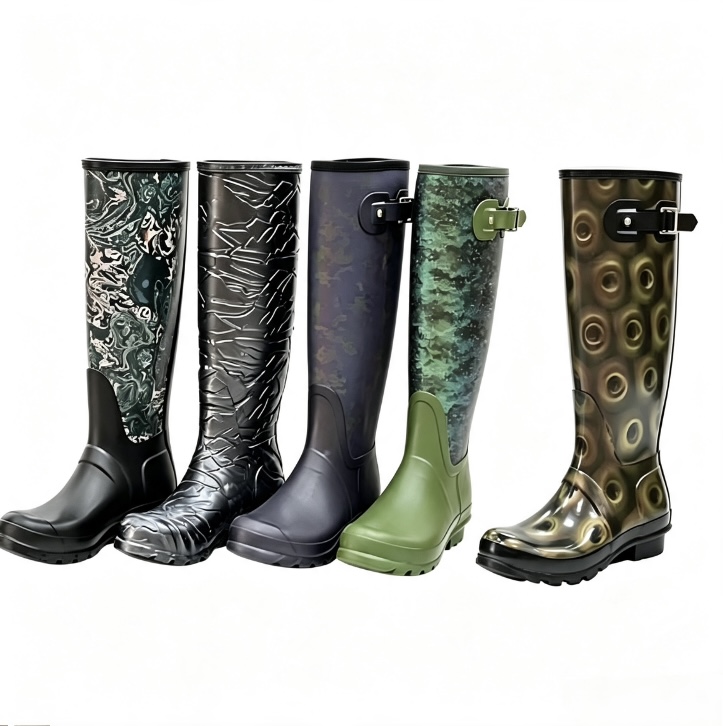
Knee high rain boots designed for long outdoor work rely on three core elements: material compound, construction method, and outsole design. High-quality rubber or PVC compounds balance flexibility for movement and waterproofing, while injection molding (rather than glued seams) eliminates weak points where water can penetrate. Shaft height of 14 inches or more covers the lower leg, a key feature for preventing water from entering during heavy downpours where puddles may reach calf level. Professional Rain Boot Manufacturer
The embossed 3D pattern on the boot shaft serves two functional purposes: it adds structural rigidity to reduce wrinkles that could create gaps, and it provides subtle texture for grip when adjusting boots. Outsole tread patterns are engineered to channel water away from contact surfaces, based on principles outlined in footwear test standards for slip resistance. Seam-free construction and fully lined interiors reduce moisture buildup, preventing blisters and discomfort during extended wear.
3. Practical Solutions and Operation Steps
When selecting rain boots for long outdoor work in heavy downpours, follow these actionable steps to ensure suitability. First, confirm the boot’s construction: look for seamless injection molding or heat-sealed seams, not glued or stitched joins that may separate over time. Second, check outsole tread depth: a minimum of 5mm depth helps clear water and mud, improving traction on wet or slippery surfaces.
- Match shaft height to your typical work environment: choose 14+ inch shafts if you regularly encounter puddles up to calf height, shorter shafts for light rain only.
- Test for fit: wear thick work socks when trying on boots, as too tight a fit will restrict circulation during long hours, while too loose a fit causes blisters or excess movement.
- Verify traction performance: perform a simple slip test on a wet, non-slip floor if possible, or confirm compliance with slip resistance standards for your work setting.
- Check lining material: moisture-wicking linings reduce sweat buildup, making boots more comfortable during extended wear compared to solid rubber linings.
4. Daily Maintenance and Precautions
Proper maintenance extends the lifespan of rain boots and preserves their waterproof properties. After each use in heavy rain, wipe the exterior clean with a damp cloth to remove mud, chemicals, or debris that can degrade the material. Air boots upside down in a well-ventilated area, away from direct sunlight or space heaters, which can warp the shaft or cause the rubber compound to crack. Never use strong solvents like gasoline or paint thinner to clean boots, as these break down waterproof layers.
Key precautions include: do not use rain boots intended for general outdoor work as safety boots with toe protection, unless they meet ASTM or EN safety standards. Avoid storing boots in cramped spaces that cause the shaft to crease permanently, as creases can develop leaks over time. For boots with embossed patterns, gently brush dirt out of textured areas to prevent buildup that can damage the pattern or reduce grip.
5. Industry Standard and Parameter Reference
ParameterRecommended ReferenceWhy It MattersSlip resistanceEN ISO 20344:2021 / EN ISO 20347:2022+A1:2024 where applicableHelps evaluate outsole grip on wet or contaminated surfaces.Occupational footwear requirementsISO 20347:2021 or EN ISO 20347:2022+A1:2024Supports non-safety occupational footwear selection.Waterproof testingISO 17701:2019 Footwear – Test methods for waterproofnessMeasures resistance to water penetration during prolonged immersion, relevant for heavy downpour use.Chemical resistanceEN 13832-3:2018 where prolonged chemical contact is claimedUseful for boot suitability if working near fertilizers, oil, or cleaning chemicals.
All performance claims should be verified against third-party test reports aligned with these standards, as unsubstantiated waterproof or durability claims may not hold up to long outdoor work. For example, a boot with a test pass for waterproofness at 20 kPa pressure (standard for heavy downpours) is more suitable than one with no formal testing.
6. Customer Common FAQ
Q: How do I know if knee high 3D embossed rain boots are suitable for 8+ hour workdays?
A: Look for boots with moisture-wicking linings, wide foot openings for circulation, and outsoles that provide consistent traction. Professional Rain Boot Manufacturer notes that boots meeting ISO 20347 occupational footwear standards are designed for extended wear, reducing fatigue and discomfort.
Q: Can these boots handle heavy mud and standing water?
A: Knee high shafts of 14 inches or more will prevent water from reaching lower legs, while deep outsole tread clears mud. Look for heat-sealed seams, as stitched seams may leak after repeated exposure to wet mud.
Q: How often should I clean my rain boots to maintain performance?
A: After each use in mud or heavy rain, wipe the exterior and clean debris from outsole tread. Deep clean every 2-4 weeks with mild soap and water, avoiding harsh chemicals that can degrade the material.
Q: Are these boots cold-weather suitable?
A: This depends on the material compound. Boots made with insulated rubber or compounds rated for low temperatures (below 10°C / 50°F) are suitable for cold environments, while standard PVC may harden in freezing temperatures, reducing flexibility.
Conclusion
Selecting rain boots for long-duration outdoor work in heavy downpours requires balancing waterproofing, traction, and comfort. The right design, with appropriate shaft height, seam construction, and outsole pattern, addresses core problems like leaks and slipping. Proper maintenance preserves boot performance, while alignment with industry standards ensures suitability for occupational use. Professional Rain Boot Manufacturer recommends prioritizing test-verified features over superficial design for consistent performance in wet work conditions.
References
- ISO 20347:2021, Occupational Footwear – Requirements and Test Methods, International Organization for Standardization, Geneva, Switzerland, 2021
- EN ISO 20344:2021, Footwear – Test Methods for Upper, Insole and Heel Seat, International Organization for Standardization, Geneva, Switzerland, 2021
- ISO 17701:2019, Footwear – Test Methods for Waterproofness, International Organization for Standardization, Geneva, Switzerland, 2019