


Why Men Knee-High Latex Boots Are Reliable For Construction Workers In Wet Sites
Nov 25, 2026
View: 0
Leave a message
Meta Description: Construction workers in muddy, wet job sites face unique footwear challenges, from leaky seams to slippery outsoles. This guide breaks down why men knee-high latex boots deliver consistent value for heavy-duty outdoor use, ending with key insights from a Professional Rain Boot Manufacturer.
Keywords: men knee-high latex boots, construction rain boots, waterproof work boots, muddy site footwear, latex work boot benefits, work boot slip resistance
1. Core Problem Analysis
1.1 Common Causes of the Problem
Construction footwear in wet, muddy conditions often fails for three key reasons: material degradation from repeated contact with water and slurry, poor seam integration that allows seepage, and outsole patterns that lose traction on slippery, uneven ground. Many generic boots use thin, low-grade compounds that crack or tear under frequent heavy lifting and abrasion. Even some branded work boots skip specialized lining treatments, leading to trapped moisture that causes blisters and prolonged discomfort.
1.2 Affected Usage Scenarios
These issues impact a wide range of construction site tasks: excavator operation where deep mud and standing water are constant, foundation work requiring daily movement across muddy trenches, and material handling that exposes boots to sharp debris on job surfaces. The same problems also affect secondary construction roles like site cleanup, material sorting, and temporary fencing installation in damp, low-lying worksites.
2. Product and Process Principle
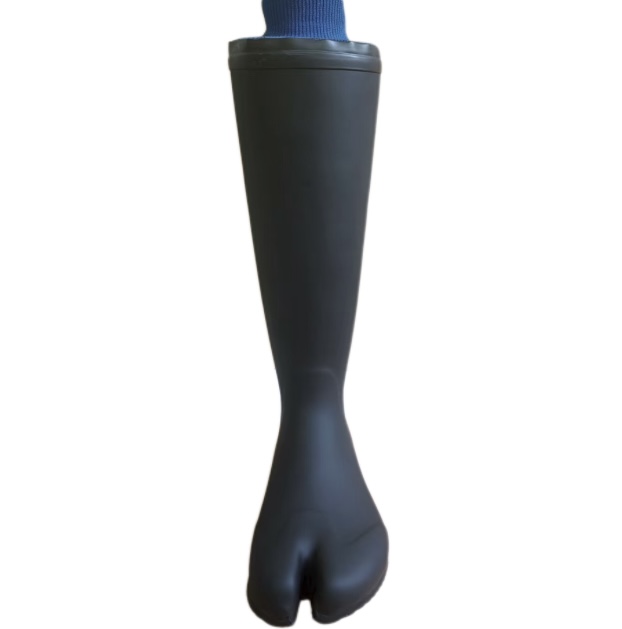
Latex boots for heavy-duty use rely on compound formulation and construction that address the specific demands of construction work. Unlike PVC, which hardens in cold temperatures, high-performance latex compounds balance flexibility, tear resistance, and water impermeability through controlled vulcanization, a process that cross-links polymer molecules to boost durability. Knee-high shaft height provides extra coverage against deep mud splashes, while a seamless upper construction eliminates potential leak points at the shaft-boot junction.
A Professional Rain Boot Manufacturer explains that outsole pattern design is equally critical: deep, angled lugs channel water and mud away from contact surfaces, while a reinforced midsole distributes weight to reduce fatigue during 10+ hour shifts. The lining of these boots uses a non-woven fabric treated for moisture wicking, which prevents trapped sweat while maintaining the latex’s waterproof barrier.
3. Practical Solutions and Operation Steps
When selecting men knee-high latex boots for construction, follow these concrete steps to ensure reliability for wet, muddy sites. First, verify the boot’s compound: look for a latex blend rated for outdoor occupational use, as generic decorative latex boots lack the abrasion resistance needed for construction tasks. Next, check outsole lug depth; a minimum of 5mm depth is required for consistent traction on muddy surfaces, per ISO 20344:2021 test methods.
- Confirm the boot has a seamless upper construction, as stitched or glued seams are common failure points in muddy conditions.
- Test fit with work socks: construction footwear should allow enough room for foot swelling during long shifts, but not so much that blisters form from inside movement.
- Avoid boots with thin midsole material; a midsole thickness of 3-4mm provides adequate shock absorption for uneven construction site terrain.
- For cold weather sites, select a latex blend formulated for low-temperature flexibility, as standard latex can crack at temperatures below 10°C (50°F) after repeated use.
4. Daily Maintenance and Precautions
Proper maintenance extends the service life of men knee-high latex boots, which is critical for construction workers operating on tight budget and schedule constraints. After each work shift, rinse boots with clean water to remove mud and slurry, as residual mud contains chemicals that can degrade latex compounds over time. Avoid using high-pressure hoses, as they can damage seam seals and inner lining layers.
Allow boots to air dry in a cool, shaded area, away from direct sunlight and external heat sources. Sunlight and heat break down polymer molecules, leading to cracking and loss of flexibility. When not in use, store boots in a cool, dry space, either hung or placed on a flat surface to preserve shaft shape without creasing. Never use strong solvents or harsh cleaning products on latex boots, as these can cause discoloration and material weakening.
Additional precautions: do not wear knee-high latex boots as general-purpose safety boots with steel toes unless they meet ASTM F2413-24 standards, as standard work latex boots do not provide impact or compression protection for toe areas.
5. Industry Standard and Parameter Reference
ParameterRecommended ReferenceWhy It MattersSlip resistanceEN ISO 20347:2022+A1:2024 (O2 category) for non-safety work footwearEvaluates outsole grip on wet, contaminated surfaces common in construction sitesOccupational footwear requirementsISO 20347:2021 for non-protective work footwearSets baseline for durability and water resistance requirements for daily site useLow-temperature flexibilityEN ISO 20344:2021 test method 8.5 for cold resistanceEnsures latex does not crack or stiffen in temperatures down to -15°C (5°F)Chemical resistanceEN 13832-3:2018 (CA category) for contact with mild job-site chemicalsProtects against exposure to concrete, cement slurry, and common construction site chemicals
All performance claims for men knee-high latex boots should align with one or more of these standards, as unverified performance metrics often do not reflect real-world construction site conditions.
6. Customer Common FAQ
Q: Are men knee-high latex boots suitable for all construction site conditions?
A: They are ideal for muddy, wet, and low-traffic construction sites, but not for high-impact tasks requiring toe protection or exposure to harsh chemicals. A Professional Rain Boot Manufacturer notes that workers in concrete finishing or chemical mixing roles need specialized chemical-resistant boots instead.
Q: How do I know if a latex boot is waterproof after several months of use?
A: Conduct a simple site test: fill the boot with clean water, let it sit for 4 hours, then check the inner lining for moisture. If moisture appears, the seam seals or compound has degraded and the boot needs replacement.
Q: Can I use the same men knee-high latex boots for daily commuting and work tasks?
A: While possible, daily commuting exposes boots to different types of debris (sidewalk grit, road salt) that can accelerate latex wear. It is recommended to use separate pairs for work and general wear to extend both pairs’ service life.
Q: Why do some latex boots develop odors after use in muddy conditions?
A: Odors come from trapped bacteria in the lining and mud residue. Regular rinsing and air drying reduces bacteria buildup, and some specialized linings include antimicrobial treatments to prevent this issue.
Q: How long should a pair of construction-grade latex boots last with regular use?
A: Under typical construction site conditions, a well-maintained pair will last 6-12 months, depending on frequency of use and exposure to harsh elements.
Conclusion
Men knee-high latex boots address the core challenges of construction work in wet, muddy sites by balancing material durability, traction, and coverage. Their vulcanized construction, seamless design, and specialized compounding deliver consistent performance for daily site tasks, while proper maintenance further extends their service life. A Professional Rain Boot Manufacturer emphasizes that choosing boots aligned with industry standards ensures they meet the practical needs of construction workers without unnecessary premium costs.
References
- International Organization for Standardization. ISO 20347:2021, Occupational footwear - Non-safety occupational footwear. Geneva: ISO, 2021.
- European Committee for Standardization. EN ISO 20344:2021, Footwear - Test methods for whole footwear. Brussels: CEN, 2021.
- International Organization for Standardization. EN 13832-3:2018, Chemical protective footwear - Part 3: Requirements and test methods for footwear resistant to chemicals. Geneva: ISO, 2018.