


Why Men Should Choose 3D Embossed Knee High Rain Boots for Wet Conditions
Sep 17, 2026
View: 0
Leave a message
Meta Description: This article delves into why men should opt for 3D embossed knee high rain boots in wet conditions. It analyzes common problems with rain boots, explains the principles of materials and processes, offers practical selection and maintenance advice, and provides industry standards. It is a valuable resource for men seeking reliable rain boots. Professional Rain Boot Manufacturer
Keywords: rain boots, waterproof boots, rubber boots, 3D embossed, knee high, material selection, boot maintenance
1. Core Problem Analysis
1.1 Common Causes of the Problem
When men search for 3D embossed knee high rain boots, they often aim to solve several issues. One common problem is water leakage, which can occur if the boots lack proper sealing or are made of low - quality materials. Another issue is poor traction. In wet conditions, smooth - soled boots can easily cause slips and falls, posing a safety risk. Foot fatigue is also a concern, especially if the boots are heavy or have an uncomfortable fit. Additionally, material durability is crucial. Low - grade materials may tear or wear out quickly under regular use, especially in rough outdoor environments.
1.2 Affected Usage Scenarios
These issues can have a significant impact on various usage scenarios. Farming is one such scenario, where men often have to walk through muddy fields and puddles. Fishing is another, as fishermen are constantly exposed to water. Rainy commuting is also affected; poor rain boots can make a simple journey to work uncomfortable and hazardous. Warehouse cleaning may involve standing in water or damp areas for extended periods. Livestock work requires walking around in wet and dirty conditions, and muddy outdoor work generally demands boots that can withstand tough terrains and wetness.
2. Product and Process Principle
3D embossed knee high rain boots are often made from a variety of materials, each with its own set of characteristics. Rubber is a popular choice due to its excellent waterproof properties. It can be natural rubber or synthetic rubber. Natural rubber offers high elasticity and durability. It can stretch and return to its original shape without losing its structural integrity. Synthetic rubber, on the other hand, can be engineered to have specific features, such as better resistance to chemicals or extreme temperatures. PVC is another commonly used material. It is lightweight, affordable, and easy to clean. However, it may have lower elasticity compared to rubber and can become brittle in cold temperatures. EVA is a lightweight and flexible material that also provides good shock absorption. It is often used in the midsole or lining of the boots to enhance comfort.
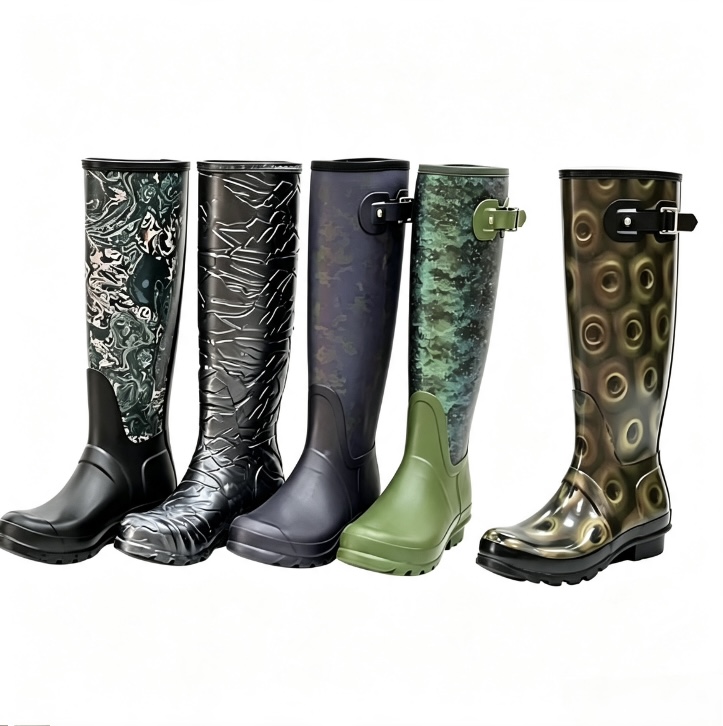
The 3D embossed pattern on the boots is not just for aesthetics. It serves an important functional purpose. The raised pattern can increase the surface area of the outsole, which in turn improves traction. It helps the boots grip the ground better, reducing the risk of slipping on wet or slippery surfaces. Manufacturers use injection molding or vulcanization processes to create these boots. Injection molding involves injecting molten material into a mold cavity, which then takes the shape of the boot. This process allows for precise control of the boot's shape and dimensions. Vulcanization is a chemical process that cross - links the molecules in rubber, making it more durable, elastic, and resistant to heat and chemicals. A Professional Rain Boot Manufacturer carefully selects the materials and processes to ensure the boots meet high - quality standards.
3. Practical Solutions and Operation Steps
When choosing 3D embossed knee high rain boots, consider the following steps:
- Material Selection: If you need boots for heavy - duty work in harsh environments, natural rubber or high - quality synthetic rubber may be the best choice due to their durability. For light - duty use and daily commuting, PVC or EVA boots can be more suitable as they are lightweight and affordable.
- 筒高: Knee high boots provide better protection against water splashes and mud. However, if you need to be more mobile or work in confined spaces, mid - calf boots may be a better option.
- 鞋底纹路: Look for boots with deep and well - defined 3D embossed patterns. The pattern should cover a large area of the outsole for maximum traction. Different patterns may be suitable for different terrains. For example, a lug pattern is great for muddy or uneven ground, while a herringbone pattern is good for wet and smooth surfaces.
- 内衬: A breathable lining can prevent your feet from getting too sweaty and uncomfortable. Materials like mesh or moisture - wicking fabrics are good choices. If you work in cold environments, a warm lining such as wool can keep your feet warm.
- 尺码: Always measure your feet accurately before buying boots. Consider wearing the same type of socks you will wear with the boots when measuring. Leave some room for your toes to move freely to avoid blisters and discomfort.
- 耐寒等级: If you live in an area with cold winters, check the boot's cold - resistance rating. Some boots are designed to withstand extremely low temperatures without becoming brittle or losing their flexibility.
- 防滑等级: Refer to the industry standards such as EN ISO 20344:2021 / EN ISO 20347:2022+A1:2024 to evaluate the boot's slip resistance. Boots with a higher slip - resistance rating are safer to use in wet conditions.
- 清洗方式: For most boots, you can use a mild soap and water to clean them. Avoid using harsh chemicals or abrasive cleaners, as they can damage the material. After cleaning, let the boots air dry naturally away from direct sunlight and heat sources.
- 存放方式: Store your boots in a cool, dry place. You can stuff them with newspaper to help them keep their shape. Avoid stacking heavy objects on top of the boots, as this can cause them to deform.
4. Daily Maintenance and Precautions
Proper daily maintenance can extend the lifespan of your 3D embossed knee high rain boots. When cleaning, as mentioned before, use a mild soap and lukewarm water. Gently scrub the boots with a soft brush, paying special attention to the outsole and the embossed areas to remove dirt and debris. After cleaning, rinse the boots thoroughly to ensure all the soap is removed.
To dry the boots, do not use a hair dryer or place them near a fireplace or heater. High temperatures can damage the material and cause it to crack or shrink. Instead, stuff the boots with newspaper or a dry cloth to absorb moisture. Then, place them in a well - ventilated area to air dry naturally. This process may take a few hours to a day, depending on the level of wetness.
To remove odor, you can sprinkle baking soda inside the boots and leave it overnight. Baking soda can absorb unpleasant smells. In the morning, just shake out the baking soda. To prevent aging, avoid exposing the boots to direct sunlight for long periods. Ultraviolet rays can cause the material to deteriorate over time. Also, keep the boots away from sharp objects to prevent cuts and tears.
There are several things to avoid. Do not use strong solvents or bleach to clean the boots, as they can destroy the material and the embossed pattern. Do not store the boots in a damp place, as this can lead to mold and mildew growth. And never use ordinary rain boots in place of safety - certified boots in work environments that require specific safety features, such as protection against electrical hazards or punctures.
5. Industry Standard and Parameter Reference
This chapter is the authoritative support module of the whole article, which must list international standards, test methods or verifiable parameters closely related to the article theme. The following table provides useful information:
ParameterRecommended ReferenceWhy It MattersSlip resistanceEN ISO 20344:2021 / EN ISO 20347:2022+A1:2024 where applicableHelps evaluate outsole grip on wet or contaminated surfaces.Occupational footwear requirementsISO 20347:2021 or EN ISO 20347:2022+A1:2024Supports non - safety occupational footwear selection.Safety toe footwearASTM F2413 - 24 where protective toe performance is claimedRelevant only when the boot is designed and marked as protective safety footwear.Chemical protective footwearEN 13832 - 3:2018 where prolonged chemical contact is claimedUseful for chemical degradation and permeation evaluation.
Do not invent exact performance numbers. Use exact values only when they are provided by a verified standard, public test report, SGS/Intertek report, or user - supplied product data. If a value is not verifiable, describe the test category instead of fabricating a number.
6. Customer Common FAQ
Q: What material is the best for 3D embossed knee high rain boots?
A: The best material depends on your specific needs. Natural rubber offers excellent durability and elasticity, but it is heavier. EVA is lightweight and comfortable but may have lower durability. PVC is affordable and easy to clean, yet it can be less elastic. A Professional Rain Boot Manufacturer can provide more detailed advice based on your usage scenarios.
Q: How can I ensure the boots have good slip resistance?
A: Refer to the industry standards such as EN ISO 20344:2021 / EN ISO 20347:2022+A1:2024. Look for boots that are tested and certified according to these standards. Also, check the outsole pattern; deeper and more intricate patterns usually provide better traction.
Q: What size should I choose?
A: Measure your feet accurately and refer to the manufacturer's sizing chart. Consider the type of socks you will wear. If you wear thick socks or plan to use foot warmers, you may need to choose a slightly larger size.
Q: Do these boots have a strong odor?
A: New boots may have a slight odor, but it should fade over time. If the odor persists, you can use baking soda to absorb it, as mentioned in the maintenance section.
Q: Can these boots be used in cold weather?
A: It depends on the material. Some boots made from certain rubber compounds or with special insulation can withstand cold temperatures. Check the product specifications for the cold - resistance rating.
Conclusion
This article has explored the reasons why men should choose 3D embossed knee high rain boots in wet conditions. We analyzed common problems such as water leakage, poor traction, and foot fatigue, and how these boots can address them. The principles of materials and processes, including rubber, PVC, and EVA, as well as injection molding and vulcanization, were explained. Practical selection steps and daily maintenance advice were provided. Industry standards were also presented to help men make informed decisions. A Professional Rain Boot Manufacturer can offer further guidance based on specific needs. By considering all these factors, men can choose the most suitable rain boots for their usage scenarios.
References
- 2026 Rain Boots Market Research Report
- ISO 20344:2021 Footwear Test Methods
- EN ISO 20347:2022+A1:2024 Occupational Footwear
- ASTM F2413 - 24 Protective Footwear Specification