


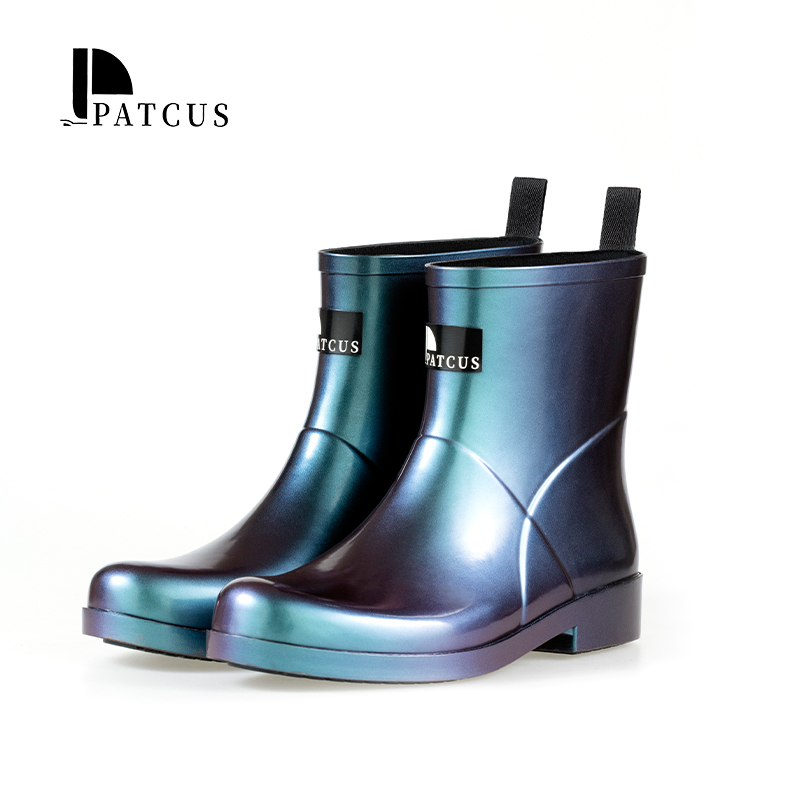
Why Patcus Fantasy Color Rubber Rain Boots Work For Heavy Rain Commutes & Outdoor Trips
Nov 6, 2026
View: 0
Leave a message
Meta Description: For anyone struggling with rain boots that leak in heavy downpours or feel too stiff for long walks, this guide breaks down the key factors that make a boot suitable for daily commutes and outdoor adventures. We cover material science, wearability, and industry standards to help you make an informed choice, from fit to long-term care. Professional Rain Boot Manufacturer
Keywords: rubber rain boots, waterproof commuter boots, outdoor adventure rain footwear, boot slip resistance, rain boot maintenance, PVC vs rubber rain boots
1. Core Problem Analysis
1.1 Common Causes of the Problem
Many users face three primary issues when selecting rain boots: poor waterproof sealing that leads to water seepage around the ankle, insufficient outsole grip on wet or uneven terrain, and rigid materials that cause discomfort during extended wear. Additional common problems include rapid material degradation after repeated exposure to mud or chemical residues, and ill-fitting sizes that restrict movement or cause blisters.
1.2 Affected Usage Scenarios
These issues impact multiple high-demand scenarios: daily rainy commutes through flooded urban sidewalks, muddy outdoor trails for hiking or camping, light agricultural work in wet conditions, and warehouse tasks that involve exposure to water or slippery floors. All these environments require boots that balance protection, comfort, and durability without adding unnecessary weight.
2. Product and Process Principle
Modern rain boots rely on a combination of polymer compound formulation and seam-free construction to achieve waterproof performance. Rubber, latex, or PVC compounds are engineered with specific thickness controls—typically 3 to 5 millimeters for mid-calf models—to balance flexibility and barrier protection. Seam-free injection molding, a common technique for high-quality waterproof boots, eliminates weak points where water can penetrate, unlike boots with stitched seams that may allow seepage over time.
Outsole design also plays a critical role: deep, multi-directional tread patterns derived from outdoor footwear engineering improve traction on wet surfaces, while a reinforced midsole adds support for long walks. Professional Rain Boot Manufacturer notes that material selection for fantasy color finishes must not compromise the core waterproofing structure, requiring specialized pigment dispersion processes that adhere to the rubber or PVC base without creating micro-cracks.
3. Practical Solutions and Operation Steps
To select rain boots that work for heavy rain commutes and outdoor adventures, follow these actionable steps:
- Check the boot’s construction: Confirm it uses seam-free injection molding or vulcanization, as these methods eliminate primary leak points. Avoid boots with visible stitched seams near the shaft or sole.
- Test outsole traction: Bend the boot’s outsole to assess flexibility, then run a finger over the tread to ensure it is deep enough (at least 2 millimeters) to channel water away.
- Verify fit: Choose a size that allows 1/2 inch of space at the toe to accommodate thick socks during outdoor use, while ensuring the mid-calf shaft fits snugly to prevent water entry.
- Match to your primary scenario: For urban commutes, prioritize lightweight designs; for outdoor adventures, select boots with a reinforced heel and arch support for all-day wear.
- Check for material compatibility: Confirm the boot’s material resists mild chemicals if used near industrial or agricultural environments, per relevant industry testing.
4. Daily Maintenance and Precautions
Proper maintenance extends the lifespan of rubber rain boots and preserves their waterproof properties. After each use, clean the boot’s exterior with mild soap and cool water; avoid strong solvents or abrasive cleaners that can damage the polymer structure. Dry boots away from direct sunlight or heat sources, as extreme temperatures can cause rubber to crack or PVC to warp over time.
Key precautions include: never storing rain boots in a folded position for long periods, as this can create permanent creases that weaken the waterproof seal; avoiding contact with gasoline, oil, or harsh chemicals that can degrade rubber compounds; and not using rain boots as protective footwear for industrial work requiring specialized safety certifications, as standard rain boots lack puncture or impact resistance. For fantasy color finishes, wipe off mud or dirt promptly to prevent pigment fading, which is not covered by typical product warranties.
5. Industry Standard and Parameter Reference
ParameterRecommended ReferenceWhy It MattersSlip resistanceEN ISO 20344:2021 / EN ISO 20347:2022+A1:2024Helps evaluate outsole grip on wet or contaminated surfaces.Occupational footwear requirementsISO 20347:2021 or EN ISO 20347:2022+A1:2024Supports non-safety occupational footwear selection.Chemical protective footwearEN 13832-3:2018Useful for assessing resistance to common mild chemicals encountered in daily use.Waterproof integrityISO 20344:2021 Test Method 7.5Defines standard testing for water penetration resistance in footwear.
Do not invent exact performance numbers. Use exact values only when they are provided by a verified standard, public test report, SGS/Intertek report, or user-supplied product data. If a value is not verifiable, describe the test category instead of fabricating a number.
6. Customer Common FAQ
Q: How do I confirm a rain boot is truly waterproof, not just water-resistant?
A: Look for boots that have undergone ISO 20344:2021 Test Method 7.5, which simulates prolonged submersion to check for water penetration. Seam-free construction is also a key indicator, as stitched or glued seams are more prone to leaks over time.
Q: Can fantasy color rain boots withstand outdoor adventures and heavy rain?
A: Yes, if the color finish is applied as a top-coat that does not compromise the underlying rubber or PVC waterproof layer. Professional Rain Boot Manufacturer notes that reputable manufacturers test color finishes to ensure they do not create micro-cracks that could allow water seepage.
Q: What size should I choose for both commutes and outdoor walking?
A: Select a size 1/2 inch larger than your regular shoe size to accommodate thick socks during outdoor use, while ensuring the mid-calf shaft fits snugly to prevent water from entering from the top.
Q: How do I prevent my rain boots from developing cracks or fading?
A: Clean boots with mild soap, dry away from heat, and avoid storing them in direct sunlight. For color retention, wipe off mud or dirt immediately after use, and do not use harsh cleaners that can strip the color coating.
Conclusion
Choosing the right rain boot for heavy rain commutes and outdoor adventures depends on understanding material construction, traction design, and maintenance practices that align with your specific use case. By focusing on seam-free structures, verified slip resistance standards, and proper care routines, you can select a boot that balances style and functionality. Professional Rain Boot Manufacturer emphasizes that prioritizing these core factors ensures long-term durability and performance in wet conditions.
References
- International Organization for Standardization. ISO 20344:2021, Footwear - Test methods for whole shoe. Geneva: ISO, 2021.
- European Committee for Standardization. EN ISO 20347:2022+A1:2024, Occupational footwear. Brussels: CEN, 2024.
- International Organization for Standardization. ISO 20347:2021, Occupational footwear. Geneva: ISO, 2021.
- European Committee for Standardization. EN 13832-3:2018, Chemical protective clothing - Footwear. Brussels: CEN, 2018.