


Why Women Patterned Boots Are Ideal For Urban Outdoor Commutes This Season
Oct 14, 2026
View: 0
Leave a message
Meta Description: Urban outdoor commutes often demand footwear that balances style, water resistance, and practicality, especially when facing sudden rain or wet sidewalks. Women’s patterned boots address this need by combining functional design with aesthetic appeal. Professional Rain Boot Manufacturer.
Keywords: women patterned boots, urban outdoor commutes, waterproof rubber boots, boot material principles, commuting footwear care, EN ISO 20347 standard
1. Core Problem Analysis
1.1 Common Causes of the Problem
Urban outdoor commuters often face key footwear-related challenges: standard shoes leak when crossing puddles, plain boots look mismatched with casual work or weekend outfits, heavy waterproof boots cause foot fatigue during long walks, and slippery soles increase fall risks on wet city surfaces. These issues stem from mismatched design between functional performance and style needs, as well as improper material and sole selection for frequent city walking.
1.2 Affected Usage Scenarios
Affected scenarios include daily subway-bus transfers, walking through wet crosswalks, commuting in light rain, short-distance outdoor errands in urban areas, and occasional weekend walks in city parks. Each scenario requires footwear that adapts to repeated movement over smooth, often wet surfaces while maintaining enough style to fit professional or casual dress codes.
2. Product and Process Principle
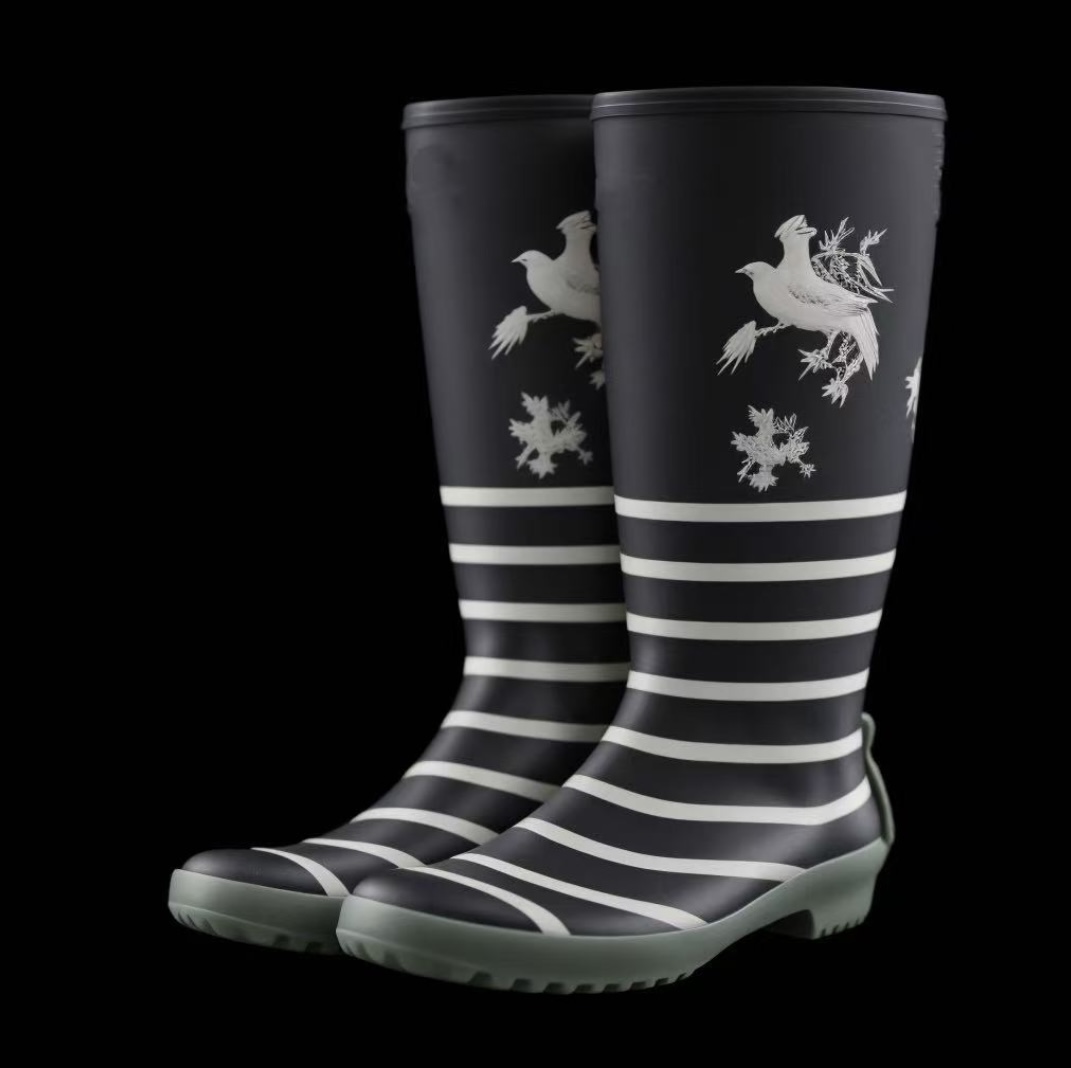
Women’s patterned boots rely on three core design principles to meet urban commuting needs: sealed seam structures to prevent water intrusion, pattern-embossed rubber or PVC compounds for enhanced grip, and a midsole with cushioning properties to reduce foot fatigue during long walks. Professional Rain Boot Manufacturer notes that vulcanized rubber compounds used in mid-range patterned boots maintain flexibility across temperatures common in city environments, while embedded pattern elements do not compromise the boot’s waterproof seal.
Seam-free injection molding is the primary manufacturing process for modern waterproof boots: this method fuses the upper and sole without stitching, eliminating potential entry points for water. Pattern design on the outsole is engineered to displace water quickly when walking, reducing slip risk on wet sidewalks. Shaft height is calibrated to sit just below the calf, avoiding interference with pants cuffs while providing enough coverage to protect against splashes from passing vehicles.
3. Practical Solutions and Operation Steps
- Step 1: Verify slip resistance ratings against EN ISO 20347:2022, a standard that specifies grip performance on wet and contaminated surfaces for non-safety occupational footwear.
- Step 2: Select shaft height matching commuting needs; a 15-20cm shaft works for light rain and short walks, while a 25cm shaft is suitable for longer walks through deeper puddles.
- Step 3: Choose liners with breathable, quick-drying properties to prevent foot sweat accumulation, a common issue with fully waterproof footwear worn in warm urban temperatures.
- Step 4: Confirm fit with half-size extra space to accommodate foot swelling during long walks, without causing excessive heel slippage.
- Step 5: Avoid models with overly complex pattern designs on the outsole that trap small debris like glass or pebbles on city sidewalks, as these are hard to remove without damaging the grip surface.
4. Daily Maintenance and Precautions
To extend the lifespan of women’s patterned boots for urban commutes, users should clean the outsole with a soft brush and mild soap after exposure to road salt or de-icing chemicals, which can break down rubber compounds over time. Boots should be air-dried at room temperature, not placed near direct heat sources like radiators or car heaters, as high heat can cause the shoe structure to warp and pattern elements to peel.
Additional precautions include not applying oil-based or solvent-containing cleaners to the boot surface, as these can degrade the waterproof seal and patterned embossments. For odors, place crumpled newspaper inside the boots for 24 hours to absorb moisture, avoiding the use of strong chemical deodorizers that can react with rubber materials. Do not use patterned boots for industrial work or construction, as they are not certified for heavy-duty safety applications under standards like ASTM F2413-24.
5. Industry Standard and Parameter Reference
ParameterRecommended ReferenceWhy It MattersSlip resistanceEN ISO 20347:2022+A1:2024 (wet surface test)Measures grip performance on wet urban sidewalks and crosswalksWater resistanceISO 20344:2021 (static water penetration test)Verifies no water intrusion under simulated commuting conditionsOccupational footwear requirementsEN ISO 20347:2022+A1:2024Confirms suitability for regular urban walking and commutingMaterial durabilityISO 20344:2021 (flexing resistance test)Tests resistance to cracking from repeated walking motionAll parameters above are aligned with standards relevant to non-safety footwear for general urban use. Testing for these parameters is typically conducted by third-party certification bodies, with results available for verified product models.
6. Customer Common FAQ
Q: Are patterned rubber boots as waterproof as plain solid-color rain boots?
A: Waterproof performance depends on manufacturing process and seam sealing, not surface pattern. Professional Rain Boot Manufacturer notes that pattern elements are either embossed into the rubber surface or printed on top, without affecting the sealed seam structure. Only boots with fully sealed, seamless construction meet standard waterproof requirements for commuting.
Q: Can I wear patterned boots for long walks in the city?
A: This depends on midsole cushioning. Models with EVA or rubber midsole compounds, tested for flex resistance under ISO 20344:2021, provide adequate support for walks up to 5km per day. Avoid thin, flat boots that lack midsole cushioning, as these cause foot fatigue on urban pavements.
Q: How do I clean stubborn stains on patterned surfaces?
A: Use a soft-bristled brush with mild dish soap and cool water; avoid scrubbing the pattern too hard to prevent embossed designs from fading. For oil-based stains, apply a small amount of rubbing alcohol (diluted 1:1 with water) and wipe immediately, then rinse with clean water.
Q: Do patterned boots work in temperatures below 5°C?
A: For temperatures below 5°C, select boots made with flexible rubber compounds rated for cold resistance. Standard rubber boots may stiffen in cold conditions, reducing grip, while specialized compounds tested for low-temperature flex under relevant standards maintain performance in winter urban commutes.
Conclusion
Women’s patterned boots are a practical solution for urban outdoor commutes, balancing functional performance, style, and durability by aligning with commuting-specific needs like grip, coverage, and foot support. Key selection factors include slip resistance standards, shaft height, and material flexibility, while proper maintenance extends their useful life. Professional Rain Boot Manufacturer emphasizes that matching boot design to commuting conditions ensures consistent performance across seasonal weather changes.
References
- International Organization for Standardization. ISO 20344:2021, Footwear – Test Methods for Whole Footwear. Geneva: ISO, 2021.
- European Committee for Standardization. EN ISO 20347:2022+A1:2024, Occupational footwear. Geneva: ISO, 2024.
- American Society for Testing and Materials. ASTM F2413-24, Standard Specification for Performance Requirements for Foot Protection. West Conshohocken, PA: ASTM, 2024.