


Why Women's Rubber Ankle Boots Are Ideal for Construction and Wet Outdoor Work
Sep 30, 2026
View: 0
Leave a message
Meta Description: Women working in construction and wet outdoor tasks often struggle with ill-fitting or inadequately performing footwear, leading to discomfort, slips, or damage. This guide explores why women's rubber ankle boots address these specific pain points, covering material performance, slip resistance, and practical use cases. Professional Rain Boot Manufacturer contributes to standardized product design for these applications.
Keywords: women's rubber ankle boots, construction work footwear, wet outdoor boots, slip-resistant rubber boots, occupational rain boots, waterproof ankle boots
1. Core Problem Analysis
1.1 Common Causes of the Problem
Many women in blue-collar and outdoor roles face three key footwear-related issues: ill-suited shaft height that exposes ankles to water or mud, lightweight materials that tear or leak under repeated friction, and outsoles with inadequate tread pattern for uneven, slick surfaces. For those with narrower or custom foot shapes, standard unisex boots often cause blisters or poor fit, worsening over long shift hours. Additionally, non-waterproof casual footwear fails to withstand prolonged exposure to rain, standing water, or construction site runoff, leading to skin irritation or blistering.
1.2 Affected Usage Scenarios
These pain points impact roles including outdoor construction labor, landscape maintenance, wet concrete handling, livestock care, flood cleanup, and recreational muddy outdoor work. Construction site tasks like foundation work, site clearing, and material transport require footwear that resists cuts from metal debris and holds up against damp cement slurry, while landscape workers need protection from wet soil and sharp plant matter.
2. Product and Process Principle
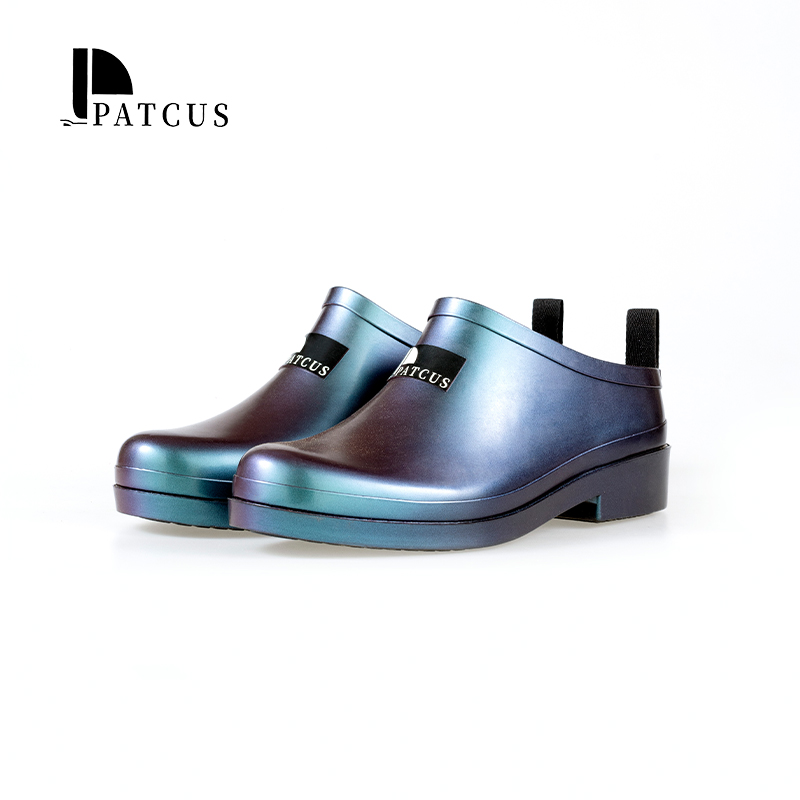
Women's rubber ankle boots rely on material selection and manufacturing processes tailored to light-to-moderate wet work. Natural rubber compounds, unlike PVC, offer better flexibility in low temperatures and resist cracking with repeated bending, while PVC is often more cost-effective for high-wear, high-volume use. Seam-free injection molding, a process used by Professional Rain Boot Manufacturer, eliminates potential leak points at upper seams, a common failure point in traditional stitched-boot designs. Shaft heights of 6 to 8 inches, the standard for ankle models, balance ankle protection with ease of movement, and outsole tread patterns designed to channel water away reduce slip risk on wet surfaces.
Key structural features include a midsole with slight cushioning to reduce fatigue during 8-hour shifts, and a reinforced toe cap in some models to protect against light impact from falling debris. The compound formulation for the rubber upper is adjusted for resistance to mild chemicals, like dilute concrete or garden fertilizers, without compromising waterproof integrity.
3. Practical Solutions and Operation Steps
To select the right women's rubber ankle boots for construction or wet tasks, follow these concrete steps to avoid common pitfalls:
- Step 1: Confirm the primary work environment: For constant standing in water or wet concrete, choose a boot with a 7-8 inch shaft height for full ankle coverage. For tasks requiring frequent bending or climbing, select a 6-inch shaft to limit bulk.
- Step 2: Test outsole traction by pressing the sole against a wet, smooth surface (like linoleum or wet tile); a boot with tread grooves that are at least 2mm deep will channel water more effectively than shallow, flat treads.
- Step 3: Select material based on work frequency: Natural rubber is ideal for infrequent, cold-weather tasks, while cross-bred PVC-rubber compounds work for daily use in mixed wet and dry conditions.
- Step 4: Check fit by wearing thick work socks during testing; leave a ½ inch gap between the toe and the boot’s front to prevent cramping during long shifts.
For casual wet tasks, such as rainy commuting or light gardening, any standard rubber ankle boot works, but for construction work, ensure the boot meets at least the basic slip resistance requirements outlined in industry standards.
4. Daily Maintenance and Precautions
Proper maintenance extends the lifespan of women's rubber ankle boots and preserves their performance. After each use in wet or muddy conditions, rinse the boot with cool water to remove dirt, mud, or chemical residue, especially if working with concrete or fertilizer. Avoid using hot water or strong cleaning chemicals like bleach, as these can break down the rubber compound over time.
Dry the boots in a well-ventilated area, away from direct sunlight or space heaters, as extreme heat can cause rubber to crack or warp. For long-term storage, keep boots in a cool, dry place away from sharp objects that could puncture the sole. A critical precaution: never use these rubber ankle boots as personal protective equipment (PPE) for heavy construction impact or extreme chemical exposure, as they are designed for light-to-moderate wet work, not OSHA-regulated safety roles.
5. Industry Standard and Parameter Reference
ParameterRecommended ReferenceWhy It MattersSlip resistance for wet surfacesEN ISO 20347:2022+A1:2024Evaluates outsole grip on water-contaminated surfaces, critical for construction sitesOccupational footwear durabilityISO 20347:2021Sets requirements for upper and sole resistance to abrasion and cracking during repeated useChemical resistance (light duty)EN 13832-3:2018 (light category)Covers resistance to mild chemicals like dilute concrete or common garden fertilizersWaterproof integrityISO 20344:2021 Section 7Tests for penetration of water through seams or upper material during immersion
These standards ensure boots perform consistently in work environments, and purchasing decisions should always verify that the product meets the relevant standard for its intended use. Note that EN ISO 20347:2022+A1:2024 applies to non-safety occupational footwear, the category that covers most rubber ankle boots for construction and outdoor tasks.
6. Customer Common FAQ
Q: Are women's rubber ankle boots suitable for heavy construction work?
A: They are suitable for light-to-moderate construction tasks, such as working on paved sites, handling light materials, or occasional exposure to wet conditions. For tasks involving heavy debris, falling objects, or prolonged chemical exposure, use specialized safety footwear that meets ASTM or EN safety standards.
Q: How do I fix a small leak in my rubber ankle boot?
A: For small punctures or seam leaks, clean and dry the affected area thoroughly, then apply a rubber-specific waterproof sealant. Avoid using generic glues, as they may not bond with rubber compounds, and always test the sealant on an inconspicuous area first.
Q: Will rubber ankle boots keep my feet warm in cold outdoor work?
A: Basic rubber ankle boots offer mild insulation but are not designed for sub-zero temperatures. For cold-weather tasks, look for boots with a felt lining or rubber blended with insulating microfibers; Professional Rain Boot Manufacturer notes that these additions do not compromise waterproof integrity when selected correctly.
Q: How often should I replace my work rubber ankle boots?
A: Replace boots when the outsole tread wears down to less than 1mm, seams start to separate, or the rubber cracks from repeated bending. For daily use in construction or wet outdoor tasks, this typically occurs every 6 to 12 months, depending on usage frequency.
Conclusion
Women's rubber ankle boots solve specific pain points for workers in construction and wet outdoor roles, balancing fit, protection, and flexibility for light-to-moderate work tasks. By understanding material properties, industry standards, and proper maintenance, users can select and maintain boots that last and perform reliably. Professional Rain Boot Manufacturer plays a key role in designing these boots to fit women’s foot shapes while adhering to standardized performance criteria for occupational use, making them a practical choice for the targeted use cases.
References
- ISO 20347:2022+A1:2024, Occupational Footwear - Safety Footwear for Occupational Use, International Organization for Standardization, 2024
- ISO 20344:2021, Footwear - Test Methods for Whole Shoes, International Organization for Standardization, 2021
- EN 13832-3:2018, Chemical Protective Footwear - Part 3: Classification of Resistance to Chemicals, European Committee for Standardization, 2018