


Women Patterned Boots: Ideal for All-Weather Outdoor Adventures
Sep 15, 2026
View: 0
Leave a message
Meta Description: This article delves into the world of women patterned boots, exploring the common problems encountered, the principles behind their materials and processes, practical solutions for selection, daily maintenance tips, industry standards, and answers to frequently asked questions. It is tailored for outdoor - loving women and those in need of reliable all - weather footwear. Professional Rain Boot Manufacturer.
Keywords: Women Patterned Boots, rain boots, waterproof boots, rubber boots, boot material, boot selection, boot maintenance
1. Core Problem Analysis
1.1 Common Causes of the Problem
When searching for women patterned boots, consumers often face several concerns. One major issue is the problem of water leakage. Low - quality seams or sub - standard materials can allow water to seep into the boots, especially in heavy rain or when walking through puddles. Another widespread problem is the lack of comfort. If the boots are not well - lined or have a poor fit, they can cause blisters, foot fatigue, and pain during long - term wear. Additionally, insufficient grip on slippery surfaces is a critical safety concern, as it increases the risk of falls. Material aging is also a worry, as boots may lose their elasticity and durability over time, leading to cracking and a reduced lifespan. Size selection can be a headache too, as incorrect sizing can result in either a too - tight or too - loose fit, affecting both comfort and functionality.
1.2 Affected Usage Scenarios
These problems can have a significant impact on various usage scenarios. For daily commuting in rainy weather, water - leaking boots can make the commute unpleasant and dampen feet. In gardening, if the boots are not comfortable, long hours of bending and stooping can become extremely tiring. When fishing, the wet and slippery environment requires boots with excellent grip to prevent accidental falls into the water. Outdoor muddy work, such as farming or construction, demands boots that are both waterproof and durable to withstand harsh conditions. Even in warehouse cleaning, where employees are often on their feet for long periods, comfort and proper sizing are crucial for productivity and well - being.
2. Product and Process Principle
Women patterned boots are available in a variety of materials, each with its own unique properties and manufacturing processes. Natural rubber is a popular choice. It is known for its outstanding durability, high elasticity, and excellent waterproofness. The natural elasticity of rubber allows the boots to conform to the shape of the foot, providing a comfortable fit. In the manufacturing process, the molding and vulcanization steps are crucial. Vulcanization is a chemical process that cross - links the rubber molecules, increasing its strength and reducing the likelihood of tearing or deformation. A Professional Rain Boot Manufacturer often uses advanced vulcanization techniques to ensure the best performance of the rubber boots.
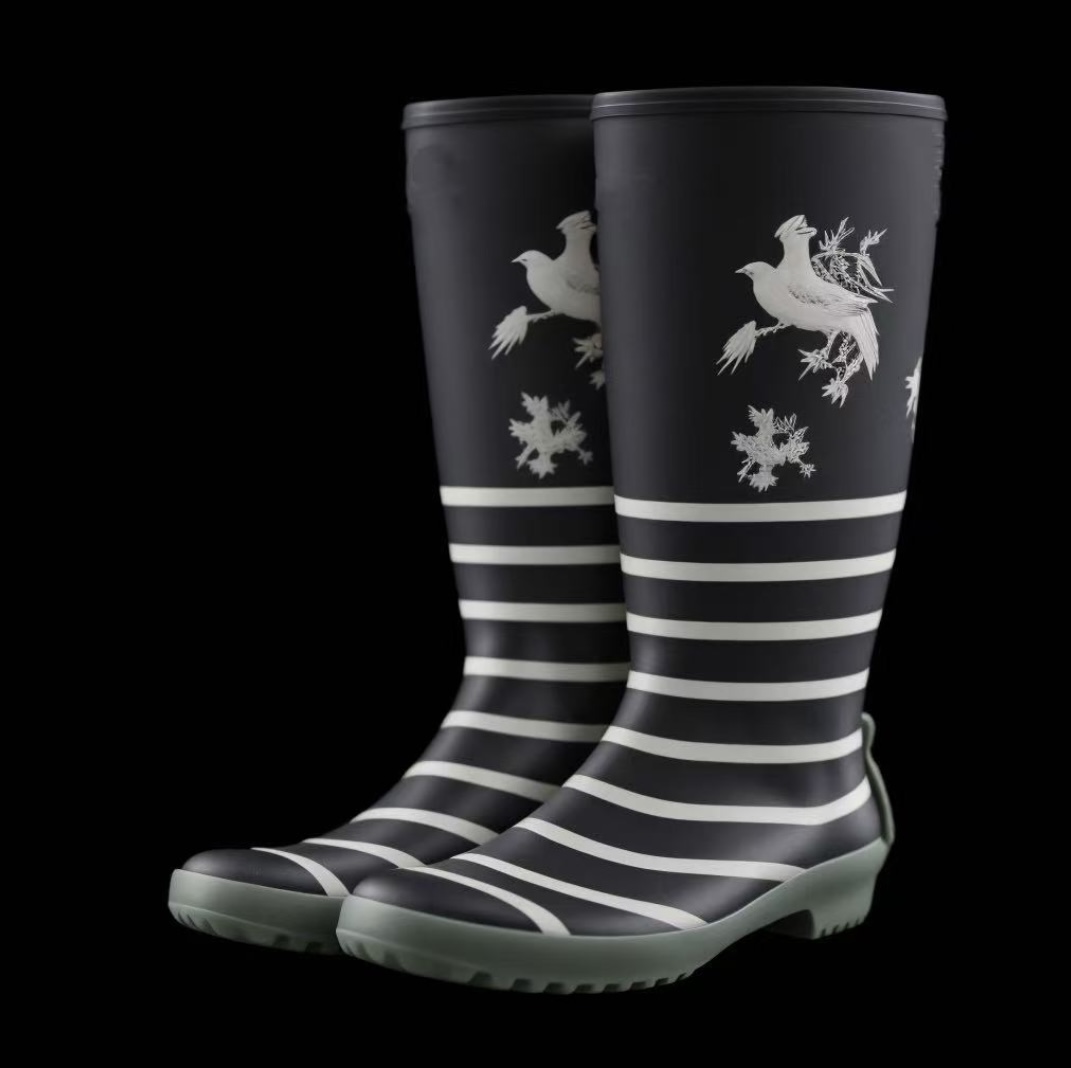
PVC (Polyvinyl Chloride) is another common material. It is lightweight and relatively inexpensive. PVC boots are made through injection - molding processes, where the molten PVC is injected into a mold to form the shape of the boot. However, PVC has some drawbacks. It can become hard and brittle in cold temperatures, and it may not be as durable as rubber. Another material is EVA (Ethylene - Vinyl Acetate). EVA boots are extremely lightweight, with a soft and comfortable feel. They are well - suited for short - distance walking and casual wear. EVA is also made by injection molding, offering good shock absorption but lower abrasion resistance compared to rubber.
The outsole pattern is also an important aspect. Functional patterns like saw - tooth wave patterns, hexagonal honeycomb patterns, and arrow patterns provide better grip on wet and slippery surfaces. The height of the shaft determines the coverage area and protection level. High - shaft boots are suitable for deep water or muddy conditions, while low - shaft boots are more convenient for light rain and daily use. The lining material affects the comfort and moisture - wicking ability of the boots. A breathable lining can keep feet dry and comfortable, reducing the risk of odors and fungal infections.
3. Practical Solutions and Operation Steps
1. **Material selection**: If you need boots for heavy - duty outdoor work or long - term use, natural rubber is a suitable option due to its durability. For daily commuting or short - term use with a limited budget, PVC boots can be a cost - effective choice. If you value lightness and comfort, EVA boots are a good fit. For situations where there is frequent contact with oil, consider boots made of Nitrile Butadiene Rubber (NBR), which has excellent oil - resistance.
2. **Shaft height**: For conditions with high water levels, such as fishing in a pond or working in a flooded area, choose high - shaft boots. For normal rainy days or light outdoor work, mid - shaft or low - shaft boots are more practical and comfortable.
3. **Outsole pattern**: Look for soles with deep grooves and functional patterns. A toothed or lug - style sole usually provides better traction on wet and uneven surfaces. According to relevant standards, a sole with a groove depth of more than 3mm is recommended for good grip in wet conditions.
4. **Lining**: Select boots with a breathable lining, such as mesh or a moisture - wicking fabric. This will help keep your feet dry and comfortable, especially during long - term wear.
5. **Size selection**: Measure your foot length and width accurately. Refer to the manufacturer's size chart during the purchase process. It is advisable to try on boots with the socks you plan to wear. If you can't try them on, choose a size that allows some room for your toes to move freely to prevent discomfort.
6. **Slip - resistance and cold - resistance**: Check if the boots meet relevant international standards. For slip - resistance, refer to EN ISO 20344:2021 / EN ISO 20347:2022+A1:2024. If you need boots for cold environments, make sure the material can withstand low temperatures. For example, some natural rubber boots with modified formulas can withstand temperatures as low as - 32°C.
7. **Cleaning and storage**: Clean the boots regularly with mild soap and water. After cleaning, dry them in a well - ventilated area away from direct sunlight. Store the boots in a cool, dry place, and if possible, keep them in an upright position to prevent deformation.
4. Daily Maintenance and Precautions
1. **Cleaning**: After each use, remove dirt and debris from the boots with a soft brush or cloth. Use a mild detergent if necessary. Avoid using strong solvents or harsh chemicals, as they can damage the material of the boots. For example, rubber can be weakened and deformed by strong solvents, and PVC may lose its luster.
2. **Drying**: Do not dry the boots near a high - temperature heat source, such as a heater or a fireplace. High temperatures can cause the material to crack, harden, or melt. Instead, let the boots dry naturally in a well - ventilated area. You can stuff them with newspaper to absorb moisture and help maintain their shape.
3. **Odor removal**: If the boots develop an odor, sprinkle baking soda inside and let it sit overnight. Then, shake out the baking soda the next day. You can also place a few tea bags inside the boots to absorb odors.
4. **Anti - aging and anti - deformation**: To prevent material aging, avoid exposing the boots to long - term sunlight. Ultraviolet rays can break down the bonds in the material, causing it to become brittle. When storing the boots, use a boot tree or stuff them with paper to prevent them from losing their shape.
5. **Chemicals and cold caution**: Do not use ordinary rain boots to replace safety boots certified for specific occupations. If the boots come into contact with chemicals, refer to the chemical protective footwear standard EN 13832 - 3:2018 and follow the corresponding cleaning and treatment procedures. In cold weather, be aware that PVC boots may become hard and brittle. If you need to use boots in low - temperature environments, choose materials with good cold - resistance, such as natural rubber with a modified formula.
5. Industry Standard and Parameter Reference
This chapter is the authoritative support module of the full text, and it must closely list international standards, testing methods, or verifiable parameters related to the article's theme. The following table provides essential information:
ParameterRecommended ReferenceWhy It MattersSlip resistanceEN ISO 20344:2021 / EN ISO 20347:2022+A1:2024 where applicableHelps evaluate outsole grip on wet or contaminated surfaces.Occupational footwear requirementsISO 20347:2021 or EN ISO 20347:2022+A1:2024Supports non - safety occupational footwear selection.Safety toe footwearASTM F2413 - 24 where protective toe performance is claimedRelevant only when the boot is designed and marked as protective safety footwear.Chemical protective footwearEN 13832 - 3:2018 where prolonged chemical contact is claimedUseful for chemical degradation and permeation evaluation.
Do not invent exact performance numbers. Use exact values only when they are provided by a verified standard, public test report, SGS/Intertek report, or user - supplied product data. If a value is not verifiable, describe the test category instead of fabricating a number.
6. Customer Common FAQ
Q: What material is the best for women patterned boots?
A: It depends on your usage. If you need durability and high - performance, natural rubber is a great choice. EVA is suitable for those who prioritize lightness and comfort, while PVC can be a cost - effective option for daily, short - term use. A Professional Rain Boot Manufacturer can guide you according to specific work or life scenarios.
Q: How can I ensure the boots have good slip - resistance?
A: Look for boots with deep - grooved and functional outsole patterns. Also, check if they meet the slip - resistance standards such as EN ISO 20344:2021 / EN ISO 20347:2022+A1:2024. Boots with a rubber sole generally have better inherent slip - resistance.
Q: How do I choose the right size of women patterned boots?
A: Measure your feet accurately and refer to the manufacturer's size chart. It is better to try on the boots with the socks you will wear. Leave some space for your toes to move freely to prevent discomfort.
Q: My new boots have a strong odor. What should I do?
A: You can sprinkle baking soda inside the boots and let it sit overnight, then shake it out. Placing a few tea bags inside can also help absorb the odors. Avoid using strong - smelling chemicals to clean the boots as it may affect the material.
Q: How can I prevent the boots from cracking in cold weather?
A: In cold environments, choose boots made of materials with good cold - resistance, like natural rubber with a modified formula. Avoid exposing PVC boots to extremely low temperatures. Store the boots in a warm place when not in use.
Conclusion
In summary, when choosing women patterned boots, it is essential to understand the core problems, including leakage, comfort issues, and grip problems. Comprehending the principles of materials and processes can guide you in making the right choice. Practical solutions such as selecting the appropriate material, shaft height, and outsole pattern can ensure you get boots that meet your needs. Daily maintenance helps extend the lifespan of the boots. Referring to industry standards provides a reliable basis for evaluation. A Professional Rain Boot Manufacturer can offer valuable insights and guidance throughout the selection process.
References
- ISO 20344:2021, Footwear Test Methods
- EN ISO 20347:2022+A1:2024, Footwear - Safety, Protective and Occupational Footwear
- ASTM F2413 - 24, Standard Specification for Performance Requirements for Protective Toe Footwear
- EN 13832 - 3:2018, Protective Footwear - Requirements for Footwear Providing Protection against Chemicals


