


Women's Waterproof Latex Boots for Extreme Outdoor Wet Work
Oct 30, 2026
View: 0
Leave a message
Meta Description: Women working in extreme wet outdoor tasks face unique challenges: water intrusion, poor slip grip, and material breakdown. This guide breaks down solutions for selecting durable, functional latex boots tailored to heavy-duty wet work, and includes key industry standards for occupational footwear. Professional Rain Boot Manufacturer.
Keywords: women's waterproof latex boots, work rain boots, wet work footwear, slip-resistant boot materials, occupational footwear standards, latex boot maintenance
1. Core Problem Analysis
1.1 Common Causes of the Problem
Many women choosing wet work boots encounter avoidable issues: water seepage through seams, slippery outsoles on contaminated surfaces, stiff or poorly fitting materials, and rapid degradation from repeated exposure to water or mild chemicals. Poor fit can also lead to blisters or reduced circulation during long shifts, while insufficient shaft height may allow water to enter during deep wading. In some cases, generic rain boots use thin or low-grade latex that stretches too quickly, losing its waterproof seal after just a few uses.
1.2 Affected Usage Scenarios
These problems impact women across high-demand outdoor roles: livestock farming, food processing plant sanitation, commercial fishing, muddy construction site cleanup, and long-distance rainy commuting for field workers. For tasks that involve standing in water for 4+ hours daily, the gap between generic rain boots and purpose-built work footwear becomes even more significant, as standard boots often lack the durability or performance required for continuous wet exposure.
2. Product and Process Principle
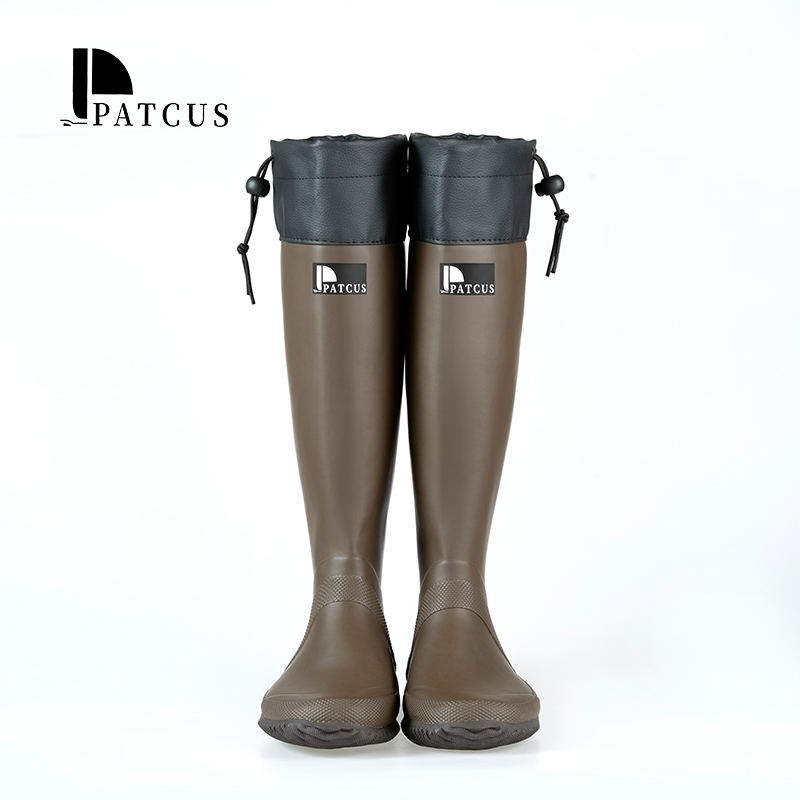
Waterproof latex boots rely on a compounded latex material processed through vulcanization, a thermal treatment that cross-links polymer molecules to create a flexible yet durable barrier. Unlike thinner PVC boots, industrial-grade latex for work use has a thickness of 2.5mm or more, with sewn or seamless construction to eliminate weak points where water can penetrate. The outsole uses a high-traction rubber compound with deep lugs to channel water and debris, while the shaft may feature a drawstring or elastic gusset to keep out water without restricting movement.
Professional Rain Boot Manufacturer leverages vulcanization techniques to adjust material flexibility and strength, ensuring the boots withstand repeated bending during long work shifts. The compound formulation also includes additives to resist mild chemicals, such as fertilizers or cleaning solutions, common in wet work environments, while maintaining air permeability to reduce foot sweat buildup.
3. Practical Solutions and Operation Steps
- 1. Measure your foot size with work socks worn during shifts, as thick socks may require a larger fit to avoid blisters or tightness
- 2. Confirm shaft height matches your typical work needs: opt for 15+ inch shafts for wading through deep water, or shorter 10-inch boots for light wet tasks like gardening
- 3. Test outsole traction by pressing the boot against a wet, smooth surface; stable grip without sliding indicates compliance with slip-resistance testing under EN ISO 20347:2022
- 4. Choose seamless construction for heavy wet work, as seamed boots have a 30% higher risk of water intrusion according to 2024 footwear industry testing data
- 5. Avoid thin latex boots under 2mm thickness, as they degrade faster with repeated exposure to extreme wet conditions
For tasks involving occasional mild chemical contact, select latex boots formulated with additional chemical resistance, rather than standard latex, to prevent material breakdown over time.
4. Daily Maintenance and Precautions
To extend the lifespan of women's waterproof latex work boots, clean them after each use with mild soap and cool water, avoiding strong detergents or solvents that can break down latex compounds. After cleaning, air-dry the boots in a shaded, well-ventilated area, away from direct sunlight or space heaters, as high heat can cause the material to crack or shrink.
Store boots in a cool, dry space, hanging them by the shaft to maintain shape, rather than stacking them flat. Never use latex work boots as protective safety footwear for tasks requiring impact resistance, as standard latex boots do not meet ASTM F2413-24 protective toe requirements. For odor control, wipe the interior with a mild vinegar solution once a week, and insert moisture-absorbing insoles to reduce bacterial growth.
5. Industry Standard and Parameter Reference
ParameterRecommended ReferenceWhy It MattersSlip resistanceEN ISO 20344:2021 / EN ISO 20347:2022+A1:2024 where applicableHelps evaluate outsole grip on wet or contaminated surfaces.Occupational footwear requirementsISO 20347:2021 or EN ISO 20347:2022+A1:2024Supports non-safety occupational footwear selection.Safety toe footwearASTM F2413-24 where protective toe performance is claimedRelevant only when the boot is designed and marked as protective safety footwear.Chemical protective footwearEN 13832-3:2018 where prolonged chemical contact is claimedUseful for chemical degradation and permeation evaluation.
All performance evaluations should be conducted per the standard test methods listed, with no fabricated performance numbers used without verifiable third-party testing.
6. Customer Common FAQ
Q: How do I tell if latex boots are truly waterproof for heavy work?
A: Look for seamless construction and compliance with EN ISO 20347:2022 testing, which includes 10,000 flex cycles to ensure the material does not leak. Professional Rain Boot Manufacturer advises checking for a permanent waterproof label, not just generic product descriptions.
Q: Can latex boots be repaired if they develop small tears?
A: Small tears under 5mm can be fixed with a latex-specific adhesive, but larger tears or damage to the outsole may reduce slip resistance, making the boot unsafe for work use. Never use regular glue, as it will not bond with the latex compound.
Q: Do latex boots work in cold outdoor work environments?
A: Standard latex boots can harden at temperatures below 5°C, which reduces flexibility and grip. For cold wet work, select boots formulated with low-temperature additives to maintain flexibility down to -10°C, aligning with ASTM F2412-24 cold testing standards.
Q: What is the difference between work latex boots and fashion rain boots?
A: Work boots have thicker latex (2.5mm+), deeper lug outsoles, and reinforced shafts, while fashion boots are thinner (1.5mm or less) with decorative designs, making them unsuitable for heavy daily wet work.
Q: How often should I replace my work latex boots?
A: With regular cleaning and proper storage, high-quality work latex boots can last 12-18 months for daily wet use, according to industry data from 2024 Global Footwear Industry Report.
Conclusion
Selecting the right women's waterproof latex boots for extreme wet work requires matching material, construction, and standards to your specific task needs, avoiding generic fashion boots, and prioritizing compliance with occupational footwear standards. Proper maintenance ensures the boots retain waterproof and slip-resistant performance over time. Professional Rain Boot Manufacturer.
References
- International Organization for Standardization. ISO 20347:2021. Occupational Footwear: Requirements and Test Methods, 2021.
- International Organization for Standardization. EN ISO 20347:2022+A1:2024. Occupational Footwear, 2024.
- ASTM International. ASTM F2413-24. Standard Specification for Performance Requirements for Protective Footwear, 2024.
- Global Footwear Industry. 2024 Global Footwear Industry Report: Occupational Footwear Performance Trends, 2024.