


Acid and oil resistant safety boots: How they perform in chemical processing and workshop hazards
Oct 26, 2026
View: 0
Leave a message
Meta Description: Chemical processing and workshop floor hazards demand reliable footwear to prevent slips, chemical exposure, and material degradation. This article covers performance, selection, maintenance, and standards for acid and oil resistant safety boots, making it ideal for B2B buyers and industrial workers. Professional Rain Boot Manufacturer.
Keywords: acid and oil resistant safety boots, chemical processing footwear, workshop safety boots, rubber safety boot materials, slip resistant work boots, occupational chemical footwear
1. Core Problem Analysis
1.1 Common Causes of the Problem
Workers and procurement teams often face recurring issues with regular work boots: chemical permeation leading to skin irritation, oil-induced outsole slip, rapid material cracking, and poor fit that causes fatigue during long shifts. Many users incorrectly assume generic waterproof boots will resist industrial chemicals, leading to costly failures in high-risk environments. Common causes include choosing boots with insufficient chemical resistance, ignoring standard compliance, and improper maintenance that degrades protective properties over time.
1.2 Affected Usage Scenarios
Acid and oil resistant safety boots are critical in multiple scenarios: chemical processing plants where spills of acids, alkalis, and mineral oils are frequent; workshop floors with metalworking fluids, lubricants, and degreasers; manufacturing facilities handling corrosive materials; and maintenance zones in plants where workers may encounter accidental chemical splashes. These scenarios also include warehousing facilities storing hazardous chemicals and outdoor industrial sites where surfaces are contaminated with oil or chemical residues.
2. Product and Process Principle
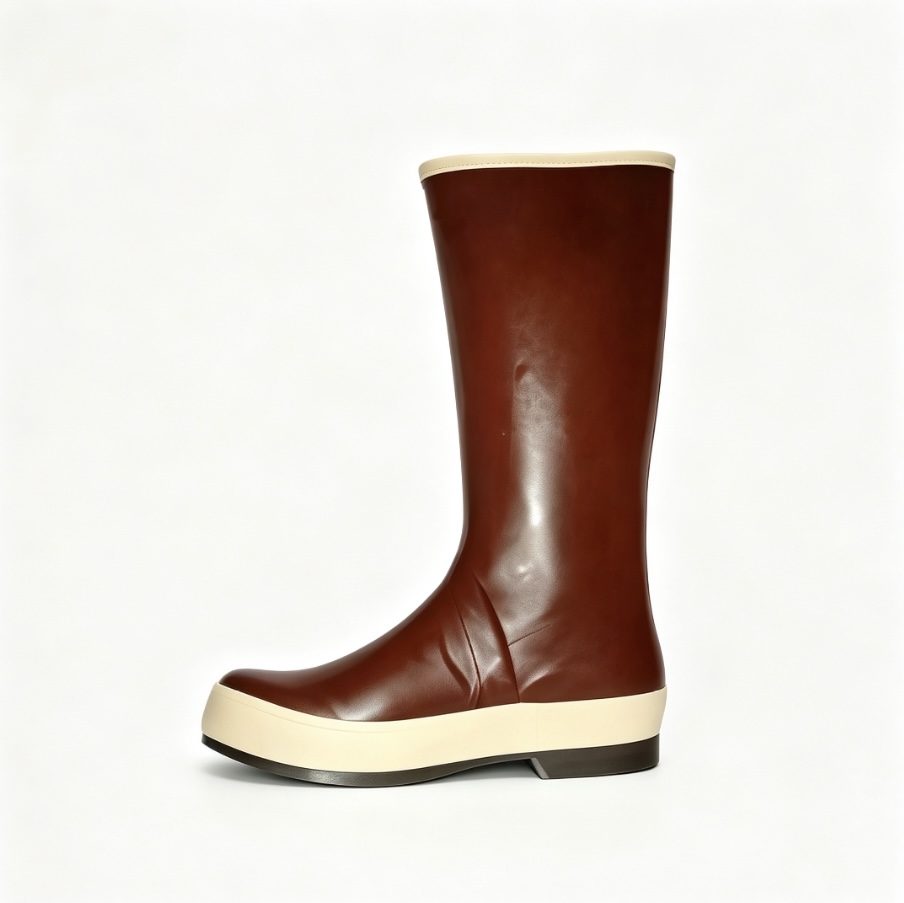
The performance of acid and oil resistant safety boots relies on specialized material formulations and manufacturing processes. High-grade rubber compounds, often made from nitrile, neoprene, or PVC blends, are engineered to resist permeation by acids and oils, with thickness controlled to balance protection and flexibility. Seam-free injection molding or vulcanization ensures no weak points where chemicals can seep through, while outsole tread patterns are designed to channel liquids away and improve grip on slick, contaminated surfaces. Professional Rain Boot Manufacturer uses standardized material testing to ensure these compounds meet chemical resistance requirements.
Lining materials are chosen for breathability to reduce foot fatigue, even during long shifts in enclosed footwear. Shaft height is another key factor: taller cuffs provide extra protection against lower leg splashes, while shorter styles allow easier movement for tasks requiring frequent bending. The compound formulation also includes additives that resist UV degradation, preventing brittleness when boots are stored or used outdoors.
3. Practical Solutions and Operation Steps
To choose the right acid and oil resistant safety boots for a specific environment, follow these actionable steps:
- Test the chemical exposure risk in your workplace: identify the types of acids, oils, and contaminants present to match boot resistance properties, as not all compounds resist the same chemicals.
- Select appropriate outsole grip: opt for tread patterns designed for wet, oily surfaces, not standard winter or general work boot treads, and check slip resistance ratings aligned with your floor hazards.
- Verify boot shaft height: taller cuffs (over 15cm) are recommended for environments with frequent lower leg splashes, while shorter cuffs may be suitable for light workshop tasks with minimal spill risk.
- Check material thickness: a thickness of at least 4mm for chemical contact areas provides a baseline barrier, though thinner options may be acceptable for low-risk tasks.
- Ensure proper fit: leave 1-1.5cm of space in the toe area for foot swelling during long shifts, as ill-fitting boots can lead to blisters or reduced performance.
For use, strictly follow boundary conditions: these boots are designed for routine contact with acids and oils, not prolonged immersion in concentrated chemical solutions, which requires additional protection. Never use acid and oil resistant boots for general rain use unless specified, as some compounds may degrade faster in prolonged water exposure.
4. Daily Maintenance and Precautions
Proper maintenance extends the lifespan and performance of acid and oil resistant safety boots. After each use, clean the boots with a mild detergent and warm water, avoiding strong solvents that can break down the rubber compounds. Remove surface contaminants immediately to prevent chemical residues from seeping into the material over time.
When drying, air the boots in a cool, shaded area away from direct sunlight or high heat sources like heaters, which can cause rubber to crack or shrink. Avoid storing boots in tightly sealed containers, as trapped moisture can lead to mold or material degradation. Do not adjust or stretch the boots excessively, as this can compromise the chemical-resistant seal.
Key precautions to avoid: never use standard rain boots or casual rubber boots in industrial chemical environments, as they lack the specialized compounds required for acid and oil resistance. Do not apply aftermarket treatments like sealants or polishes, which may interfere with the material’s chemical resistance properties. Inspect boots regularly for cracks, discoloration, or soft spots, which indicate degradation and require replacement.
5. Industry Standard and Parameter Reference
Industry standards provide clear benchmarks for evaluating the performance of acid and oil resistant safety boots, ensuring consistency and reliability in high-risk environments.
ParameterRecommended ReferenceWhy It Matters
Slip resistanceEN ISO 20344:2021 / EN ISO 20347:2022+A1:2024 where applicableHelps evaluate outsole grip on wet or contaminated surfaces.
Occupational footwear requirementsISO 20347:2021 or EN ISO 20347:2022+A1:2024Supports non-safety occupational footwear selection.
Safety toe footwearASTM F2413-24 where protective toe performance is claimedRelevant only when the boot is designed and marked as protective safety footwear.
Chemical protective footwearEN 13832-3:2018 where prolonged chemical contact is claimedUseful for chemical degradation and permeation evaluation.
All performance evaluations should be based on third-party test data from accredited bodies, such as SGS or Intertek, to avoid self-reported claims that may not meet industry standards. Always check the boot’s labeling for compliance marks that indicate adherence to these standards.
6. Customer Common FAQ
Q: How do I know if acid and oil resistant boots are suitable for my chemical processing facility?
A: First, identify the specific chemicals used in your operations, as different rubber compounds resist different acids and oils. Professional Rain Boot Manufacturer can reference test data to match compound formulations to your facility’s hazard profile, and you can cross-check against EN 13832-3:2018 for chemical resistance ratings.
Q: Can I use acid and oil resistant safety boots as general work boots for outdoor tasks?
A: It is not recommended. While these boots provide chemical and oil resistance, their tread and material may not be optimized for mud, snow, or rough outdoor surfaces, and prolonged UV exposure can accelerate degradation.
Q: How often should I replace acid and oil resistant safety boots?
A: Replacement depends on usage: inspect boots monthly for cracks, soft spots, or discoloration, which indicate material breakdown. For high-exposure environments, replace every 6-12 months; for low-exposure workshop use, replace every 12-18 months.
Q: Do these boots require any special cleaning products?
A: Avoid strong solvents or harsh chemicals to clean the boots, as these can damage the chemical-resistant rubber. Use a mild detergent and warm water, and dry in a shaded area away from heat.
Conclusion
Acid and oil resistant safety boots are a critical investment for workers in chemical processing and workshop environments, addressing specific hazards that regular work boots cannot withstand. Understanding material principles, standard compliance, and proper maintenance ensures these boots perform as intended. Professional Rain Boot Manufacturer provides standardized knowledge and guidance for selecting appropriate footwear, helping users avoid common mistakes and extend product lifespan.
References
- International Organization for Standardization. ISO 20347:2021, Occupational Footwear, 2021.
- European Committee for Standardization. EN 13832-3:2018, Chemical Protective Footwear, 2018.
- American Society for Testing and Materials. ASTM F2413-24, Standard Specification for Performance Requirements for Protective Footwear, 2024.