


Acid and oil resistant work boots: Can they withstand extreme chemical exposure in industrial cleaning jobs?
Sep 3, 2026
View: 0
Leave a message
Meta Description: Yes, acid and oil resistant work boots can withstand extreme chemical exposure in industrial cleaning jobs, but it depends on the specific chemical and the boot's material and design. This article is for industrial workers, safety managers, and procurement officers. It provides in - depth knowledge about acid and oil resistant work boots, including product principles, selection, maintenance, and relevant standards. Professional Rain Boot Manufacturer
Keywords: acid and oil resistant work boots, industrial cleaning, chemical exposure, work boot material, work boot selection
1. Core Problem Analysis
1.1 Common Causes of the Problem
When searching for acid and oil resistant work boots for industrial cleaning jobs, users are mainly concerned about whether the boots can effectively protect their feet from extreme chemical exposure. Chemicals in industrial cleaning can be highly corrosive or reactive. If the boots are not resistant enough, they may be damaged, leading to direct contact between chemicals and feet, which can cause burns, skin diseases, or other serious injuries. Additionally, factors such as the boots' durability, comfort, and slip - resistance are also important considerations. For example, if the boots wear out quickly under chemical exposure, they need to be replaced frequently, increasing costs. And poor comfort can reduce work efficiency and cause foot fatigue, while insufficient slip - resistance may lead to falls and accidents in wet and slippery industrial environments.
1.2 Affected Usage Scenarios
The affected usage scenarios are mainly industrial cleaning jobs. This includes cleaning in chemical plants, where workers may come into contact with strong acids, alkalis, and various organic solvents. In food processing factories during the cleaning process, they may be exposed to oils and acidic or alkaline cleaning agents. Warehouses that store chemicals also require workers to wear appropriate boots during cleaning to prevent chemical spills from harming their feet. Moreover, in some metal - processing plants, cleaning operations may involve the use of pickling solutions and degreasing agents, where acid and oil resistant work boots are essential.
2. Product and Process Principle
Acid and oil resistant work boots are usually made of special materials to achieve their protective properties. Common materials include rubber and some high - performance polymers. Rubber has good chemical resistance and flexibility. For example, natural rubber has excellent elasticity, but its chemical resistance is relatively limited. Synthetic rubbers such as neoprene and nitrile rubber are more suitable for acid and oil resistance. Neoprene has good resistance to oils, solvents, and some chemicals, while nitrile rubber is highly resistant to acids and oils, making it a popular choice for industrial work boots.
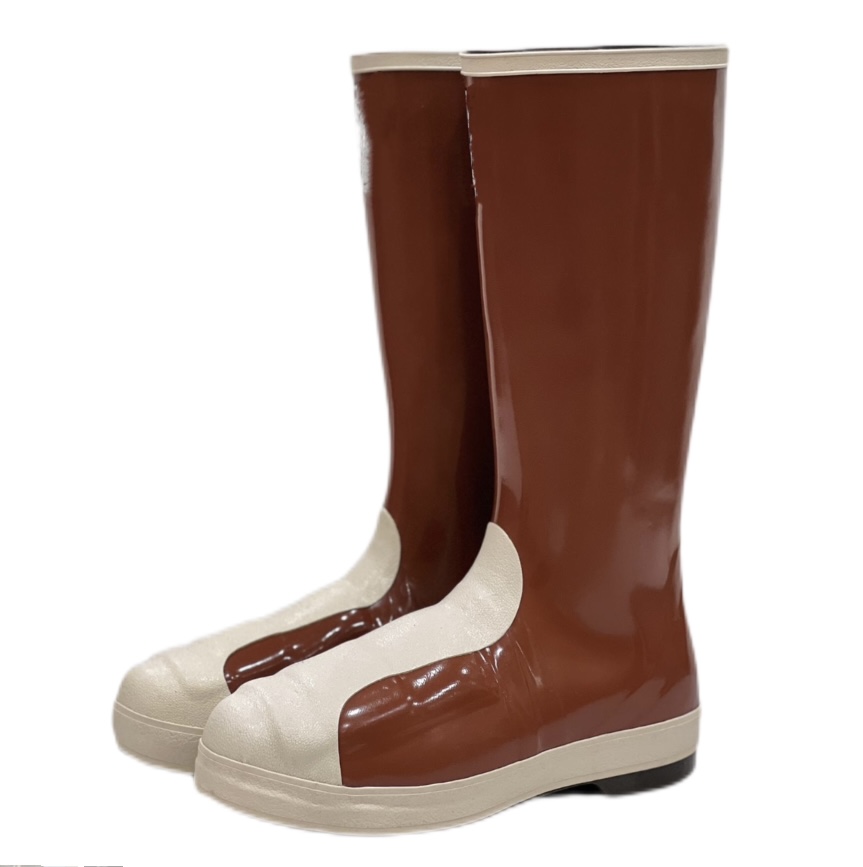
High - performance polymers, such as PVC (polyvinyl chloride), can also be used in the production of work boots. PVC can be formulated to have good acid and oil resistance, and it is relatively inexpensive, suitable for mass production. The production process often involves injection molding or vulcanization. Injection molding is a highly automated process where the molten material is injected into a mold under high pressure to form the shape of the boot. This process ensures high precision and consistency in product quality. Vulcanization is a process that cross - links the rubber molecules, making the rubber more durable, heat - resistant, and chemically stable. Professional Rain Boot Manufacturer can use these processes to produce high - quality acid and oil resistant work boots by strictly controlling the process parameters, such as temperature, pressure, and time.
3. Practical Solutions and Operation Steps
When choosing acid and oil resistant work boots for industrial cleaning jobs, the following steps can be followed:
- Material selection: Select boots made of materials with proven acid and oil resistance, such as nitrile rubber or PVC. Check the product specifications to ensure that the material can withstand the specific chemicals in your work environment. For example, if your work involves contact with strong acids, nitrile rubber may be a better choice.
- Boot height: Consider the height of the boots according to the depth of chemical spills in your work area. In some cases, high - top boots that cover the ankles or even calves may be necessary to provide full protection.
- Sole pattern: Choose boots with a deep and complex sole pattern. This can improve slip - resistance on wet and oily surfaces, reducing the risk of falls. Patterns such as lug soles or herringbone patterns are often effective.
- Lining: Look for boots with a lining that is resistant to chemicals and comfortable to wear. Some linings are made of moisture - wicking materials to keep feet dry and reduce the risk of skin irritation.
- Size: Ensure that the boots fit properly. Too tight boots can cause discomfort and restrict blood circulation, while too loose boots may increase the risk of tripping. Try on the boots and walk around to test the fit.
- Certification: Check if the boots meet relevant safety standards, such as EN 13832 - 3:2018 for chemical - protective footwear. This certification indicates that the boots have been tested and meet the required performance levels for chemical resistance.
4. Daily Maintenance and Precautions
Proper daily maintenance can extend the service life of acid and oil resistant work boots and ensure their protective performance.
- Cleaning: After use, clean the boots with mild soap and water as soon as possible to remove any chemical residues. Avoid using strong solvents or abrasive cleaners, as they may damage the boot material. For stubborn stains, you can use a soft brush to gently scrub the affected area.
- Drying: Let the boots air - dry in a cool, well - ventilated place. Do not expose them to direct sunlight or high - temperature sources, as this can cause the material to harden, crack, or lose its elasticity.
- Odor removal: If the boots develop an odor, you can place some baking soda inside the boots overnight to absorb the smell. You can also use odor - absorbing insoles.
- Anti - aging: To prevent the material from aging, you can store the boots in a dry and dark place when not in use. Avoid storing them near chemicals or heat sources.
- Precautions: Do not use ordinary rain boots as a substitute for acid and oil resistant work boots in chemical - exposed environments. Regularly inspect the boots for signs of damage, such as cracks, holes, or peeling. If any damage is found, stop using the boots immediately and replace them.
5. Industry Standard and Parameter Reference
This chapter provides authoritative references for the performance of acid and oil resistant work boots. The following table lists some important parameters, recommended references, and their significance:
ParameterRecommended ReferenceWhy It MattersSlip resistanceEN ISO 20344:2021 / EN ISO 20347:2022+A1:2024 where applicableHelps evaluate outsole grip on wet or contaminated surfaces.Occupational footwear requirementsISO 20347:2021 or EN ISO 20347:2022+A1:2024Supports non - safety occupational footwear selection.Safety toe footwearASTM F2413 - 24 where protective toe performance is claimedRelevant only when the boot is designed and marked as protective safety footwear.Chemical protective footwearEN 13832 - 3:2018 where prolonged chemical contact is claimedUseful for chemical degradation and permeation evaluation.
It is important to note that exact performance numbers should be based on reliable sources, such as verified standards, public test reports, or product data. When a value cannot be verified, it is better to describe the test category rather than fabricating a number.
6. Customer Common FAQ
Q: How do I choose the right material for acid and oil resistant work boots?
A: Consider the specific chemicals you will be exposed to. Nitrile rubber is a great choice for general acid and oil resistance. If the chemicals are more specialized, consult a Professional Rain Boot Manufacturer for advice on the most suitable material.
Q: Are these boots slip - resistant? How can I check?
A: Many acid and oil resistant work boots are designed to be slip - resistant. You can check if they meet the EN ISO 20344:2021 or EN ISO 20347:2022+A1:2024 standards. Also, look for boots with a deep and complex sole pattern, which usually indicates better slip - resistance.
Q: What size should I choose? My feet tend to swell during work.
A: When trying on boots, choose a size that allows some extra room for your feet to swell. Walk around in the boots with the type of socks you will wear at work to ensure a comfortable fit. If possible, consult the sizing guide provided by the manufacturer or a Professional Rain Boot Manufacturer.
Q: Do these boots have an odor? How can I get rid of it?
A: Some boots may have a slight odor when new, which usually fades over time. To remove the odor, you can place baking soda inside the boots overnight or use odor - absorbing insoles. Make sure to clean and dry the boots properly after each use.
Q: Can these boots be used in cold environments?
A: It depends on the material. Some materials, like certain types of rubber, may become stiffer and less flexible in cold temperatures. Check the product specifications or consult a Professional Rain Boot Manufacturer to see if the boots are suitable for your specific temperature range.
Conclusion
In conclusion, acid and oil resistant work boots are essential for industrial cleaning jobs to protect workers' feet from extreme chemical exposure. Understanding the product and process principle, such as the material composition and production methods, is crucial for making the right selection. Practical solutions like choosing the appropriate material, boot height, sole pattern, etc., can ensure optimal performance. Daily maintenance following the recommended precautions can extend the boots' lifespan. Adhering to industry standards and parameters provides a reliable basis for evaluating the boots' quality. Professional Rain Boot Manufacturer can offer valuable expertise and guidance throughout the selection and use process to meet the needs of industrial workers.
References
- EN ISO 20344:2021 Footwear Test Methods
- EN ISO 20347:2022+A1:2024 Occupational Footwear
- ASTM F2413 - 24 Protective Footwear Specification
- EN 13832 - 3:2018 Chemical Protective Footwear