


Acid and oil resistant work boots: Essential Footwear for Chemical Processing and Maintenance
Oct 26, 2026
View: 0
Leave a message
Meta Description: For workers in chemical processing facilities and industrial maintenance zones, exposure to corrosive acids, petroleum-based liquids, and slippery industrial surfaces poses significant foot safety risks. This guide breaks down key considerations for selecting appropriate footwear to mitigate these hazards, with actionable insights and industry-standard references. Professional Rain Boot Manufacturer provides technical guidance on boot design and application for these high-risk environments.
Keywords: acid and oil resistant work boots, chemical processing footwear, industrial safety boots, chemical protective footwear, oil resistant work boots, acid resistant boots
1. Core Problem Analysis
1.1 Common Causes of the Problem
Workers in chemical processing facilities and industrial maintenance zones often face foot-related issues stemming from ill-suited footwear. The most prevalent problems include degradation of material when exposed to concentrated or diluted acids and oils, slip failure on contaminated wet or oily surfaces, inadequate water resistance that leads to foot discomfort in spill-prone areas, and structural cracking after repeated exposure to harsh industrial chemicals. Poorly selected footwear may also lack sufficient abrasion resistance for tasks involving heavy equipment or moving parts.
1.2 Affected Usage Scenarios
These issues impact multiple high-risk industrial settings, including chemical storage and handling areas, batch processing lines for acid and oil-based products, maintenance workshops for heavy machinery and fuel systems, and outdoor industrial yards where chemical spills or lubricant leaks are common. Additional scenarios include pipeline repair tasks, industrial cleaning operations that use caustic solutions, and parts washing stations with petroleum-based solvents.
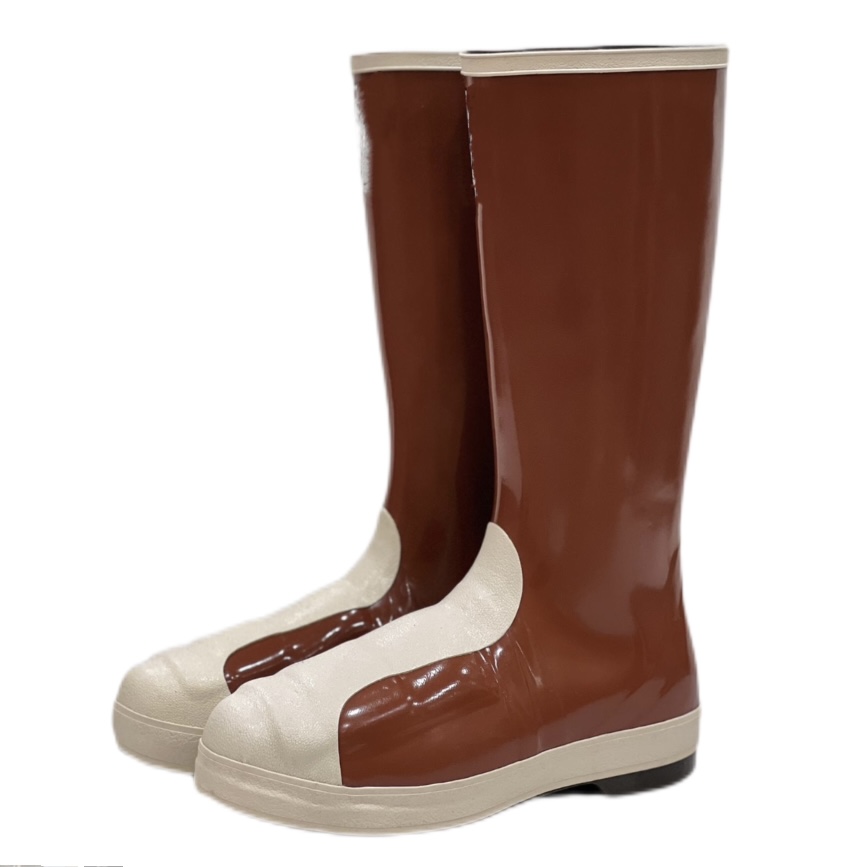
2. Product and Process Principle
Acid and oil resistant work boots rely on engineered material formulations and manufacturing processes to deliver protective performance. The primary materials used are natural rubber blends, synthetic rubber compounds (such as nitrile or neoprene), and modified PVC compounds, each selected for specific chemical resistance profiles. For example, nitrile rubber is optimized for resistance to petroleum-based oils and fuels, while neoprene offers enhanced protection against dilute acids and alkalis.
Injection molding and vulcanization are key manufacturing processes that create seamless or low-seam structures, eliminating potential weak points where chemicals could penetrate. Professional Rain Boot Manufacturer emphasizes that compound formulation control, including material thickness calibration and additive integration, directly impacts both chemical resistance and durability. Standard boot structures include a raised outsole tread pattern, durable shank support, and a moisture-wicking lining to balance protection and wear comfort.
3. Practical Solutions and Operation Steps
Selecting the right acid and oil resistant work boots requires matching material properties to specific workplace hazards, while also considering practical fit and comfort for long shifts. Below are actionable steps to guide selection and appropriate use:
- Identify the primary chemical exposures in your workspace: Confirm the type of acids, oils, or solvents used, and cross-reference this with material resistance charts from relevant standards (such as EN 13832-3).
- Test outsole slip resistance against on-site surfaces: Conduct a small-scale test on your facility’s floor material using a small sample of the boot outsole to verify grip when contaminated with oils or water.
- Check boot height for spill protection: Select a shaft height that extends a minimum of 15cm above the floor to prevent spills from reaching the lower leg and foot opening of the boot.
- Verify fit for movement and comfort: Ensure boots have enough toe room to accommodate foot swelling during long shifts, and that the lining does not cause excessive rubbing or moisture buildup.
- Assess durability for task-specific wear: For tasks involving heavy equipment or sharp edges, choose boots with reinforced toe caps and abrasion-resistant outsole sections, per applicable safety standards.
4. Daily Maintenance and Precautions
Proper maintenance extends the service life of acid and oil resistant work boots and preserves their protective properties. After each work shift, wipe the boots clean with a mild detergent and water to remove residual chemicals, grease, or debris. Allow boots to air dry in a well-ventilated area at room temperature; do not place them near direct heat sources, open flames, or in direct sunlight, as high temperatures can degrade rubber compounds and cause cracking.
Additional precautions include avoiding contact with strong solvents (such as acetone or gasoline) during cleaning, as these can break down the boot’s protective material. Store boots in a cool, dry area away from chemical storage zones, and use boot trees to maintain shape during storage. It is critical never to use standard rain boots or general-purpose rubber boots as a replacement for certified acid and oil resistant work boots, as they lack the engineered chemical resistance required for industrial environments.
5. Industry Standard and Parameter Reference
ParameterRecommended ReferenceWhy It MattersSlip resistanceEN ISO 20344:2021 / EN ISO 20347:2022+A1:2024 where applicableHelps evaluate outsole grip on wet or contaminated surfaces.Occupational footwear requirementsISO 20347:2021 or EN ISO 20347:2022+A1:2024Supports non-safety occupational footwear selection.Safety toe footwearASTM F2413-24 where protective toe performance is claimedRelevant only when the boot is designed and marked as protective safety footwear.Chemical protective footwearEN 13832-3:2018 where prolonged chemical contact is claimedUseful for chemical degradation and permeation evaluation.
All performance evaluations should rely on verified test methods aligned with the listed standards, as published by recognized bodies such as the International Organization for Standardization (ISO) or the European Committee for Standardization (CEN). Third-party test reports from accredited laboratories may be used to validate compliance for specific boot models.
6. Customer Common FAQ
Q: How do I know which boot material is best for my work with both acids and oils?
A: Most general-purpose acid and oil resistant work boots use a blended rubber compound that balances resistance to both categories of chemicals. Professional Rain Boot Manufacturer recommends reviewing material resistance data from EN 13832-3:2018 to confirm suitability for your specific chemical concentrations.
Q: Can I repair a small cut in an acid and oil resistant boot?
A: Minor surface cuts that do not penetrate through the boot material may be sealed with a compatible rubber adhesive designed for chemical-resistant materials. Do not use general-purpose adhesives, as they may degrade on contact with industrial chemicals.
Q: How often should I replace my acid and oil resistant work boots?
A: Replacement frequency depends on usage intensity and exposure levels. Inspect boots after each shift for signs of cracking, softening, or material degradation. Boots showing these signs should be replaced immediately, even if they appear visually intact.
Q: Do these boots provide insulation against cold temperatures?
A: Standard acid and oil resistant work boots are not inherently insulated. If working in cold industrial environments, select boots with added thermal linings that are compatible with chemical resistance requirements, per ISO 20347:2021 guidance.
Conclusion
Acid and oil resistant work boots are critical protective equipment for chemical processing facilities and industrial maintenance zones, addressing specific hazards from chemical exposure, slip risks, and material degradation. By aligning boot selection with workplace chemical profiles, following proper maintenance protocols, and referencing applicable industry standards, workers can ensure adequate foot protection. Professional Rain Boot Manufacturer’s technical guidance supports informed decisions that balance performance, durability, and comfort for long industrial work shifts.
References
- International Organization for Standardization. ISO 20347:2021, Occupational footwear: Requirements and test methods. Geneva: ISO, 2021.
- European Committee for Standardization. EN ISO 20344:2021, Footwear: Test methods for whole shoe. Brussels: CEN, 2021.
- European Committee for Standardization. EN 13832-3:2018, Chemical protective footwear: Classification and performance requirements for chemical resistant footwear. Brussels: CEN, 2018.