


Acid and oil resistant work boots: How do they meet the needs in high - risk chemical environments?
Aug 24, 2026
View: 0
Leave a message
Meta Description: Acid and oil resistant work boots are essential for high - risk chemical environments. This article analyzes core problems, product principles, and practical solutions. It offers maintenance tips, industry standards, and answers frequently asked questions. Ideal for those in chemical - related industries. Professional Rain Boot Manufacturer
Keywords: acid and oil resistant work boots, high - risk chemical environments, work boot materials, work boot selection, work boot maintenance
1. Core Problem Analysis
1.1 Common Causes of the Problem
When users search for acid and oil resistant work boots in high - risk chemical environments, they are mainly trying to solve several key problems. Firstly, in such environments, the boots may be exposed to various acids and oils, which can corrode the boot material. If the boots are not resistant enough, it may lead to leakage of chemicals, causing damage to the feet and potential safety hazards. Secondly, long - term contact with chemicals can cause material aging, reducing the durability and service life of the boots. Also, foot comfort is a concern. Chemical substances may produce heat or other irritations, and the boots need to provide a comfortable environment to maintain work efficiency. Additionally, proper sizing is crucial. Ill - fitting boots can cause discomfort during long - term wear and even affect the user's walking posture and safety.
1.2 Affected Usage Scenarios
These affected usage scenarios are mainly concentrated in industries where high - risk chemicals are present. In the chemical manufacturing industry, workers are often in contact with strong acids, alkalis, and various chemical solvents. For example, in the production process of fertilizers, sulfuric acid and nitric acid are commonly used, and work boots must be acid - resistant to prevent chemical burns. In oil refineries, workers dealing with crude oil, refined oil products, and various petroleum - based chemicals require oil - resistant boots to avoid the boots being softened or damaged by oil. In battery factories, where acids such as sulfuric acid are used in battery production, acid - resistant work boots are also necessary. In addition, some cleaning - related industries that use strong cleaning agents with acid or oil components also need these special work boots.
2. Product and Process Principle
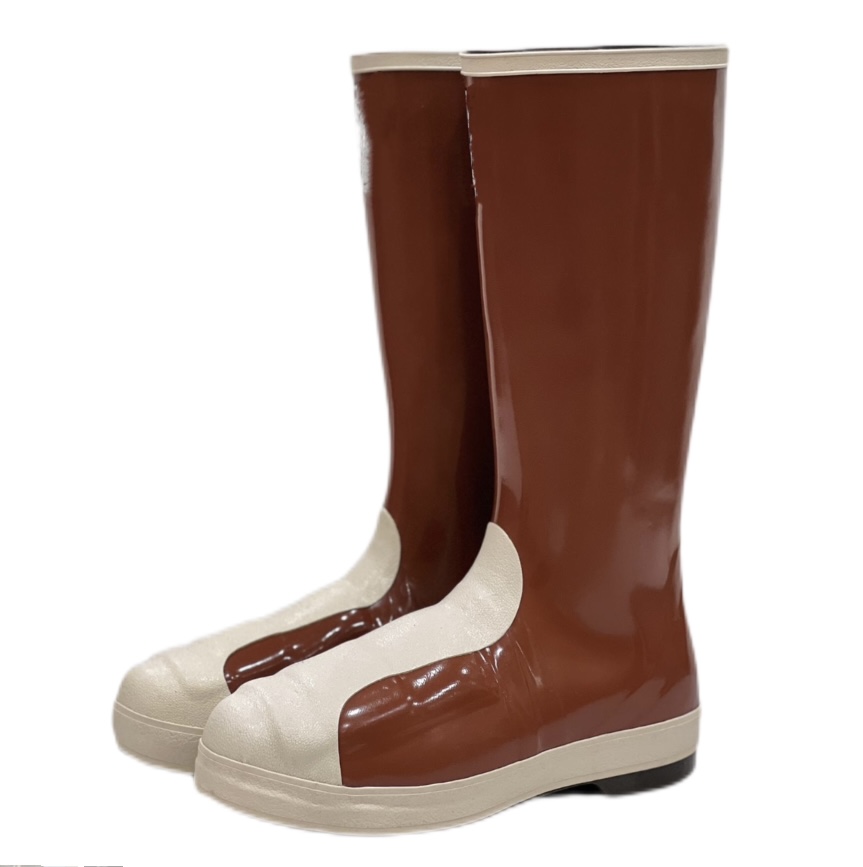
Acid and oil resistant work boots are usually made of special materials and manufacturing processes. Common materials include rubber and high - performance polymers. Rubber has good elasticity and chemical resistance. Natural rubber has a certain degree of acid and oil resistance, but synthetic rubber, such as neoprene rubber, has better performance. Neoprene rubber is highly resistant to petroleum - based oils, chemicals, and mild acids. It can form a stable barrier between the feet and chemicals, preventing penetration. High - performance polymers, on the other hand, are engineered materials with enhanced chemical resistance. They can be custom - formulated to resist specific acids and oils. For example, some polymers can be designed to withstand concentrated sulfuric acid or strong alkalis.
In terms of manufacturing processes, injection molding is a common method. Injection molding allows for precise control of the shape and size of the boots. The molten material is injected into a mold under high pressure, ensuring a seamless structure. A seamless structure is important because it eliminates potential leakage points where chemicals could enter. Vulcanization is another key process. Vulcanization improves the strength, durability, and chemical resistance of rubber. By adding sulfur or other vulcanizing agents to the rubber and heating it, a cross - linked structure is formed, which enhances the overall performance of the boots. The lining of the boots also plays a role. Some linings are made of breathable materials to keep the feet dry and comfortable, while others may have additional properties such as resistance to static electricity or protection against fungi. A Professional Rain Boot Manufacturer carefully selects materials and manufacturing processes to ensure that the boots meet the requirements of high - risk chemical environments.
3. Practical Solutions and Operation Steps
When choosing acid and oil resistant work boots, consider the following aspects:
- Material selection: First, identify the types of acids and oils present in the working environment. If the environment contains mainly petroleum - based oils, neoprene rubber boots are a good choice. For strong acid environments, boots made from high - performance polymers with acid - resistant properties should be selected. Consult the supplier or a Professional Rain Boot Manufacturer to understand the chemical resistance capabilities of different materials.
- Boot height: The height of the boot shaft should be determined according to the possible splash height of chemicals. In an environment where chemicals may splash up to the calf, high - top boots are necessary to provide complete protection for the lower legs. For situations where there is only a small chance of contact on the feet, low - top boots may be sufficient.
- Outsole pattern: The outsole should have a deep and complex pattern to ensure good slip resistance on wet or oily surfaces. Patterns such as deep grooves, multi - directional lines, or suction - cup - like protrusions can improve grip and reduce the risk of slipping and falling.
- Lining: Choose a lining that is comfortable and has appropriate functionality. For example, a breathable lining can reduce foot sweating and discomfort during long - term wear. If there is a risk of static electricity in the environment, a lining with anti - static properties can prevent static discharge.
- Size: Ensure that the boots fit properly. Try on the boots with the type of socks that will be worn during work. There should be enough space in the toe area to allow the toes to move freely, and the heel should fit snugly to prevent slipping inside the boot. Refer to the size chart provided by the manufacturer and, if possible, consult with professional staff for size advice.
- Certifications: Check if the boots meet relevant industry standards. For example, under EN 13832 - 3:2018, the boots should be tested for resistance to chemical degradation and permeation. ISO 20347:2021 or EN ISO 20347:2022+A1:2024 can also be used as references for occupational footwear requirements.
4. Daily Maintenance and Precautions
To maintain the performance and lifespan of acid and oil resistant work boots, follow these daily maintenance tips:
- Cleaning: After use, immediately clean the boots with mild soap and water to remove any chemical residue. Avoid using strong solvents as they can damage the material of the boots. For stubborn stains, use a soft - bristle brush to gently scrub the boots, but be careful not to scratch the surface.
- Drying: After cleaning, dry the boots in a well - ventilated area at room temperature. Do not expose the boots to direct sunlight or high - temperature heat sources, as this can cause the material to harden, crack, and reduce its chemical resistance.
- Odor removal: If the boots develop an odor, place odor - absorbing materials such as activated carbon or baking soda inside the boots. You can also spray some natural deodorants, but avoid using products with strong chemical components.
- Anti - aging: Store the boots in a cool and dry place when not in use. UV radiation can cause the material to age, so keep the boots away from windows or areas with direct sunlight. You can also apply a protective coating specifically designed for work boots periodically to slow down the aging process.
- Deformation prevention: To prevent the boots from deforming, use boot trees or stuff them with soft materials such as old towels or newspaper. This helps to maintain the shape of the boots.
- Handling after chemical contact: If the boots come into contact with large amounts of chemicals, follow the safety instructions immediately. In some cases, it may be necessary to discard the boots to ensure safety. Do not attempt to repair seriously damaged boots on your own.
- Precautions: Never use ordinary rain boots as a substitute for acid and oil resistant safety boots in high - risk chemical environments, as they do not have the necessary chemical resistance and may pose a serious threat to safety.
5. Industry Standard and Parameter Reference
This chapter provides a comprehensive list of international standards, test methods, and verifiable parameters related to acid and oil resistant work boots:
ParameterRecommended ReferenceWhy It MattersSlip resistanceEN ISO 20344:2021 / EN ISO 20347:2022+A1:2024 where applicableHelps evaluate outsole grip on wet or contaminated surfaces.Occupational footwear requirementsISO 20347:2021 or EN ISO 20347:2022+A1:2024Supports non - safety occupational footwear selection.Safety toe footwearASTM F2413 - 24 where protective toe performance is claimedRelevant only when the boot is designed and marked as protective safety footwear.Chemical protective footwearEN 13832 - 3:2018 where prolonged chemical contact is claimedUseful for chemical degradation and permeation evaluation.
Do not rely on unverified performance numbers. Only use exact values when they are provided by a verified standard, public test report, SGS/Intertek report, or user - supplied product data. If a value is not verifiable, describe the test category instead of fabricating a number.
6. Customer Common FAQ
Q: What material is best for acid and oil resistant work boots?
A: It depends on the specific chemicals in the working environment. For general oil resistance, neoprene rubber is a good choice. For strong acid environments, high - performance polymers engineered for acid resistance are more suitable. A Professional Rain Boot Manufacturer can offer more detailed advice based on the chemical composition in your workplace.
Q: How can I ensure the slip resistance of the boots?
A: Look for boots that meet the EN ISO 20344:2021 or EN ISO 20347:2022+A1:2024 standards. Check the outsole pattern; deeper and more complex patterns usually provide better slip resistance.
Q: How do I choose the right size of work boots?
A: Refer to the manufacturer's size chart. Try on the boots with work - appropriate socks. Make sure your toes have enough room to move and the heel fits snugly. If unsure, consult with a staff member from a Professional Rain Boot Manufacturer.
Q: Why do my new work boots have a strong smell?
A: New boots may have a smell due to the materials and manufacturing process. You can use odor - absorbing materials like activated carbon or baking soda to reduce the odor. Allow the boots to air out in a well - ventilated area before use.
Q: Can I repair the boots if they are cracked?
A: It depends on the extent of the damage. Minor cracks may be repairable, but you need to ensure that the repair method does not compromise the chemical resistance. For large cracks or damage in high - stress areas, it is recommended to replace the boots to ensure safety.
Conclusion
In conclusion, acid and oil resistant work boots are crucial for high - risk chemical environments. Understanding the core problems, product and process principles is essential for making the right choice. When selecting boots, consider material, height, outsole pattern, lining, size, and relevant standards. Daily maintenance is also important to extend the lifespan of the boots. A Professional Rain Boot Manufacturer can provide valuable expertise and help you select the most suitable boots for your specific working conditions.
References
- EN ISO 20344:2021 Footwear Test Methods
- EN ISO 20347:2022+A1:2024
- ASTM F2413 - 24 Protective Footwear Specification
- EN 13832 - 3:2018 Chemical Protective Footwear