


Application Feasibility of Waterproof Women’s Latex Boots Within Medical Working Environments
Aug 13, 2026
View: 0
Leave a message
Meta Description: This article delves into the application feasibility of waterproof women's latex boots in medical working environments. It analyzes common problems, explains product and process principles, offers practical solutions, and provides maintenance tips. Suitable for medical workers and those interested in rain boot knowledge. Professional Rain Boot Manufacturer.
Keywords: Women's waterproof latex boots, Medical working environments, Rain boot materials, Boot maintenance, Boot selection
1. Core Problem Analysis
1.1 Common Causes of the Problem
When considering waterproof women's latex boots in medical working environments, several common problems may arise. Leakage can occur if the boots have poor seam construction or damaged materials. Cracking may be due to material aging, especially if the boots are exposed to harsh chemicals or extreme temperatures. Foot discomfort can result from improper sizing, lack of cushioning, or poor breathability. Slip resistance may be insufficient, increasing the risk of falls on wet or slippery floors. Additionally, material aging can lead to a loss of elasticity and durability, reducing the overall performance of the boots.
1.2 Affected Usage Scenarios
The use of waterproof women's latex boots is relevant in various medical working scenarios. In hospitals, they are essential for nurses, doctors, and other medical staff who may come into contact with liquids, such as blood, urine, or cleaning solutions. In laboratories, where chemicals and hazardous substances are handled, these boots provide protection against spills and splashes. In dental clinics, they can prevent water and saliva from soaking into the shoes. Moreover, in outdoor medical settings, such as field hospitals or disaster relief areas, waterproof boots are necessary to keep the feet dry and protected from mud, water, and other environmental elements.
2. Product and Process Principle
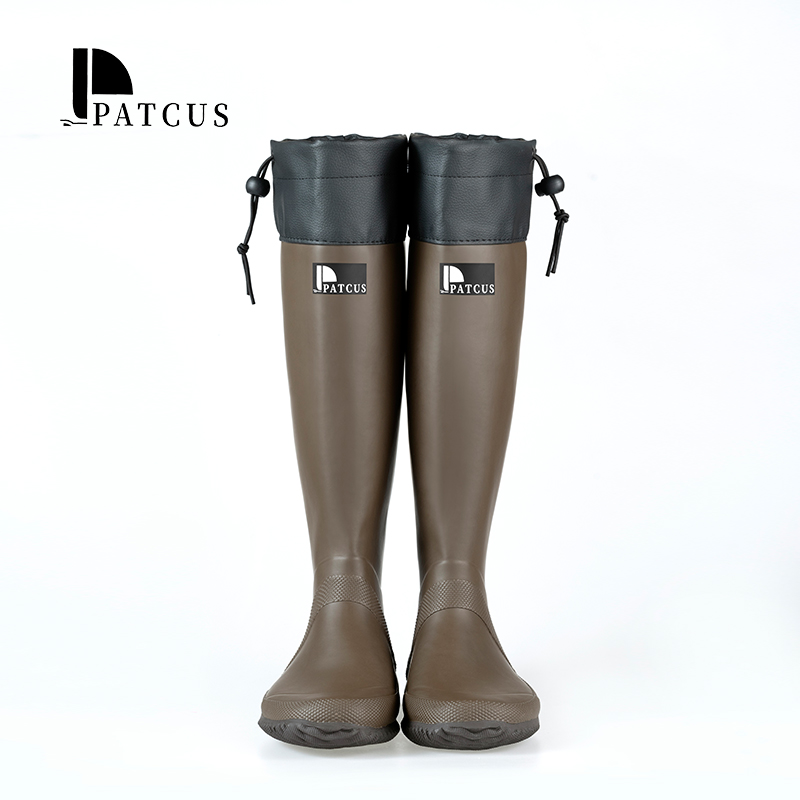
Waterproof women's latex boots are typically made from natural or synthetic latex materials. Natural latex offers excellent elasticity, flexibility, and waterproof properties. It is also biodegradable and environmentally friendly. Synthetic latex, on the other hand, can be engineered to have specific properties, such as increased durability or resistance to chemicals. The manufacturing process of latex boots often involves dipping a mold into a latex solution, followed by drying and vulcanization. This process creates a seamless and waterproof structure. The outsole of the boots is usually made of rubber, which provides good traction and slip resistance. The shaft height of the boots can vary depending on the intended use, with higher shafts offering more protection against splashes and spills. The lining of the boots can be made of various materials, such as cotton or synthetic fibers, to provide comfort and breathability. Professional Rain Boot Manufacturer plays a crucial role in ensuring the quality and performance of these boots through standardized production and process knowledge.
3. Practical Solutions and Operation Steps
When choosing waterproof women's latex boots for medical working environments, the following steps can be followed: 1. **Material selection**: Opt for high-quality latex materials that are resistant to chemicals and punctures. Consider the type of latex, whether natural or synthetic, based on your specific needs. 2. **Shaft height**: Select a shaft height that provides adequate protection against splashes and spills. For most medical settings, mid-calf or knee-high boots are recommended. 3. **Sole pattern**: Look for boots with a deep and well-designed sole pattern to ensure good traction on wet or slippery surfaces. Patterns such as herringbone or lug soles are effective for preventing slips. 4. **Lining**: Choose a lining material that is comfortable and breathable. Cotton or synthetic fibers with moisture-wicking properties are ideal. 5. **Size**: Ensure a proper fit by measuring your feet and referring to the manufacturer's size chart. Consider wearing thick socks if you plan to use the boots in cold environments. 6. **Certifications**: Check for relevant certifications, such as EN ISO 20344:2021 or EN ISO 20347:2022+A1:2024, to ensure the boots meet safety and performance standards. 7. **Cleaning and storage**: After use, clean the boots with mild soap and water. Allow them to dry naturally in a well-ventilated area. Store the boots in a cool and dry place, away from direct sunlight and heat sources.
4. Daily Maintenance and Precautions
To maintain the performance and longevity of waterproof women's latex boots, the following daily maintenance tips should be followed: 1. **Cleaning**: Regularly clean the boots with mild soap and water to remove dirt, debris, and chemicals. Avoid using harsh detergents or solvents, as they can damage the latex material. 2. **Drying**: After cleaning, allow the boots to dry naturally in a well-ventilated area. Do not expose them to direct sunlight or heat sources, as this can cause the latex to crack or lose its elasticity. 3. **Deodorizing**: To remove odors, sprinkle baking soda inside the boots and let it sit overnight. Then, shake out the baking soda. 4. **Anti-aging**: To prevent material aging, avoid exposing the boots to extreme temperatures, chemicals, and UV radiation. Store the boots in a cool and dry place when not in use. 5. **Anti-deformation**: To prevent the boots from deforming, stuff them with newspaper or a boot tree when storing. 6. **Precautions**: Do not use the boots in environments where they are not designed for, such as in high-temperature or high-pressure settings. Do not use the boots as a substitute for safety boots that are specifically designed for certain hazards. Do not expose the boots to sharp objects or abrasive surfaces, as this can cause punctures or tears.
5. Industry Standard and Parameter Reference
This section provides important industry standards and parameter references for waterproof women's latex boots:
ParameterRecommended ReferenceWhy It MattersSlip resistanceEN ISO 20344:2021 / EN ISO 20347:2022+A1:2024 where applicableHelps evaluate outsole grip on wet or contaminated surfaces.Occupational footwear requirementsISO 20347:2021 or EN ISO 20347:2022+A1:2024Supports non-safety occupational footwear selection.Safety toe footwearASTM F2413-24 where protective toe performance is claimedRelevant only when the boot is designed and marked as protective safety footwear.Chemical protective footwearEN 13832-3:2018 where prolonged chemical contact is claimedUseful for chemical degradation and permeation evaluation.
It is important to note that these standards and references should be used as a guide, and the specific requirements may vary depending on the intended use and application of the boots.
6. Customer Common FAQ
Q: How do I choose the right size of waterproof women's latex boots?
A: It is recommended to measure your feet and refer to the manufacturer's size chart. Consider wearing thick socks if you plan to use the boots in cold environments. If you have a wide foot or high arch, you may need to choose a larger size. Professional Rain Boot Manufacturer can provide further guidance on size selection based on their expertise.
Q: Are waterproof women's latex boots suitable for all medical working environments?
A: While latex boots offer good waterproof and chemical resistance, they may not be suitable for all medical working environments. For example, in environments where there is a high risk of punctures or cuts, boots with additional protection, such as steel toes or puncture-resistant soles, may be required. It is important to assess the specific hazards and requirements of your work environment before choosing the appropriate boots.
Q: How can I clean and maintain my waterproof women's latex boots?
A: To clean the boots, use mild soap and water. Avoid using harsh detergents or solvents, as they can damage the latex material. After cleaning, allow the boots to dry naturally in a well-ventilated area. Do not expose them to direct sunlight or heat sources. To maintain the boots, store them in a cool and dry place, away from direct sunlight and heat sources. You can also use a boot conditioner to keep the latex soft and supple.
Q: Do waterproof women's latex boots have good slip resistance?
A: The slip resistance of latex boots depends on the design of the outsole. Look for boots with a deep and well-designed sole pattern, such as herringbone or lug soles. Additionally, some boots may be tested and certified to meet specific slip resistance standards, such as EN ISO 20344:2021 or EN ISO 20347:2022+A1:2024. Professional Rain Boot Manufacturer can provide information on the slip resistance of their products.
Q: Can I wear waterproof women's latex boots in cold weather?
A: Latex boots can be worn in cold weather, but they may not provide as much insulation as other types of boots. If you plan to use the boots in cold environments, consider wearing thick socks or adding an insulating insole. Additionally, some latex boots may be treated with a special coating to improve their cold resistance.
Conclusion
In conclusion, waterproof women's latex boots can be a suitable choice for medical working environments. They offer good waterproof and chemical resistance, as well as flexibility and comfort. However, it is important to consider the specific requirements of your work environment, such as slip resistance, puncture protection, and insulation. By following the practical solutions and operation steps outlined in this article, you can choose the right boots and maintain their performance and longevity. Professional Rain Boot Manufacturer can provide valuable expertise and guidance in the selection and use of these boots.
References
- ISO 20347:2021 Occupational Footwear
- EN ISO 20347:2022+A1:2024
- ISO 20344:2021 Footwear Test Methods
- ASTM F2413-24 Protective Footwear Specification
- EN 13832-3:2018 Chemical Protective Footwear