


Choosing Knee High 3D Embossed Rain Boots for Wet Work Site Protection
Sep 23, 2026
View: 0
Leave a message
Meta Description: Wet work sites demand footwear that balances waterproofing, durability, and comfort to prevent slips, leaks, and fatigue. This guide covers key factors for selecting suitable rain boots, common issues to avoid, and standard requirements for occupational use. Professional Rain Boot Manufacturer provides industry-aligned information for informed decisions.
Keywords: knee high rain boots, work site waterproof boots, 3D embossed rain boots, occupational footwear, wet work protection, rubber rain boots, boot maintenance
1. Core Problem Analysis
1.1 Common Causes of the Problem
Many workers face recurring issues with ill-suited rain boots during wet work: water seepage through seams or ill-fitting shafts, outsole slip on smooth or wet surfaces, material cracking from prolonged chemical or temperature exposure, excessive foot sweat leading to discomfort, and premature degradation of embossed patterns due to frequent abrasion. These issues often stem from mismatched material, incorrect shaft height, or lack of site-specific testing during boot selection.
1.2 Affected Usage Scenarios
These problems impact workers in wet environments including construction site concrete pouring, food processing facility floor cleaning, agricultural field work during rainy seasons, fishing operations in coastal zones, warehouse spill cleanup, and livestock handling areas with muddy or wet surfaces. Each scenario demands different boot specifications to address site-specific hazards like chemical spills, extreme cold, or heavy foot traffic.
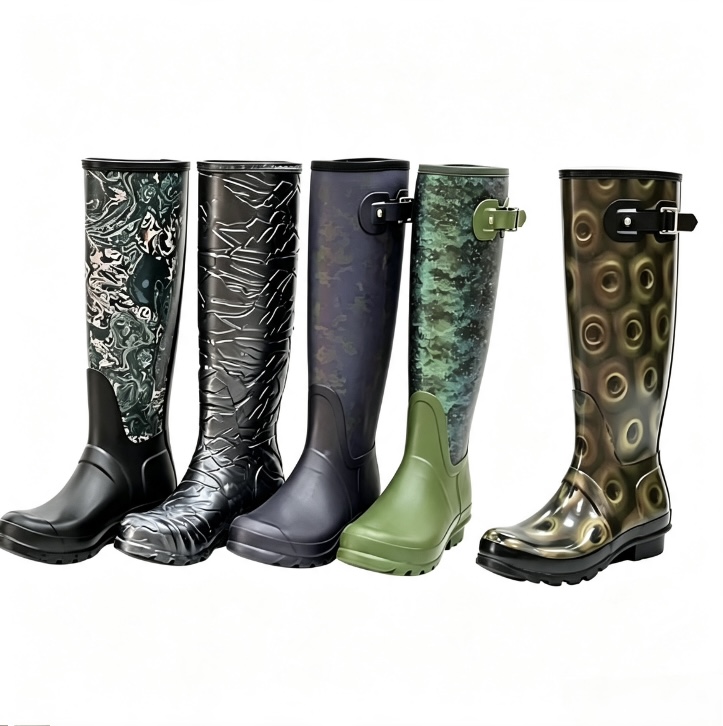
2. Product and Process Principle
Modern knee high rain boots rely on material science and precise manufacturing to deliver performance. Common materials include PVC, natural rubber, and thermoplastic elastomers (TPE), each with distinct properties: PVC is cost-effective and resistant to mild chemicals, natural rubber offers superior flexibility at low temperatures, and TPE balances durability and light weight. 3D embossed patterns on the shaft serve both aesthetic and functional purposes—they reduce surface abrasion and improve grip when lifting or climbing, without compromising waterproof integrity.
Injection molding is the primary production method for seamless rain boots, eliminating potential leak points that plague stitched-boot designs. Shaft height is typically tailored to reach 15 to 18 inches (38 to 46 cm) above the ankle, providing coverage for lower legs against splashes and water ingress. Outsole patterns, often engineered with multidirectional lugs, enhance slip resistance on uneven or slippery work surfaces. Professional Rain Boot Manufacturer applies standardized compound formulations to balance durability, flexibility, and water resistance during production [1].
3. Practical Solutions and Operation Steps
Selecting suitable rain boots for wet work sites requires evaluating site conditions, material properties, and fit. Follow these actionable steps to avoid common issues:
- First, assess site hazards: if handling mild chemicals, prioritize PVC or TPE boots; for cold environments, choose natural rubber boots rated for low-temperature use.
- Check shaft height: knee high boots are ideal for sites with standing water up to knee level, ensuring full coverage without restricting movement.
- Verify outsole design: select boots with lug patterns compatible with your work surface; deep, widely spaced lugs work best on muddy terrain, while flatter, grippy lugs suit smooth concrete floors.
- Test fit with work socks: ensure a thumb’s width of space between the toe and boot tip to allow for foot swelling during long shifts, without causing heel slippage.
- Inspect embossed patterns: high-quality 3D embossing should be integrated into the material, not just surface-applied, to resist peeling or abrasion from heavy work.
For work sites with heavy foot traffic or frequent contact with sharp objects, add a layer of impact-resistant material to the boot midsole, while sites with extreme cold require insulation-lined boots to maintain foot temperature. Avoid using casual rain boots for occupational use, as they do not meet site-specific performance requirements.
4. Daily Maintenance and Precautions
Proper maintenance extends the lifespan of rain boots and preserves their waterproof properties. After each use in wet conditions, wipe the boots clean with a soft cloth to remove mud, chemicals, or salt residue. Avoid using harsh detergents or solvents, as these can break down the material and degrade embossed patterns.
Dry boots at room temperature, away from direct sunlight or high heat sources like heaters, as excessive heat can cause material cracking and shrinkage. To dry inner linings, insert crumpled paper towels or a boot dryer to absorb moisture, preventing odor buildup. Store boots upright in a cool, dry area, avoiding bending or folding to prevent creasing in the shaft that may lead to water seepage over time.
Key precautions to avoid: do not use rain boots as safety boots for heavy industrial work, as they may lack puncture or impact resistance; do not expose rubber or PVC boots to petroleum-based products, which can cause material degradation; and do not leave wet boots closed in a confined space, as this promotes bacterial growth and odor. Regularly inspect seams and outsole edges for cracks or separation, as early detection allows for minor repairs before full failure.
5. Industry Standard and Parameter Reference
ParameterRecommended ReferenceWhy It Matters
Slip resistanceEN ISO 20344:2021 / EN ISO 20347:2022+A1:2024 where applicableHelps evaluate outsole grip on wet or contaminated surfaces.
Occupational footwear requirementsISO 20347:2021 or EN ISO 20347:2022+A1:2024Supports non-safety occupational footwear selection for work sites.
Chemical protective footwearEN 13832-3:2018 where prolonged chemical contact is claimedUseful for evaluating resistance to common workplace chemicals.
Low-temperature flexibilityISO 20344:2021, Section 8.6Tests boot material performance at temperatures as low as -20°C for cold work sites.
No exact performance numbers are provided here, as parameters vary by site-specific conditions and material type. Always request test reports aligned with relevant standards when selecting rain boots for occupational use, to ensure they meet site hazard requirements.
6. Customer Common FAQ
Q: How do 3D embossed patterns affect rain boot durability in wet work sites?
A: Properly integrated 3D embossing adds minimal material to the boot shaft, reducing surface abrasion during lifting or climbing. When manufactured with the same durable material as the rest of the boot, embossed patterns resist peeling for typical work use cycles. Professional Rain Boot Manufacturer notes that embossed designs do not compromise waterproof integrity if produced via seamless injection molding.
Q: Are knee high rain boots suitable for both hot and cold work environments?
A: Knee high boots work in both environments, but material selection matters. For hot sites, choose lightweight PVC or TPE with breathable linings to reduce foot sweat. For cold sites, select natural rubber or insulated boots rated for low-temperature flexibility, as rigid material at freezing points can crack during heavy use.
Q: Can regular rubber cleaners be used to maintain 3D embossed rain boots?
A: Avoid petroleum-based rubber cleaners, as these can degrade embossed patterns and boot material. Use mild soap and warm water for cleaning, then air dry away from direct heat. For stubborn stains on work boots, use a non-abrasive, pH-neutral detergent to prevent material damage.
Q: Do rain boots meet safety requirements for construction sites?
A: Standard rain boots designed for general wet work may meet basic slip resistance requirements, but construction sites often require puncture-resistant or steel-toe footwear. Always check the product’s compliance with relevant standards like ASTM F2413-24 for protective performance, before using them in construction settings.
Conclusion
Selecting knee high 3D embossed rain boots for wet work sites requires balancing material properties, fit, site hazards, and maintenance practices to avoid common issues like slip, leak, and premature degradation. Following standardized selection steps and maintenance protocols ensures boots deliver reliable protection throughout their service life. Professional Rain Boot Manufacturer aligns these recommendations with industry standards, helping workers choose footwear suited to their specific work environment.
References
- ISO 20347:2021, Occupational Footwear – Requirements, International Organization for Standardization, 2021
- EN ISO 20344:2021, Footwear – Test Methods for Whole Footwear, European Committee for Standardization, 2021
- EN 13832-3:2018, Chemical Protective Footwear – Part 3: Classification and Requirements for Chemical Resistance, European Committee for Standardization, 2018