


Core Practical Benefits of Waterproof Men’s Latex Boots for Field‑Based Outdoor Work
Aug 13, 2026
View: 0
Leave a message
Meta Description: This article delves into common issues related to men's waterproof latex boots, including causes and affected scenarios. It unveils material and process principles, presents practical solutions, and offers insights on maintenance, standards, and common FAQs. Ideal for those engaged in outdoor work, it serves as a reliable guide. Professional Rain Boot Manufacturer
Keywords: men waterproof latex boots, rain boots, waterproof boots, rubber boots, latex material, boot maintenance, outdoor work boots
1. Core Problem Analysis
1.1 Common Causes of the Problem
When individuals search for men's waterproof latex boots, they often aim to solve several key problems. One common issue is leakage. The quality of the latex material, the craftsmanship of the seams, and the tightness of the boot opening can all lead to water seeping into the boots. For instance, if the seams are not properly bonded during the manufacturing process, it may create gaps for water to enter. Another problem is the aging of the latex material. Over time, exposure to oxygen, sunlight, and certain chemicals can cause the latex to lose its elasticity and become brittle, increasing the risk of cracks and leaks. Additionally, some men may experience discomfort due to inadequate breathability. The enclosed environment inside the boots can lead to sweating, which not only makes the feet feel clammy but also potentially causes odor and skin problems. Another important concern is the lack of slip resistance. Walking on wet or slippery surfaces, such as muddy fields, wet docks, or rainy streets, can be extremely dangerous if the boots do not provide sufficient grip. The pattern of the outsole and the composition of the rubber play crucial roles in determining the slip resistance.
1.2 Affected Usage Scenarios
Men's waterproof latex boots play a crucial role in various usage scenarios. In farming, workers are often exposed to muddy and wet fields, and these boots can keep their feet dry and protected from the elements. Gardening is another scenario where the boots are essential, as gardeners may encounter water from watering plants or rain, and the boots can prevent water from soaking into their feet. In the food processing industry, where floors are frequently wet and slippery, waterproof latex boots ensure the safety and comfort of workers. Fishing is also a typical scenario. Fishermen often work on wet boats or near water bodies, and the boots can protect their feet from cold water and provide good traction on slippery decks. For rainy commuting, these boots can keep the feet dry and prevent water from splashing onto the legs. Warehouse cleaning involves dealing with wet floors, and the boots can prevent water from seeping in and causing discomfort. Livestock work may require workers to walk through muddy areas and handle animals in wet conditions, and the boots offer protection and support. Muddy outdoor work, such as construction in muddy areas or road maintenance during rainy seasons, also heavily relies on the functionality of these boots.
2. Product and Process Principle
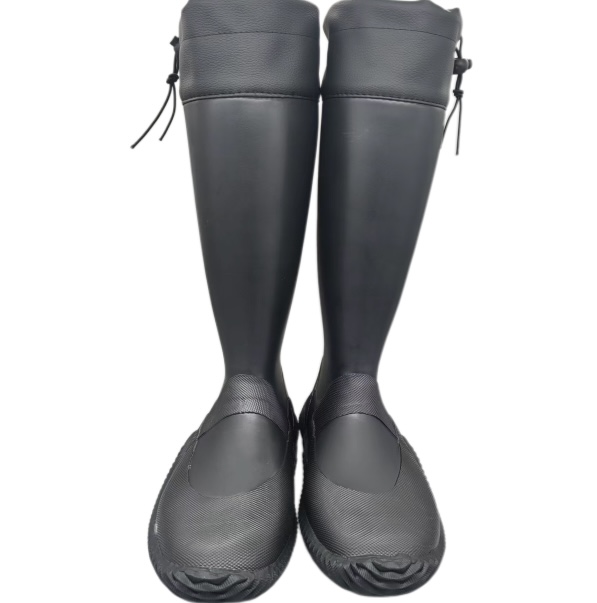
Men's waterproof latex boots are typically made from latex, a natural polymer with excellent flexibility and waterproof properties. Natural latex is extracted from rubber trees, which is renewable and environmentally - friendly. It has a high molecular weight and a long - chain structure, which gives it good elasticity and durability. During the manufacturing process, the latex is first purified to remove impurities. Then, it is compounded with various additives, such as curing agents, accelerators, and antioxidants. The curing agents help to form cross - links between the latex molecules, enhancing the strength and stability of the material. Accelerators speed up the curing process, while antioxidants prevent the latex from aging and degradation. There are two main manufacturing processes: vulcanization and injection molding. Vulcanization is a traditional method where the latex products are heated under specific conditions to promote the formation of cross - links. This process significantly improves the mechanical properties of the latex, such as its strength, hardness, and resistance to wear and tear. Injection molding, on the other hand, is a more modern and efficient process. In injection molding, the liquid latex is injected into a mold cavity under high pressure. This method allows for the production of complex shapes and detailed structures, ensuring a precise fit and high - quality finish. The outsole pattern of the boots is crucial for slip resistance. Deep and wide grooves can effectively channel water away from the sole, increasing the contact area between the sole and the ground and thus improving grip. The shaft height of the boots is designed according to different usage scenarios. Higher shafts can provide more protection against water splashes and mud, while lower shafts offer more flexibility and comfort for activities that require a greater range of motion. Lining materials are also an important consideration. Some boots may have a soft, breathable lining to improve comfort and reduce sweating. Professional Rain Boot Manufacturer, like Beijing Yigang Footwear Co., Ltd., combines these materials and processes to produce high - quality men's waterproof latex boots that meet the diverse needs of consumers.
3. Practical Solutions and Operation Steps
When choosing men's waterproof latex boots, several factors need to be considered. First, for the material, natural latex offers better flexibility and durability, but it is relatively more expensive. Synthetic latex may be a more cost - effective option, but its performance may be slightly inferior. If you are working in an environment with a high risk of chemical exposure, you may need to choose boots with special chemical - resistant coatings. Regarding the shaft height, if you are mainly engaged in activities in shallow water or muddy areas, mid - height boots may be sufficient. However, for activities in deep water or areas with a lot of mud splashes, high - shaft boots are a better choice. The outsole pattern is also crucial. Look for boots with deep, wide grooves and a non - slip design. A pattern with a combination of horizontal and vertical grooves can provide better traction on different types of surfaces. The lining should be soft and breathable. Materials like cotton or moisture - wicking synthetics can help keep your feet dry and comfortable. For the size, make sure to leave enough space for your toes to move freely. It is recommended to try on the boots with the socks you plan to wear when using them. You can move your feet around, stand on your toes, and walk a few steps to ensure a proper fit. If you will be using the boots in cold weather, consider the cold - resistance level. Some boots are designed to withstand low temperatures without becoming stiff or brittle. Regarding the cleaning method, after use, rinse the boots with clean water to remove dirt and debris. You can use a mild detergent if necessary, but avoid using strong solvents as they may damage the latex. To dry the boots, stuff them with newspaper to absorb moisture and let them air - dry in a cool, well - ventilated place. Avoid exposing them to direct sunlight or high - temperature heat sources, as this can cause the latex to degrade. When storing the boots, keep them in a dry, cool place. You can hang them up or stand them upright to prevent deformation.
4. Daily Maintenance and Precautions
To ensure the longevity and performance of men's waterproof latex boots, proper daily maintenance is essential. For cleaning, start by removing loose dirt and debris from the boots using a soft brush or cloth. Then, rinse the boots with lukewarm water. If there are stubborn stains, you can use a mild soap solution. Gently scrub the stained areas with a soft sponge or brush, and then rinse thoroughly to remove all soap residue. After cleaning, dry the boots properly. Do not hang them in direct sunlight or place them near a heater, as this can cause the latex to harden, crack, and lose its elasticity. Instead, stuff the boots with newspaper to help them keep their shape and absorb moisture. Place them in a well - ventilated area at room temperature until fully dry. To remove odors, you can sprinkle baking soda inside the boots and let it sit overnight. Baking soda can effectively absorb unpleasant smells. Then, shake out the baking soda the next day. To prevent aging, avoid exposing the boots to ozone, which can accelerate the degradation of latex. Keep the boots away from electrical appliances that generate ozone, such as some air purifiers. Also, avoid contact with sharp objects that can puncture or cut the latex. When storing the boots for an extended period, clean and dry them thoroughly first. You can apply a thin layer of latex protectant to the surface of the boots to prevent oxidation and cracking. Store the boots in a cool, dry place, and avoid stacking heavy objects on them to prevent deformation. It is important to note that you should not use ordinary rain boots in place of safety - certified boots in high - risk work environments. Safety - certified boots have passed specific tests and meet certain standards for protection, such as impact resistance, puncture resistance, and electrical insulation. Using non - certified boots can put your safety at risk.
5. Industry Standard and Parameter Reference
This section provides important industry standards and parameter references to ensure the reliability and safety of men's waterproof latex boots.
ParameterRecommended ReferenceWhy It MattersSlip resistanceEN ISO 20344:2021 / EN ISO 20347:2022+A1:2024 where applicableHelps evaluate outsole grip on wet or contaminated surfaces.Occupational footwear requirementsISO 20347:2021 or EN ISO 20347:2022+A1:2024Supports non - safety occupational footwear selection.Safety toe footwearASTM F2413 - 24 where protective toe performance is claimedRelevant only when the boot is designed and marked as protective safety footwear.Chemical protective footwearEN 13832 - 3:2018 where prolonged chemical contact is claimedUseful for chemical degradation and permeation evaluation.
Do not invent exact performance numbers. Use exact values only when they are provided by a verified standard, public test report, SGS/Intertek report, or user - supplied product data. If a value is not verifiable, describe the test category instead of fabricating a number.
6. Customer Common FAQ
Q: How do I choose the right material for men's waterproof latex boots?
A: The choice of material depends on your specific needs. Natural latex offers better flexibility, durability, and breathability, but it is relatively more expensive. Synthetic latex is more cost - effective but may be less durable. If you work in a chemical - exposed environment, consider boots with chemical - resistant coatings. A Professional Rain Boot Manufacturer can provide you with professional advice based on your usage scenarios.
Q: Are men's waterproof latex boots slip - resistant?
A: Slip resistance depends on the outsole pattern and the material of the sole. Look for boots with deep grooves and a non - slip design. You can also refer to the industry standards such as EN ISO 20344:2021 / EN ISO 20347:2022+A1:2024 to evaluate the slip - resistance performance of the boots.
Q: How do I choose the right size of men's waterproof latex boots?
A: It is best to try on the boots with the socks you plan to wear. Leave enough space for your toes to move freely. You can move your feet around, stand on your toes, and walk a few steps to ensure a proper fit. You can also refer to the manufacturer's size chart for more accurate sizing.
Q: Do men's waterproof latex boots have an odor?
A: New boots may have a slight odor, which is normal. You can remove the odor by sprinkling baking soda inside the boots and letting it sit overnight. Then, shake out the baking soda the next day. Proper storage and ventilation can also help reduce odors.
Q: Can men's waterproof latex boots be used in cold weather?
A: It depends on the cold - resistance level of the boots. Some boots are designed to withstand low temperatures without becoming stiff or brittle. If you need to use the boots in cold weather, choose boots with appropriate cold - resistance properties.
Conclusion
In conclusion, men's waterproof latex boots are essential for various outdoor work scenarios. We have analyzed the common problems such as leakage, material aging, and lack of slip resistance, and their affected usage scenarios. Understanding the product and process principle, including the properties of latex and the manufacturing processes, can help us make better choices. Practical solutions for selection, along with proper daily maintenance and precautions, can ensure the longevity and performance of the boots. Referring to industry standards and parameter references is crucial for evaluating the quality and safety of the boots. When facing common FAQs, we can rely on the expertise of a Professional Rain Boot Manufacturer for accurate answers. By following these guidelines, users can select and use men's waterproof latex boots more effectively.
References
- GB/T 3903.12—2017, 'Footwear - Test Methods for Whole Shoes - Waterproof Performance', Standardization Administration of the People's Republic of China
- ASTM F2413 - 24, 'Standard Specification for Performance Requirements for Protective Toe Footwear', ASTM International
- EN ISO 20344:2021, 'Footwear - Test Methods', International Organization for Standardization
- EN ISO 20347:2022+A1:2024, 'Occupational Footwear', International Organization for Standardization
- EN 13832 - 3:2018, 'Protective Footwear Against Chemicals - Part 3: Requirements and Test Methods for Footwear Offering Limited Protection Against Chemicals', European Committee for Standardization